Royal Basilica of Saint Francis the Great
Madrid, Spain
The story
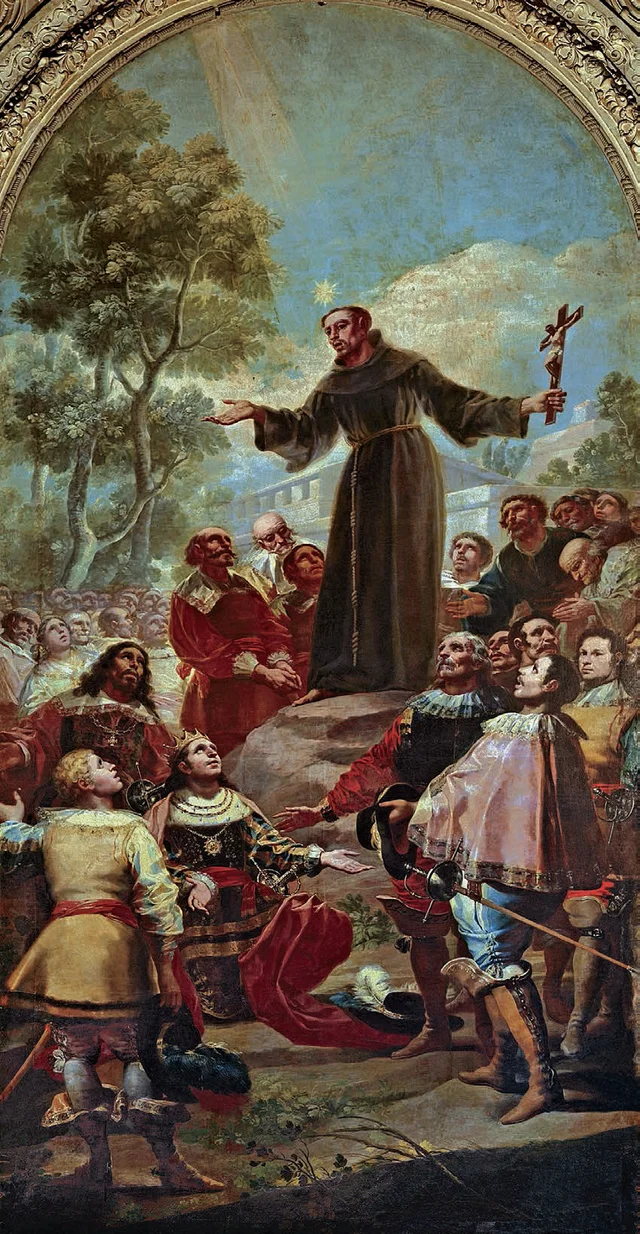
In the third chapel on the right of San Francisco el Grande, among the listeners near the edge of a large altarpiece, stands a man with Francisco de Goya's own face. Goya was then in his mid-thirties and still working his way up at the Spanish court. In 1781 the Count of Floridablanca, chief minister of King Charles III, gave seven painters an altar each in the king's new church in Madrid. Goya's rivals included Francisco Bayeu, his own brother-in-law, and Mariano Salvador Maella. He chose Saint Bernardino of Siena preaching before King Alfonso V of Aragon, and the canvas was hung in the church with the others in January 1783.
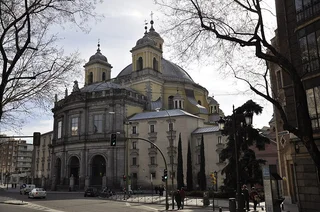
The church took more than 20 years to build. Its first stone was laid in 1761 to a design by the Franciscan friar Francisco Cabezas, on a site where tradition says Saint Francis of Assisi founded a small chapel on his way to Santiago. Francesco Sabatini, the king's Italian architect, finished it, and Charles III attended the inauguration in December 1784. The dome, about 33 metres across, is among the widest church domes in Europe.
In the 19th century the building was meant to become a national pantheon, and for a time it held the remains of the poets Garcilaso de la Vega and Francisco de Quevedo. A later restoration covered its plain neoclassical interior with the rich painted decoration visitors see today. During the Civil War it sheltered collections from the Royal Palace, and it is still administered through the Obra Pía de los Santos Lugares, an old royal foundation for the Holy Places that now answers to Spain's foreign ministry.