The story
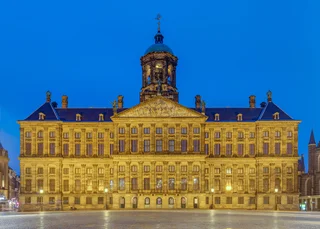
On Dam Square in Amsterdam stands a palace that was built as a city hall. Jacob van Campen, the leading Dutch architect of his day, began it in 1648 and set it on 13,659 wooden piles driven into the soft ground. It was inaugurated in 1655, still unfinished, and the burgomasters ran the city from it for more than 150 years. In 1808 Louis Napoleon, Napoleon's brother and the new King of Holland, made it his palace. The Dutch royal house still uses it for state visits and opens its rooms to visitors for much of the year.
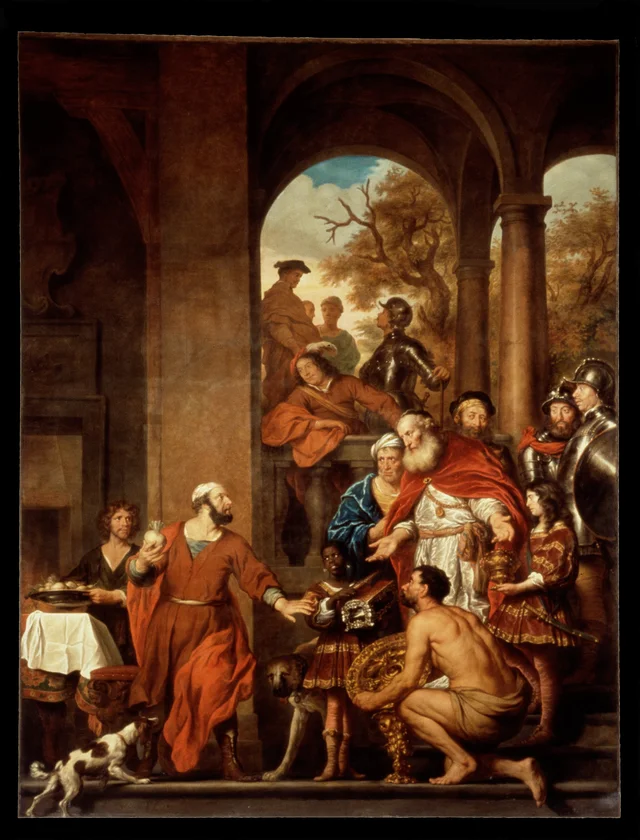
The paintings were made for the rooms they hang in. Govert Flinck, a former pupil of Rembrandt, painted the Roman consul Manius Curius Dentatus turning down the gifts of the Samnites in 1656, a lesson in honesty for the burgomasters who met beneath it. Jan Lievens painted the Roman general Quintus Fabius Maximus dismounting before his son, the consul. In the council chamber, Flinck's King Solomon still kneels to pray for wisdom in the place the canvas was made for.
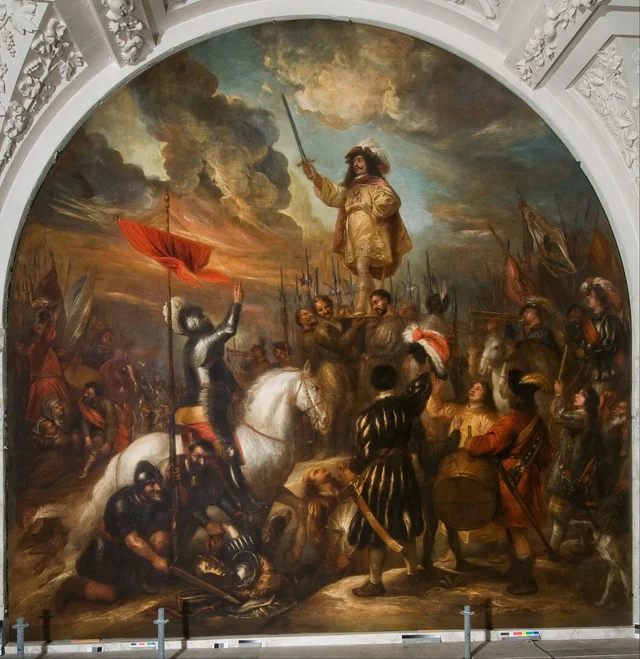
Flinck's success brought him a far bigger commission, a cycle on the revolt of the Batavians, the tribe the Dutch saw as their ancestors, for the great gallery. He died in 1660 with little done, and the work was shared out. Rembrandt's Conspiracy of Claudius Civilis hung here only briefly before it went back to him. He cut it down, and the surviving piece is now in Stockholm. Lievens's Brinio Raised on a Shield, a Batavian chief lifted up by his people, is still in place.