The story
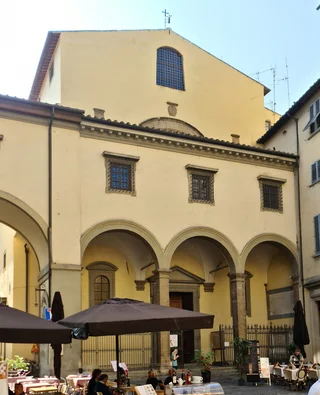
Look up at the wall above the entrance of Santa Felicita and you see a wide window behind a heavy grille. It belongs to the Vasari Corridor, the covered passage the Medici built in 1565 to walk from the Palazzo Vecchio across the river to the Pitti Palace without touching the street. The passage runs straight through the church's façade, and from behind that grille the grand-ducal family could follow Mass unseen.
The site is one of the oldest places of Christian worship in Florence, though the interior a visitor sees today is mostly the work of the architect Ferdinando Ruggieri, who rebuilt it in the 1730s.
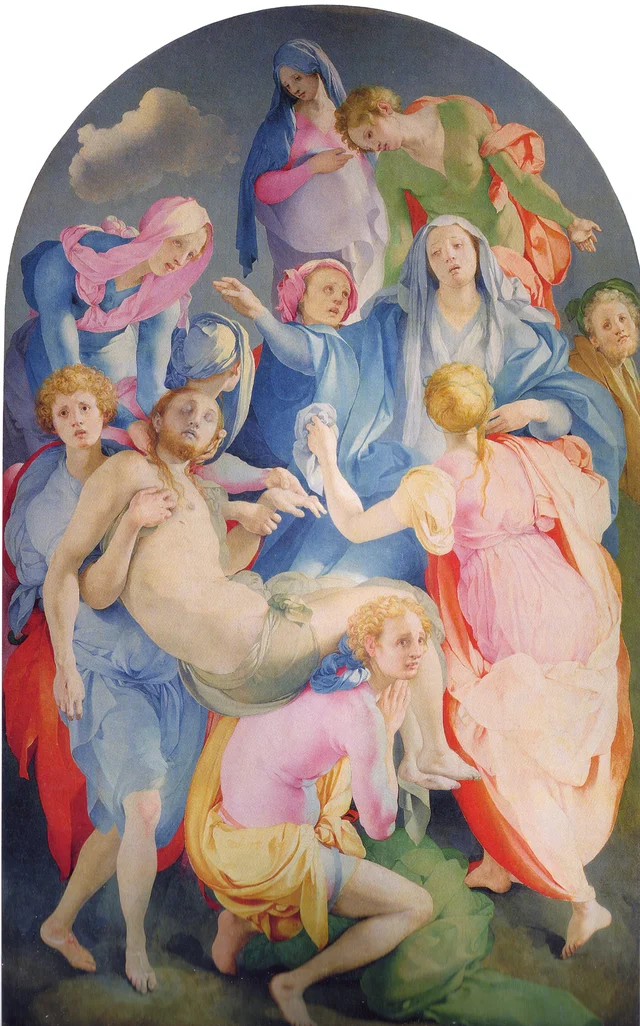
Just inside on the right is the small Capponi Chapel, designed by Filippo Brunelleschi in the 1420s. On its altar is Pontormo's Deposition, painted between 1525 and 1528. There is no cross and no tomb in the picture, only a ring of young figures in pale pinks and blues who seem almost weightless as they carry the body of Christ. Giorgio Vasari, the painter and biographer who knew Pontormo, wrote that he kept the chapel screened off for three years so that no one could see the work, the patron Lodovico Capponi included. Pontormo also frescoed the Annunciation on the wall beside it, and the four round panels of the Evangelists high in the corners are divided by scholars between him and his young pupil Bronzino.