The story
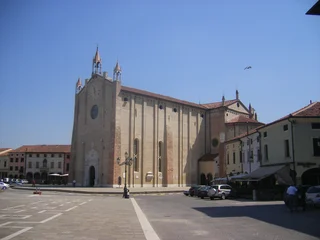
Montagnana, a small town in the Veneto south-west of Padua, is known for its almost complete ring of medieval walls, and on its main square stands the church of Santa Maria Assunta, which the town calls its Duomo. It was built between 1431 and 1502, a late Gothic church with Renaissance details.
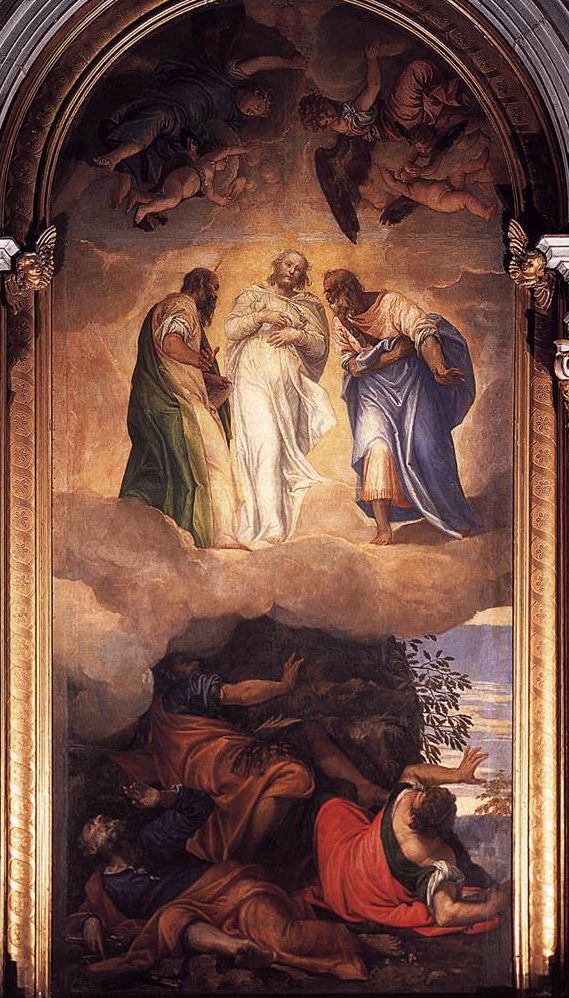
The picture most visitors come for is on the high altar. Paolo Veronese painted this Transfiguration of Christ in 1555 and 1556, in his late twenties, having only recently settled in Venice. It shows the moment the Gospels describe, when Christ appears in glory before three of his apostles.
Before leaving, turn round. On the entrance wall, on either side of the door, are two frescoes of David and Judith that many scholars give to the Venetian painter Giorgione, perhaps with his workshop. Very little about Giorgione's life is documented, and part of the case for his presence here is a red chalk drawing of Montagnana's castle of San Zeno, attributed to him and now in the Boijmans Van Beuningen museum in Rotterdam. The church also keeps three panels by Giovanni Buonconsiglio and a large votive canvas of the Battle of Lepanto.