The story
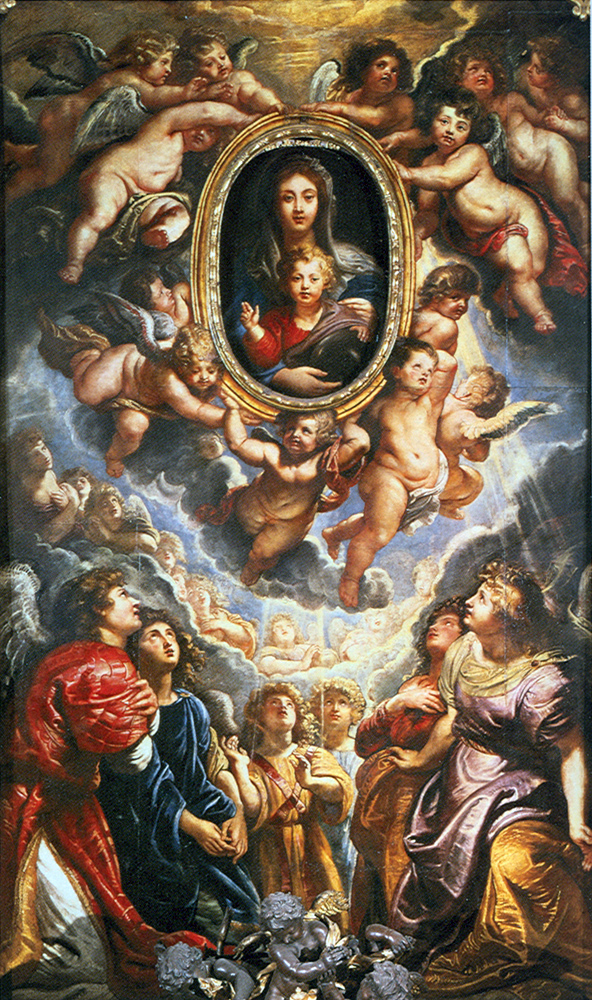
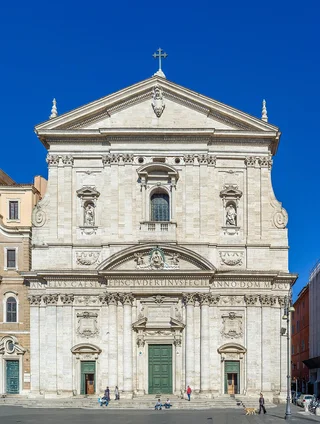
Every Saturday, above the high altar of the Chiesa Nuova in Rome, a painted panel is slowly raised. Behind it appears a small, very old image of the Virgin and Child, venerated as miraculous, set inside a ring of angels painted by Peter Paul Rubens. The panel that covers it, painted by Rubens on copper, shows the same Madonna, so the altar looks complete whether the old image is hidden or revealed.
Rubens was not yet 30 when he won this commission from the Oratorians, the community founded by Saint Philip Neri, who from 1575 had rebuilt the small medieval church of Santa Maria in Vallicella on a far grander scale. His first version, a canvas finished in 1607, reflected so much light from the altar that it was hard to see. Rubens replaced it with paintings on slate, a stone with a matt surface, and the canvas eventually ended up in the museum at Grenoble.
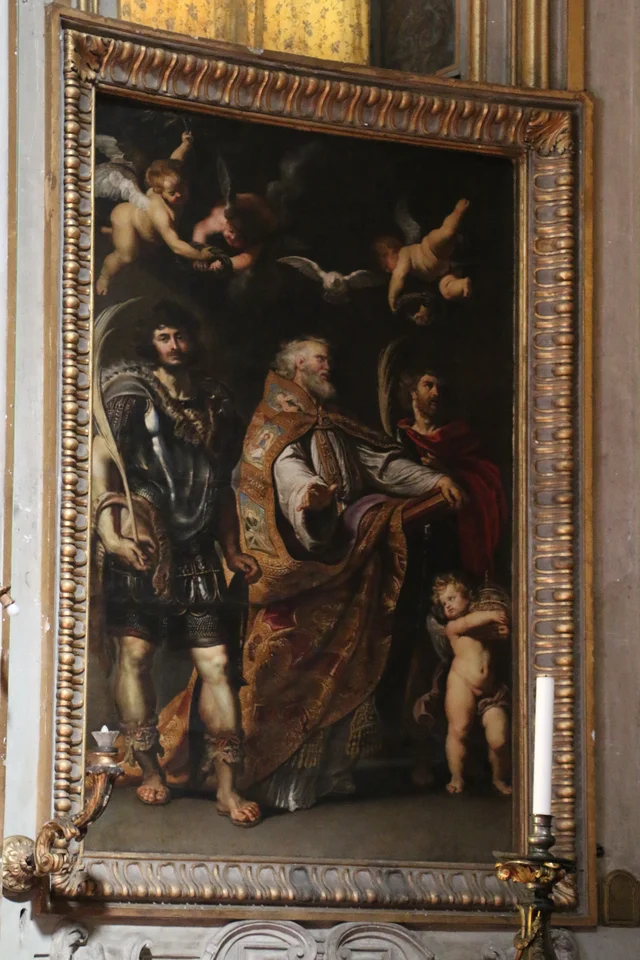
The slate ensemble, unveiled in 1608, wraps around the apse in three parts. On one side Pope Gregory the Great stands with Saints Maurus and Papianus, and on the other Saint Domitilla with Nereus and Achilleus, martyrs of early Christian Rome. Pietro da Cortona's ceiling frescoes were added decades later, and Philip Neri himself lies in a richly decorated chapel beside the altar.