The story
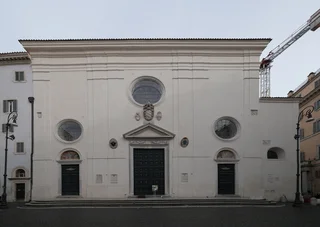
Before you reach the door of Santa Maria sopra Minerva, you pass a small marble elephant carrying an Egyptian obelisk on its back, set up in 1667 to a design by Gian Lorenzo Bernini, the great sculptor of Baroque Rome. The obelisk had been dug up in the friars' own garden, and the church's name recalls the old belief that it rose over a temple of Minerva.
Inside is Rome's best-known Gothic church, begun by the Dominicans around 1280, its vaults painted deep blue with gold stars in a 19th-century restoration. Left of the high altar stands Michelangelo's Risen Christ, a marble figure holding the cross, set up in 1521. To the right, in the Carafa Chapel, Filippino Lippi, the Florentine painter, painted frescoes around 1490 for a cardinal from Naples. Catherine of Siena lies beneath the high altar, and Fra Angelico, the painter friar, is buried nearby.
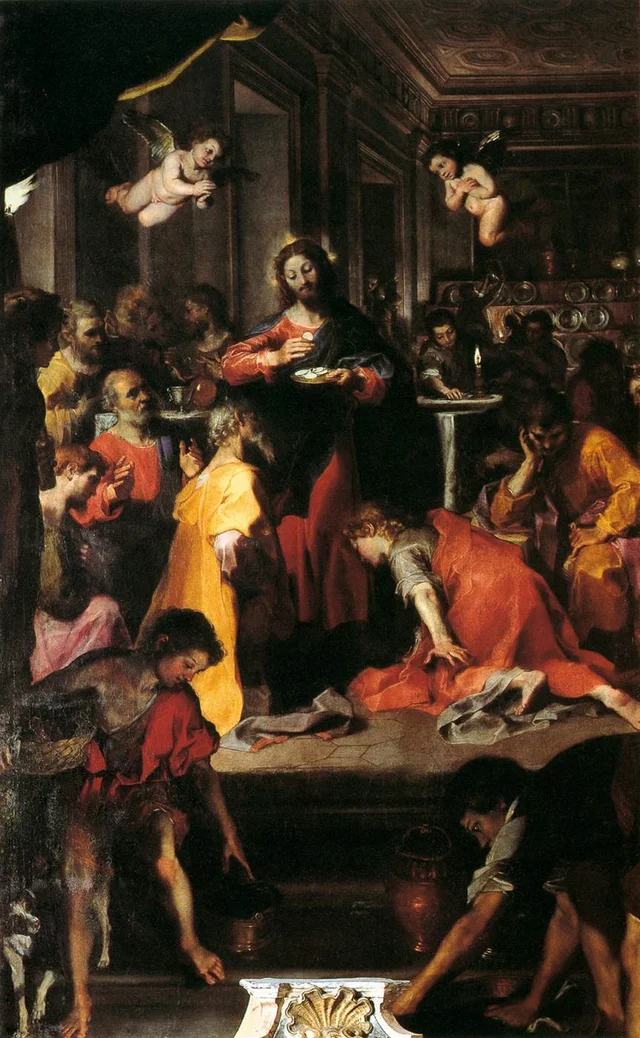
In the Aldobrandini Chapel hangs the Communion of the Apostles by Federico Barocci, the painter from Urbino. The family of Pope Clement VIII commissioned it in 1603, and Barocci painted it at home in Urbino, where he was sent drawings and details of the chapel so the picture would fit its place. Clement died in 1605, and the canvas was finished around 1608.
In the Dominican friary beside the church, in June 1633, Galileo knelt before the cardinals of the Inquisition and abjured his teaching that the Earth moves around the Sun.