The story
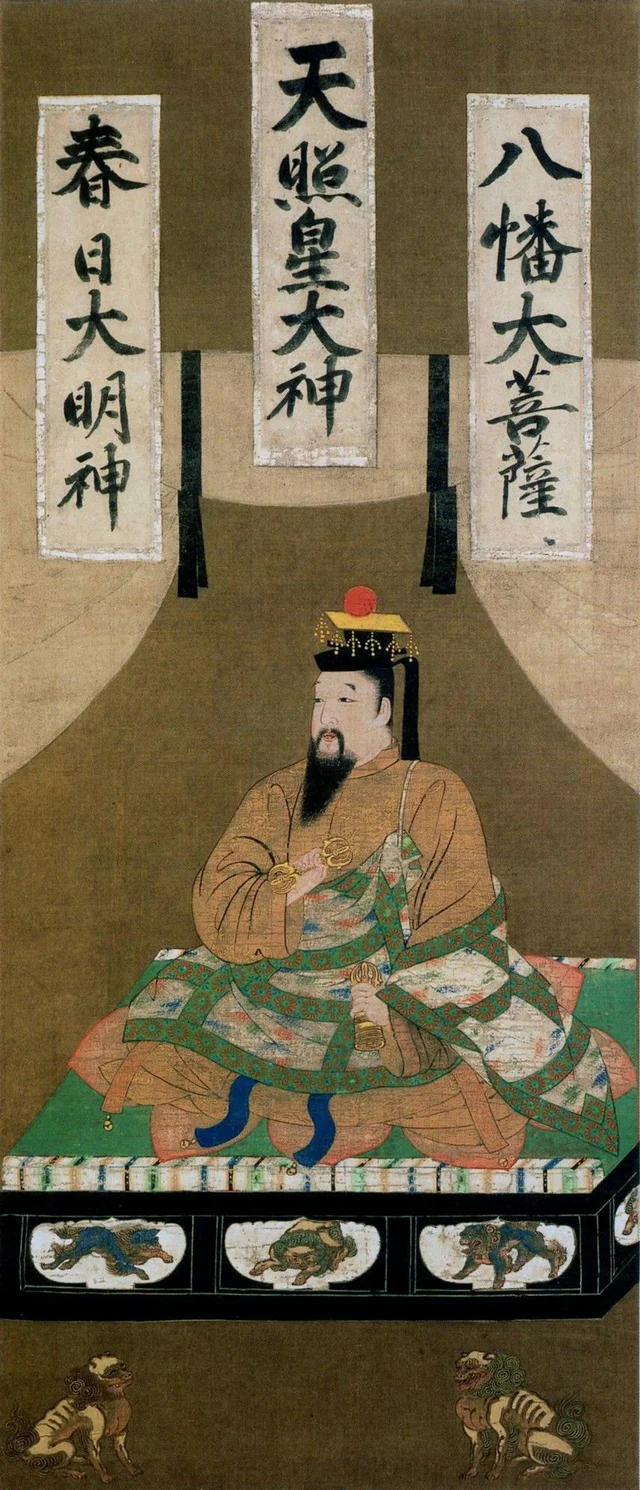
Emperor Go-Daigo died in 1339 in the mountains of Yoshino, still claiming the throne after his break with the Ashikaga shoguns. Soon afterwards he was painted on silk in an unusual guise, wearing a crown together with Buddhist robes and holding the bell and vajra of esoteric ritual. The portrait is associated with Monkan, the monk who had been his close adviser, and it is registered as an Important Cultural Property of Japan.
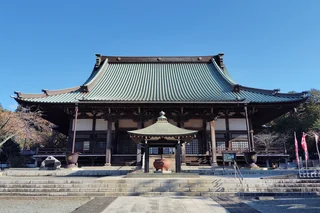
It belongs to Shōjōkō-ji in Fujisawa, south-west of Tokyo, which is primarily a working temple, the head temple of the Ji school of Pure Land Buddhism. Locals call it Yugyō-ji, after the sect's tradition of wandering preachers. Donkai, one of their leaders, founded it in 1325. Fighting between local clans destroyed it in 1513, it stood empty for nearly a century, and rebuilding began in 1607. The present main hall replaced the one lost in the 1923 Great Kantō earthquake.
The temple shows its art in a treasure house opened in 1977. Its most famous possession is the Ippen Hijiri-e, a National Treasure of twelve painted scrolls finished in 1299, which follow Ippen, the sect's founder, on his travels across Japan.