The story
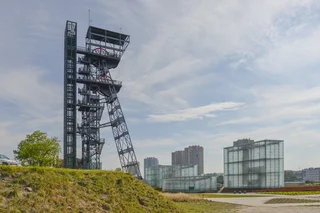
The galleries of the Silesian Museum lie underground, on the site of the former Katowice coal mine. At the surface you see brick mine buildings, a steel shaft tower you can ride up for a view over the city, and a cluster of milky glass boxes that send daylight down into the exhibition halls below. The complex, by the Austrian architects Riegler Riewe, opened in June 2015.
It is the museum's third home. Founded by the Silesian regional parliament in 1929, it was given a modernist building by the architect Karol Schayer, finished in 1939 and counted among the most modern museum buildings in Europe. It never opened. Under the German occupation the building was taken apart between 1941 and 1944, and the collections were scattered. The museum was revived only in 1984, in a former hotel in the city centre.
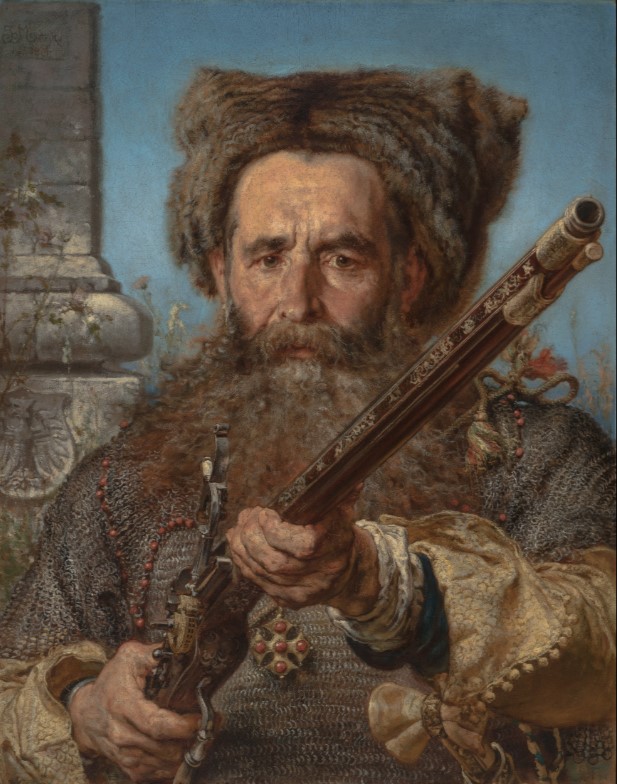
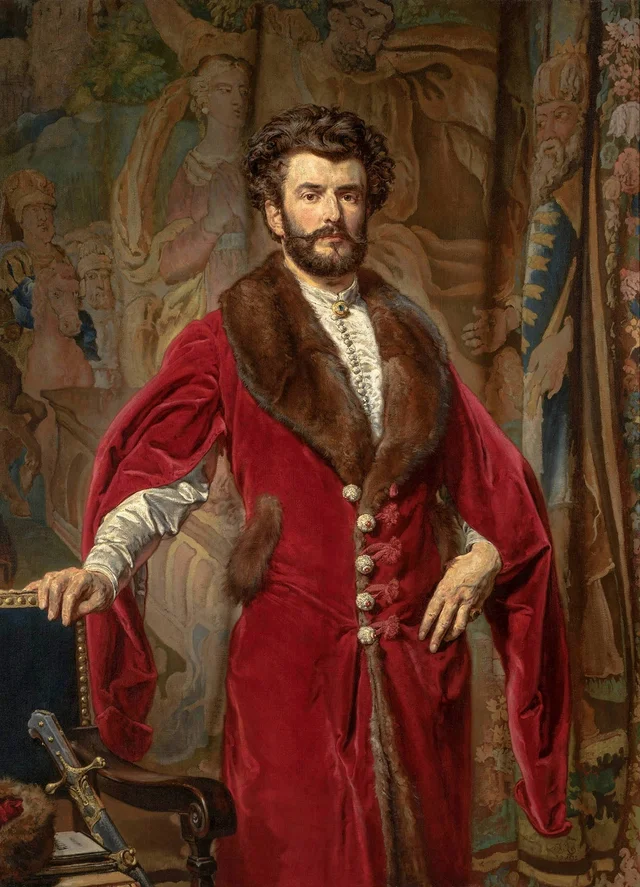
Below ground, the picture galleries follow Polish art from about 1800 to 1945 and on after the war, with a separate gallery for self-taught painters, a strong tradition in this mining region. Among the 19th-century works are pictures by Jan Matejko, the painter of Polish history, among them his portrait of Józef Ciechoński from 1873, and a portrait of the poet and composer Władysław Tarnowski by Maurycy Gottlieb, a pupil of Matejko who died at 23.