The story
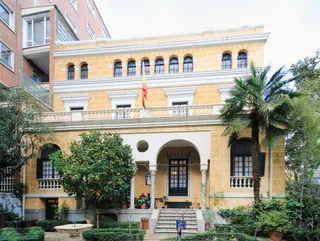
Step off a busy Madrid street into the Sorolla Museum and you are inside a painter's home left almost exactly as he knew it. Joaquín Sorolla, the Valencian who became Spain's great painter of sunlight, built this house and studio around 1910 and lived here until a stroke stopped him painting in 1920. He died three years later.
Sorolla designed the gardens himself, in an Andalusian style, with tiled fountains and clipped hedges that throw the same dappled light you see all through his beach scenes. Inside, the main studio still holds his easels, his brushes, and the low couch where he rested, along with hundreds of his canvases hung frame to frame.
His widow, Clotilde García, gave the whole property to the Spanish state, house, garden and roughly 1,200 paintings, and it opened as a museum in 1932. Look for the quick oil sketches of his wife and children on the terrace, painted in an afternoon, that he never meant to sell.
Collection
13 works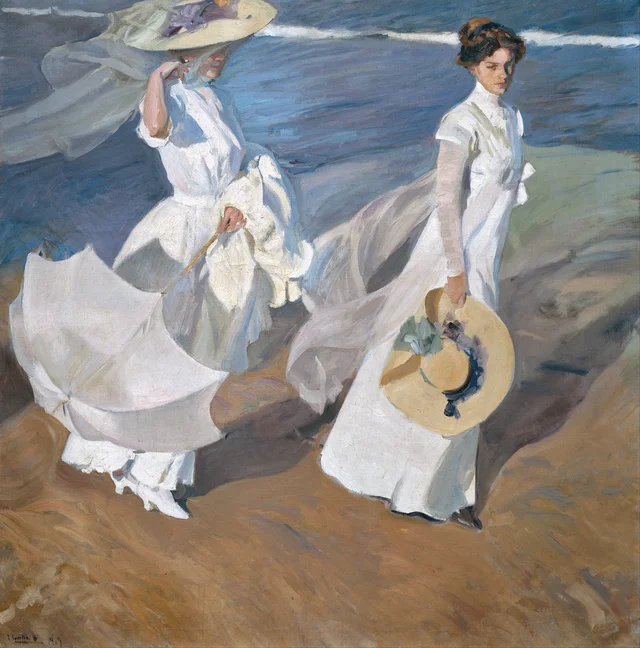 Walk on the BeachJoaquín Sorolla, 1909
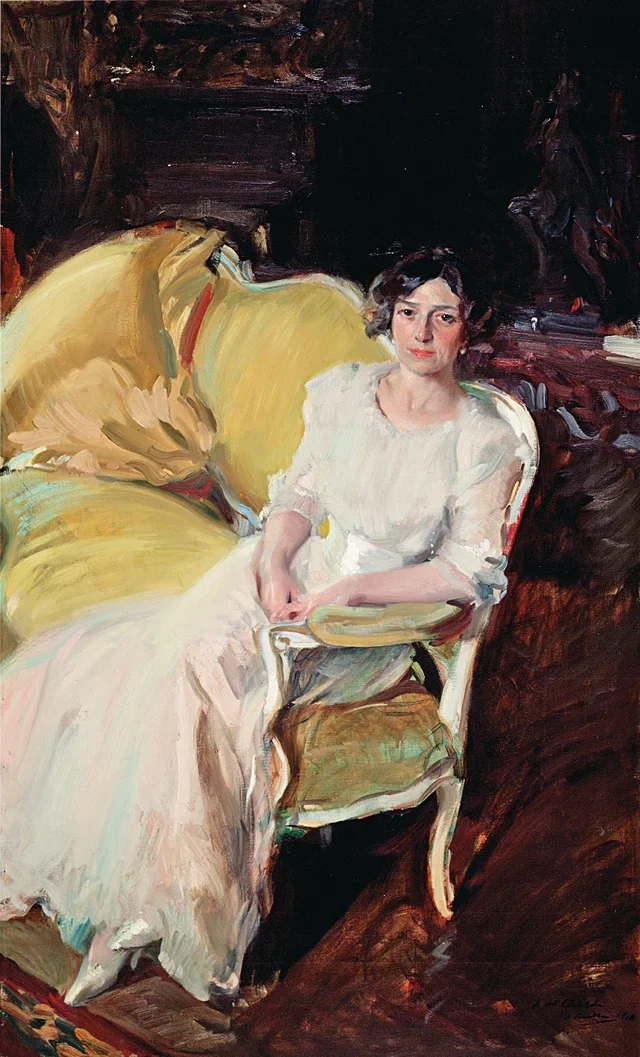 Clotilde seated on the SofaJoaquín Sorolla, 1910
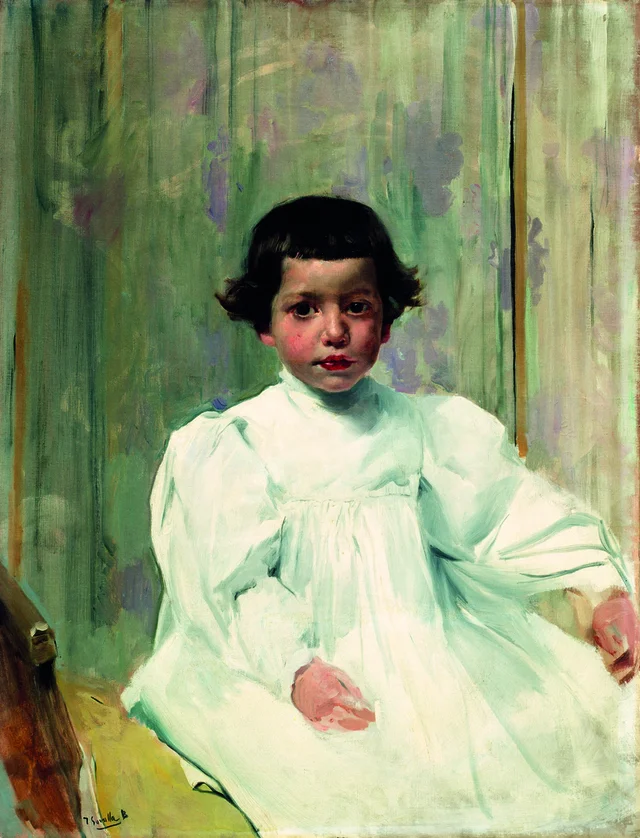 Joaquín Sorolla García dressed in whiteJoaquín Sorolla, 1896
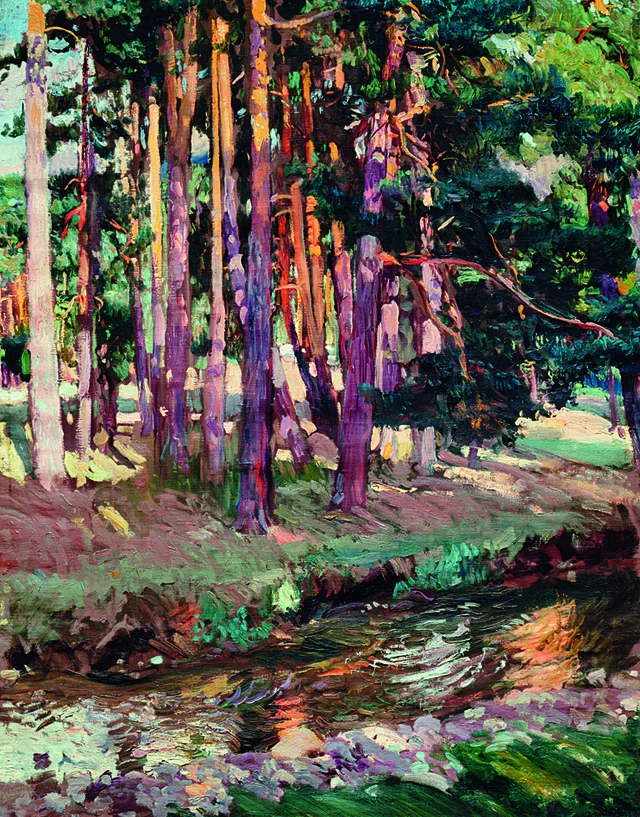 The Forest. La GranjaJoaquín Sorolla, 1907
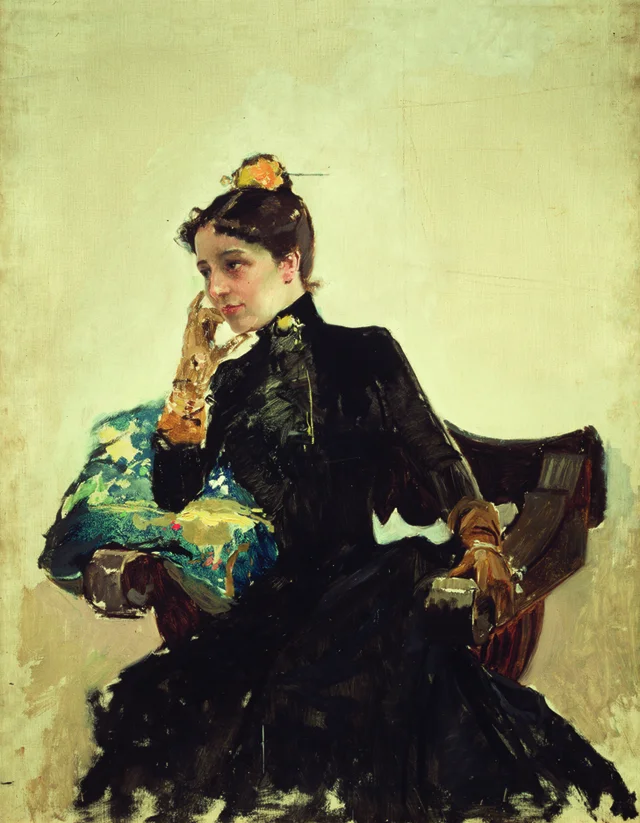 Clotilde García del CastilloJoaquín Sorolla, 1890
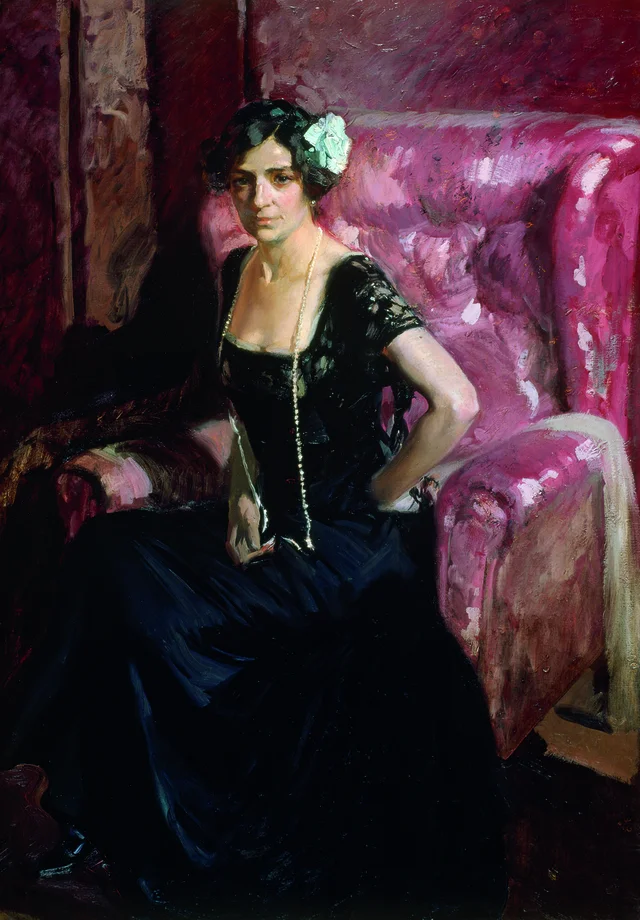 Clotilde in evening dressJoaquín Sorolla, 1910
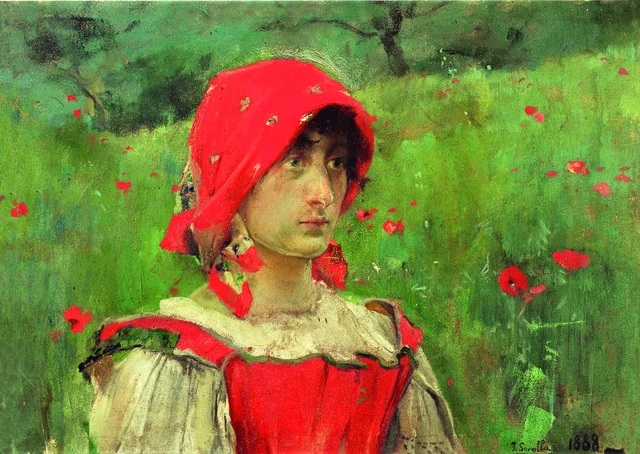 Contadina de AsísJoaquín Sorolla, 1888
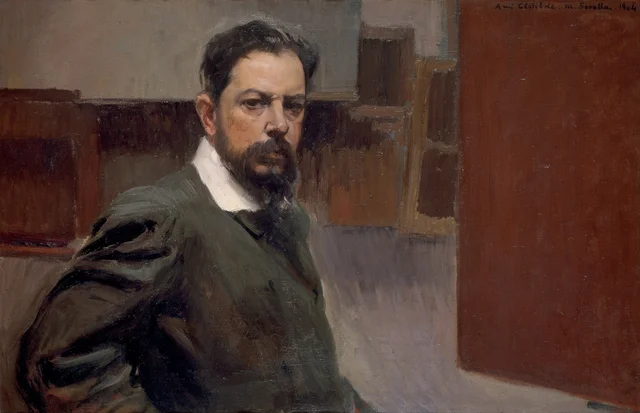 Self-PortraitJoaquín Sorolla, 1904
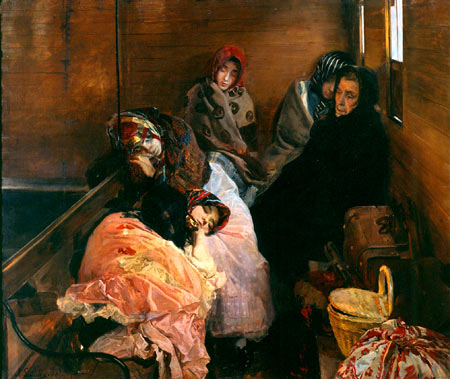 White slave tradeJoaquín Sorolla, 1894
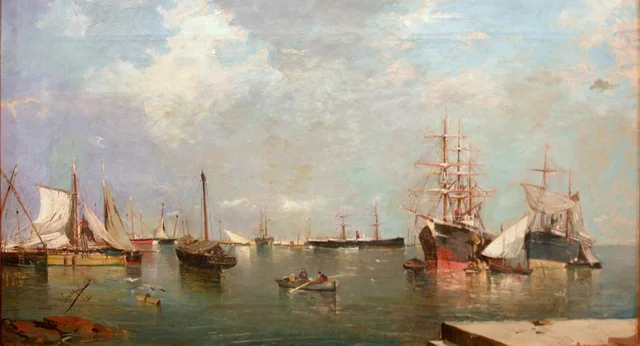 HarbourJoaquín Sorolla, 1881
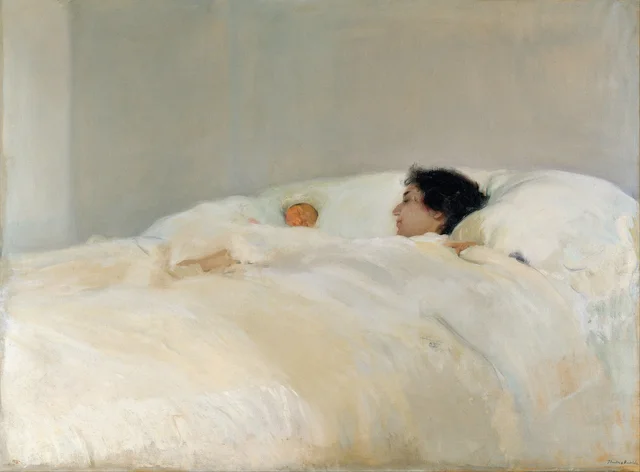 MotherJoaquín Sorolla, 1900
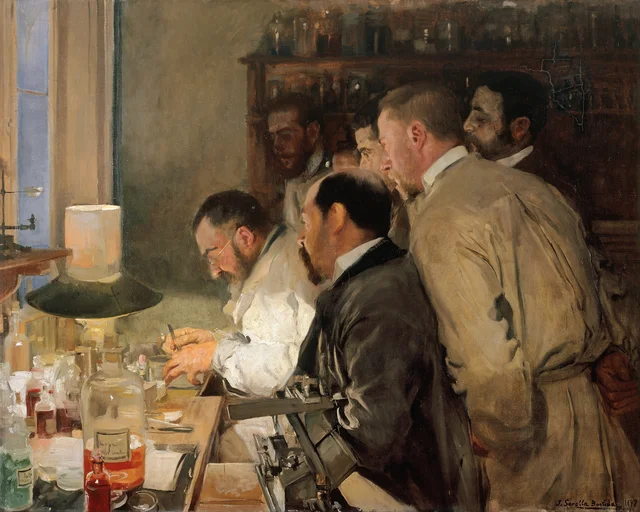 ResearchJoaquín Sorolla, 1897
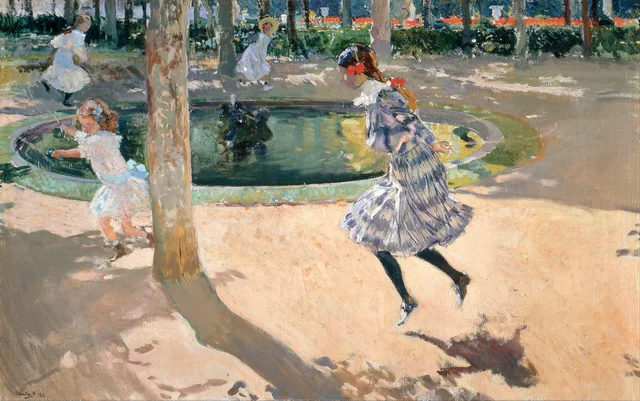 The Skipping RopeJoaquín Sorolla, 1907