The story
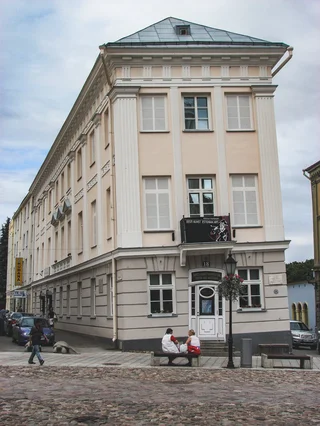
The building leans. On Town Hall Square in Tartu, the house at number 18 tilts visibly to one side. It was built in 1793 and belonged to the Barclay de Tolly family. One side rests on the remains of the old town wall and the other on wooden piles, and over the years the two settled unevenly. Restorers from Poland eventually stopped the movement, and since 1988 the Leaning House has been the main exhibition building of the Tartu Art Museum.
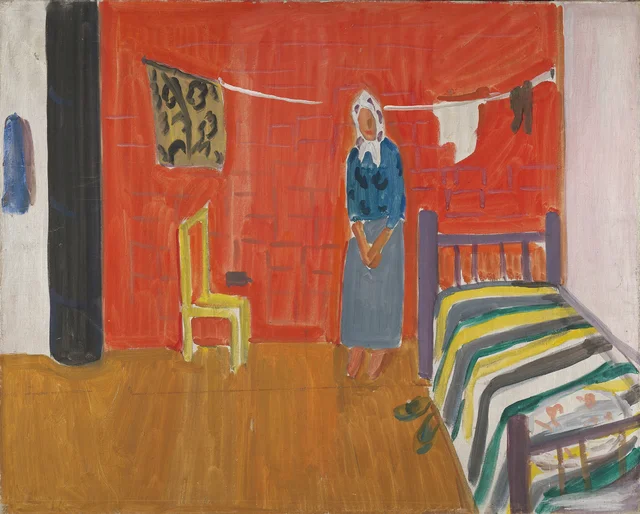
The museum was set up by the city in 1940 on the collection of Pallas, the art society that had run Tartu's influential art school since 1918. Its first catalogued work was Interior by the painter Ida Anton-Agu, one of 133 pieces handed over by Pallas members. Today it holds about 23,000 works, centred on Estonian painting of the early 20th century, including Konrad Mägi's landscapes and works by Nikolai Triik, Ado Vabbe and Karin Luts. A smaller group of Russian pictures includes works by Ivan Aivazovsky and Ivan Shishkin.
Karl Pärsimägi, who studied at Pallas, is represented by his Farmhouse with a Stove, painted in 1935. He moved to Paris two years later, and in 1942 he was deported from there to Auschwitz, where he died.