The story
In a gallery of the Newark Museum of Art in New Jersey stands a complete Tibetan Buddhist altar, painted in 1989 and 1990 by the Tibetan artist Phuntsok Dorje and consecrated by the Dalai Lama in 1990. It anchors one of the most important collections of Tibetan art in the Western world, which began in the 1910s with objects acquired from Albert Shelton, an American missionary doctor working on the Tibetan borderlands.
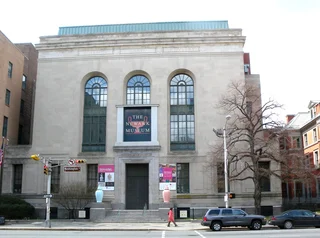
That a city museum in New Jersey collects Tibet says a lot about its founder. John Cotton Dana, a librarian, opened it in 1909 on the fourth floor of the Newark Public Library and wanted it to be useful to a working industrial city, so science and everyday design were collected alongside painting. In the 1920s it moved to its own building on Washington Park, a gift of the department-store owner Louis Bamberger. It later took in the Ballantine House, the 1885 mansion of a Newark brewing family, now shown with its period rooms.
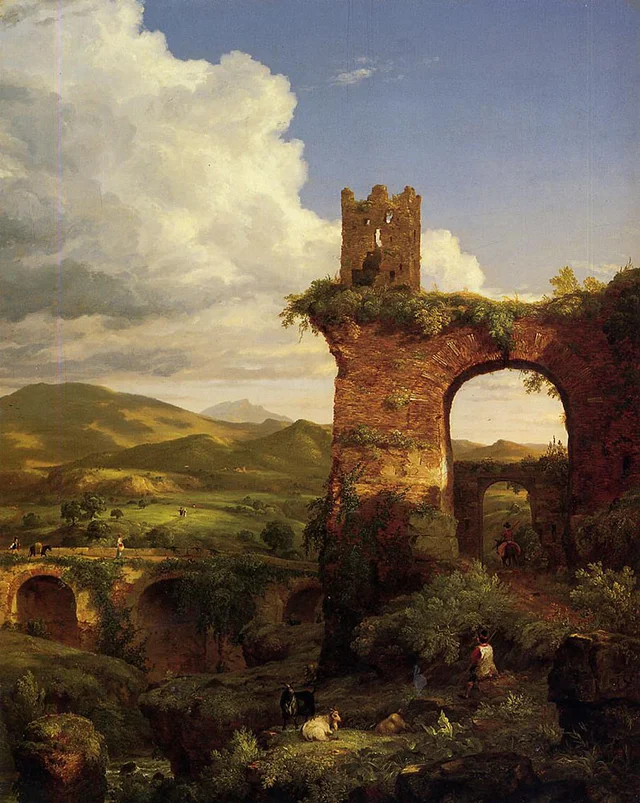
The American galleries run from the Hudson River School to the 20th century, with Georgia O'Keeffe, Edward Hopper and John Singer Sargent. Among the older pictures is Arch of Nero, a Roman ruin painted in 1846 by Thomas Cole, the English-born landscape painter who led the Hudson River School.