The story
Before he was forced out of the Forbidden City in 1924, Puyi, the last emperor of China, quietly sent more than a thousand paintings and calligraphies out of the palace as gifts to his younger brother. One was The Night Revels of Han Xizai, a long silk scroll that follows a 10th-century minister through a night of music and dancing. The original was attributed to the court painter Gu Hongzhong, and what survives is a 12th-century copy. It came back to the Palace Museum only in the 1950s, when the state bought back works that had left with the emperor.
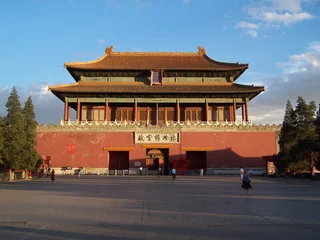
The museum opened on 10 October 1925 in the palace of the Ming and Qing emperors. In 1933, with Japanese forces advancing in the north, its finest pieces were packed into 13,427 crates and sent south, first to Shanghai, then Nanjing, and on through the war. In 1948 and 1949 some 2,972 of those crates crossed to Taiwan and became the core of the National Palace Museum in Taipei.
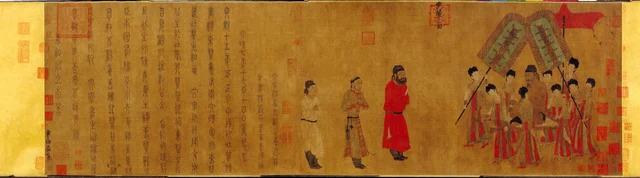
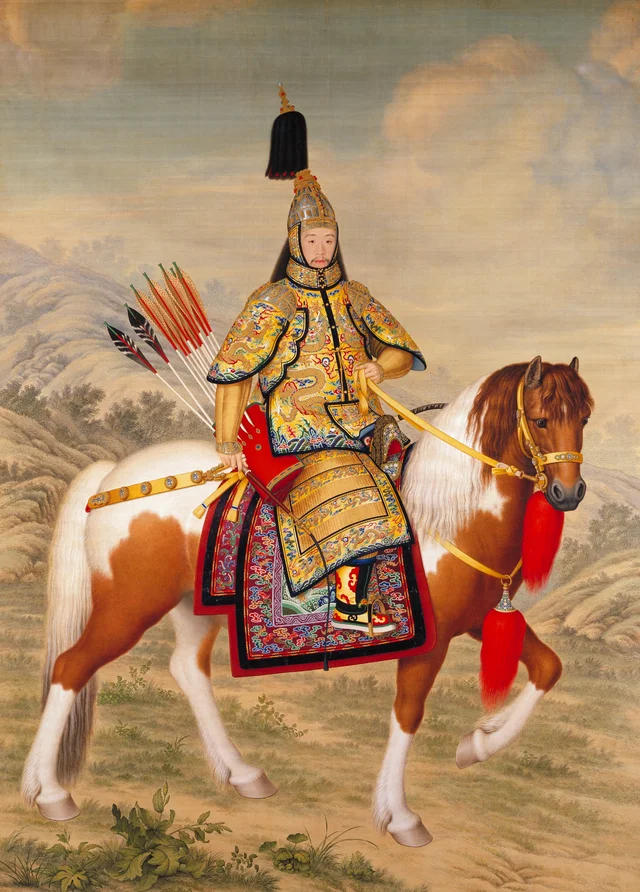
Paintings are shown only in rotation, so a visit is mostly the palace itself, its halls and courtyards, the clock and treasure galleries, and a changing selection of scrolls. The museum keeps Bunian Tu, Emperor Taizong of the Tang receiving a Tibetan envoy, a composition traditionally given to Yan Liben and known through a Song copy. From another world entirely comes the Italian Jesuit Giuseppe Castiglione's portrait of the Qianlong Emperor in ceremonial armour on horseback, painted in the blend of European shading and Chinese brushwork he developed for the Qing court.