The story
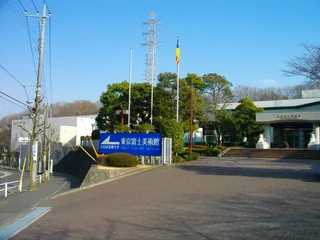
On Tokyo's western edge, in the hills of Hachioji, stands a museum built to move art between East and West. Daisaku Ikeda, the Buddhist leader of the Soka Gakkai, opened it in 1983 after conversations with the French art historian Rene Huyghe, and its stated aim is to be a bridge across cultures.
The collection is genuinely global, some 30,000 objects of Japanese, Chinese and Western art, and it ranges into ceramics, armour and photography. Its best-known piece, though, is European: one of the five versions Jacques-Louis David painted of Napoleon on a rearing horse, crossing the Alps with his cloak streaming behind him.
This is the last of the five to leave David's studio. Around it runs a survey of Western portraiture across 400 years, from Renaissance faces to the 19th century, chosen to introduce Japanese visitors to a tradition their own painters never took up.