The story
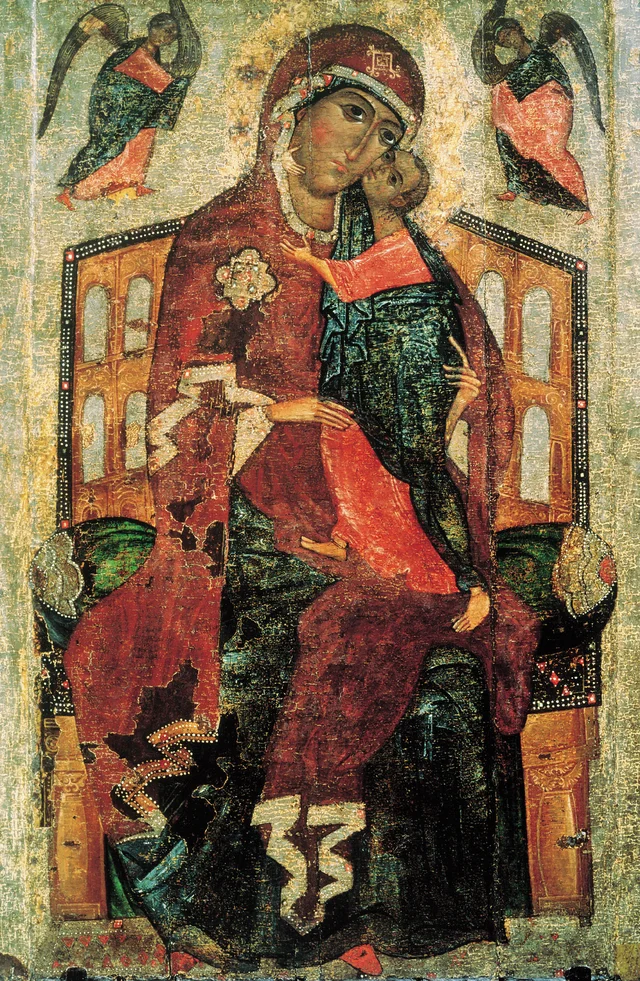
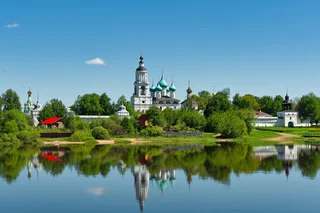
Pilgrims who come to the Tolga convent, on the left bank of the Volga at the northern edge of Yaroslavl, are usually looking for one picture. Tradition says the Tolga icon of the Mother of God appeared here in August 1314 to Prochorus, bishop of Rostov. Travelling along the river, he saw a pillar of light on the far bank and, crossing over, found the image standing among the trees. A wooden church went up that same day, and a monastery grew around it, named after the little Tolga river that meets the Volga at this spot.
This is primarily a working community of nuns, and its buildings carry its later history. The five-domed Cathedral of the Presentation of the Virgin was built in the 1680s and is painted inside with frescoes of the Yaroslavl school. Behind the stone walls grows a grove of Siberian cedars that, by local tradition, goes back to the sixteenth century.
In 1928 the Soviet state closed the monastery and turned its buildings to other uses, and the icon was taken into a museum. In 1987 the site was handed back to the Church as a convent, the first women's monastery to reopen in Soviet Russia. In 2003 the icon itself came home from the Yaroslavl Art Museum to the place where, by tradition, it first appeared.