The story
The reason most people come to Colmar's Unterlinden Museum is a single object: the Isenheim Altarpiece, painted between 1512 and 1516 by the German master known as Grünewald, with carved figures by Niclaus of Haguenau. It once stood in the chapel of a monastery hospital run by the Antonite order at Isenheim, a few miles south of here.
The monks nursed people suffering from Saint Anthony's fire, a gangrenous illness caused by a fungus in rye, and Grünewald painted a Christ whose body is covered in the same sores the patients bore. The altarpiece opened in stages for different feasts, moving from that harrowing crucifixion to a radiant resurrection, so the sick who prayed before it saw their own affliction and then a promise of healing.
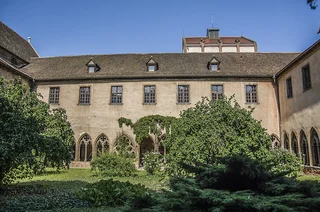
The panels were carried to Colmar during the French Revolution and installed in 1852 in a former Dominican convent, the museum's home to this day. Around them the galleries hold Rhenish medieval art and Alsatian archaeology, but almost everyone walks straight to the chapel.