The story
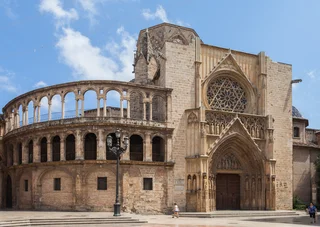
Every Thursday at noon, outside the Gothic Apostles' Door of Valencia Cathedral, a court of farmers known as the Water Tribunal still meets to settle disputes over irrigation. Behind that door is a working cathedral, begun in 1262 on the site of the city's main mosque, which also keeps some remarkable art.
The most visited corner is the Chapel of the Holy Chalice, a Gothic hall where a cup of dark agate, venerated as the cup of the Last Supper, stands behind glass. It has been in the cathedral since 1437, when King Alfonso V of Aragon left it there.
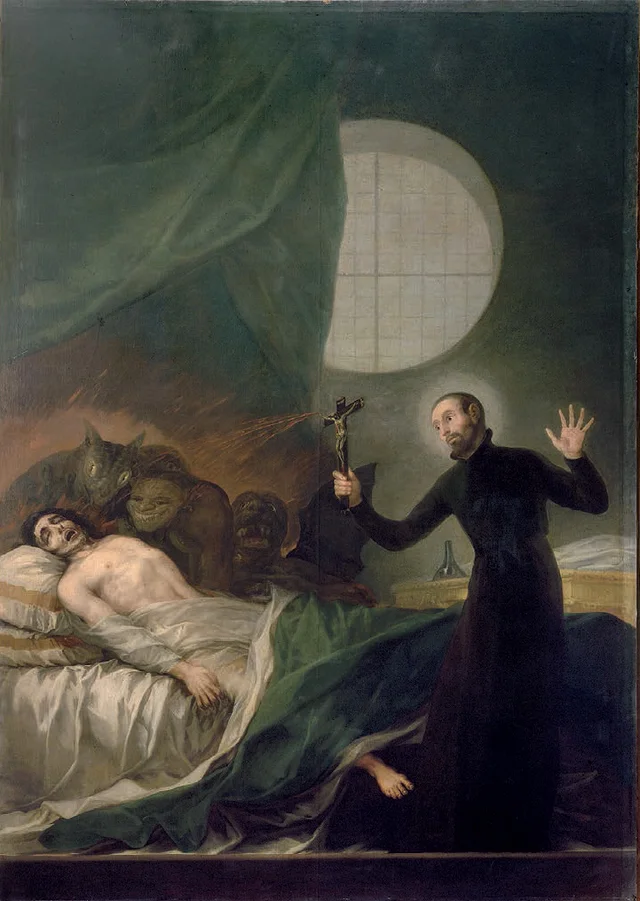
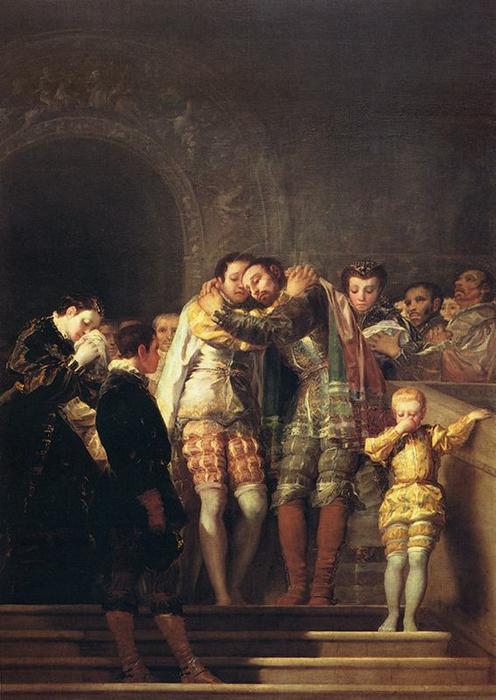
In the chapel of Saint Francis Borgia hang two canvases by Francisco de Goya, painted in 1788 for the Duchess of Osuna, one of his most loyal patrons and an heir of the saint's family. Borgia was a 16th-century Duke of Gandía, near Valencia, who gave up his title to become a Jesuit. One painting shows him taking leave of his family. In the other he stands at the bed of a dying man who refuses confession, while monsters wait behind the pillow, demons often described as the first in Goya's work.
Above the high altar, hidden for more than three centuries under a Baroque vault, restorers in 2004 found Renaissance frescoes of angels playing instruments against a starry sky. They were painted in the 1470s by Paolo da San Leocadio and Francesco Pagano, two Italians brought to Valencia by Cardinal Rodrigo Borgia, the future Pope Alexander VI.