The story
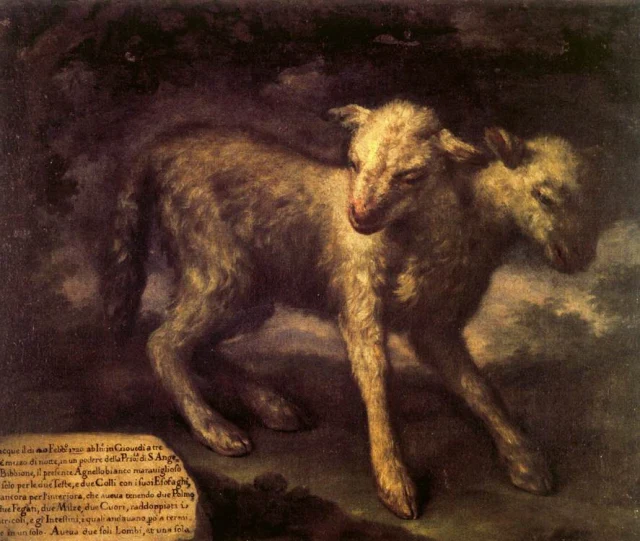
The top floor of this Medici country house is hung with still lifes, about 200 of them across 16 rooms, painted for the grand dukes of Tuscany in the 17th and 18th centuries. A large share are by one man, Bartolomeo Bimbi, a Florentine painter whom Cosimo III kept busy recording what his estates produced. A set of 12 big canvases sorts the citrus, grapes, pears, peaches and figs grown in Tuscany variety by variety, with keys along the bottom naming each one. When a lamb was born with two heads in 1720, that went to Bimbi as well, and the inscription on his painting lists what was found inside the animal: two hearts, two livers, two spleens. The same floor holds a vase of flowers by Jan Brueghel the Elder and a dish of cherries by Giovanna Garzoni.
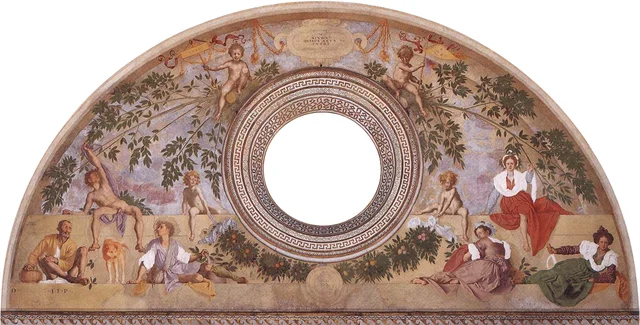
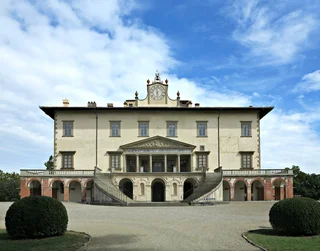
Downstairs is the house that came first. Lorenzo il Magnifico bought the farm here in the 1470s and had Giuliano da Sangallo rebuild it as a villa, with a temple front over the entrance loggia and a glazed terracotta frieze filling the pediment. It was one of the first private houses to wear the face of an ancient temple. The barrel-vaulted great hall was finished under Lorenzo's son, Pope Leo X, and frescoed from 1519 by Andrea del Sarto, Franciabigio and Pontormo. Pontormo's lunette shows Vertumnus and Pomona, the Roman gods of the turning year and of orchards, sitting on a low wall in country clothes under a laurel branch.
In October 1587 Francesco I de' Medici and his wife Bianca Cappello both died in the villa, a day apart. The recorded cause was tertian fever, and the case has been argued over ever since. The house passed to the Italian state in 1919, and the still-life rooms opened as a museum in 2007. Researchers now work from Bimbi's fruit canvases to identify Tuscan varieties that have dropped out of cultivation.