The story
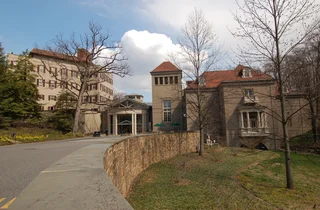
In May 1961 the new First Lady, Jacqueline Kennedy, toured a mansion in the Delaware hills and came away with ideas for the White House. Its owner, Henry Francis du Pont, an heir to the du Pont chemical fortune, went on to chair her committee for restoring the President's house. What she had seen was his life's work, Winterthur, a 175-room house filled with furniture, silver, ceramics and textiles made or used in America between about 1640 and 1860.
Du Pont collected whole rooms along with their furniture. He bought panelling, fireplaces and staircases from old houses up and down the East Coast and rebuilt them inside his own home, so that each object stood in a setting of its own period. In 1951 he moved to a smaller house on the estate and opened the mansion as a museum. The collection now runs to some 90,000 objects, and visitors still walk through the rooms much as he arranged them, with a 60-acre garden he designed himself outside the windows.
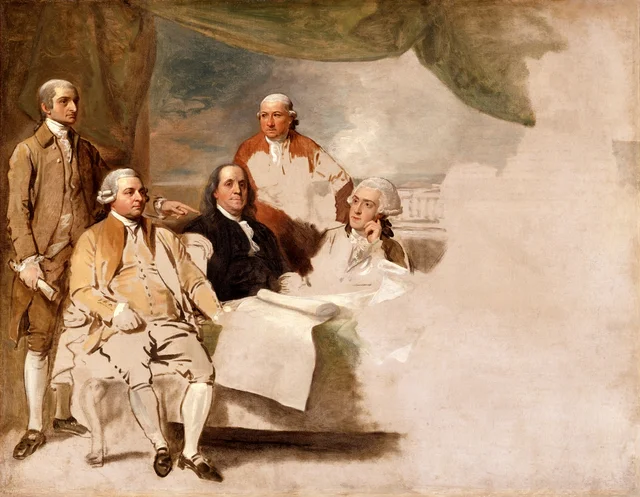
Among the paintings is one whose blank half tells a diplomatic story. Benjamin West, the American-born history painter working in London, began a group portrait of the American commissioners who negotiated peace with Britain in 1783. John Jay, John Adams, Benjamin Franklin, Henry Laurens and Franklin's grandson William Temple Franklin fill the left side. The right side, meant for the British negotiators, stayed empty because they refused to sit for him, and du Pont bought the unfinished canvas in 1948.
The estate's name is older than the museum. It comes from Winterthur in Switzerland, the ancestral town of James Antoine Bidermann, who married into the du Pont family and named the property in the 1830s.