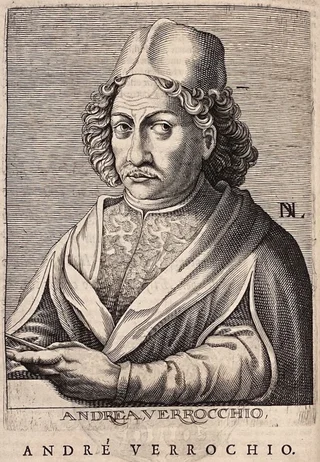
Andrea del Verrocchio
1435–1488 · República de Florencia · Renacimiento italiano
La historia
Hacia 1466, un adolescente llamado Leonardo, hijo ilegítimo de un notario florentino, entró en el taller de Andrea del Verrocchio, entonces el escultor y pintor más solicitado de Florencia, en Italia. Verrocchio dirigía su taller como una pequeña fábrica, formando a los aprendices a la vez en orfebrería, fundición de bronce, dibujo y pintura, y Leonardo permaneció allí cerca de una década, absorbiéndolo todo.
La propia producción de Verrocchio abarcaba un abanico igual de amplio, desde la estatua de bronce de David, hoy en el museo del Bargello de Florencia, hasta la tumba de mármol de Piero y Giovanni de Médici, hijos de la familia de banqueros que gobernaba la ciudad, pasando por pinturas como el Bautismo de Cristo, en la que consta que Leonardo pintó uno de los ángeles arrodillados. El biógrafo del siglo XVI Giorgio Vasari afirmó más tarde que Verrocchio quedó tan impresionado por el ángel de su discípulo que abandonó la pintura para siempre, una historia que los historiadores tratan con cierta cautela pero que ha quedado adherida a la reputación de Verrocchio desde entonces.
En sus últimos años Verrocchio estuvo en Venecia fundiendo una estatua ecuestre de bronce del general mercenario Bartolomeo Colleoni, un encargo que no vivió para ver terminado. Murió allí en 1488, y otro escultor completó y fundió la estatua tras su muerte.
Más artículos
Obras
8 obras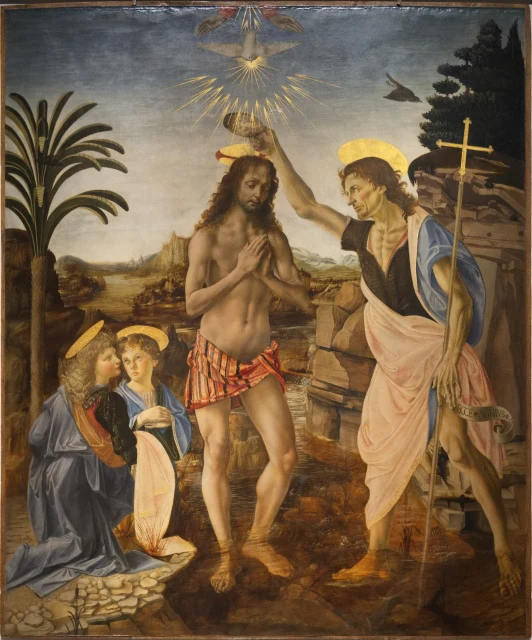 El bautismo de CristoAndrea del Verrocchio, 1472
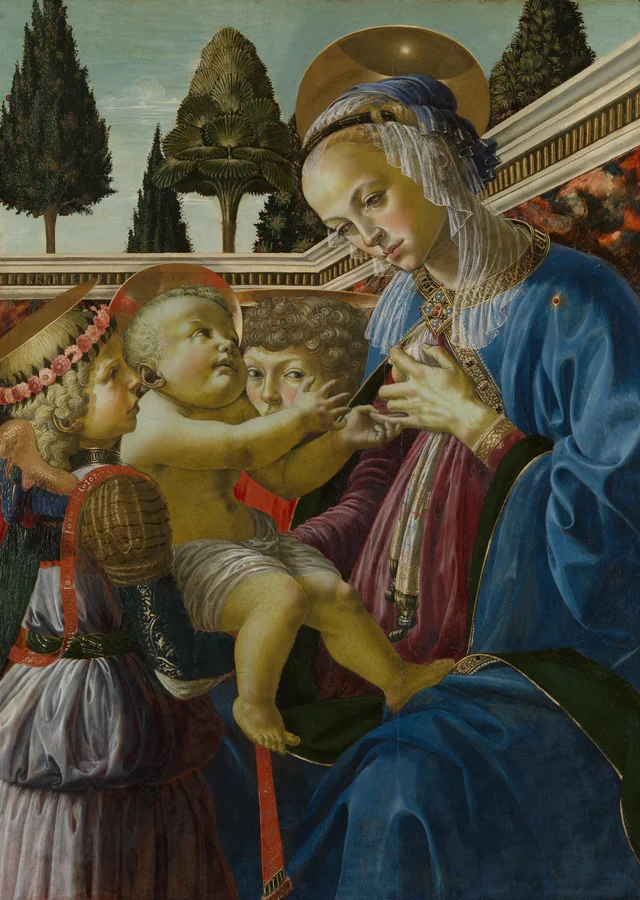 La Virgen de la lecheAndrea del Verrocchio, 1467
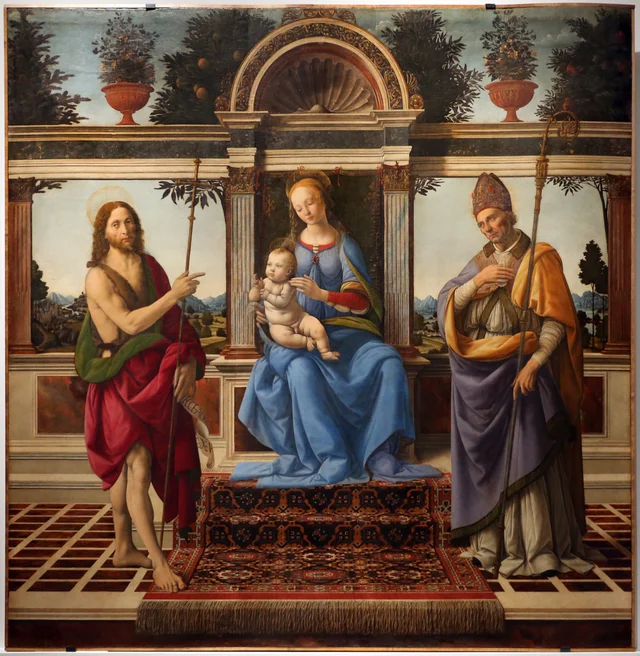 Virgen con el Niño y santosAndrea del Verrocchio, 1479
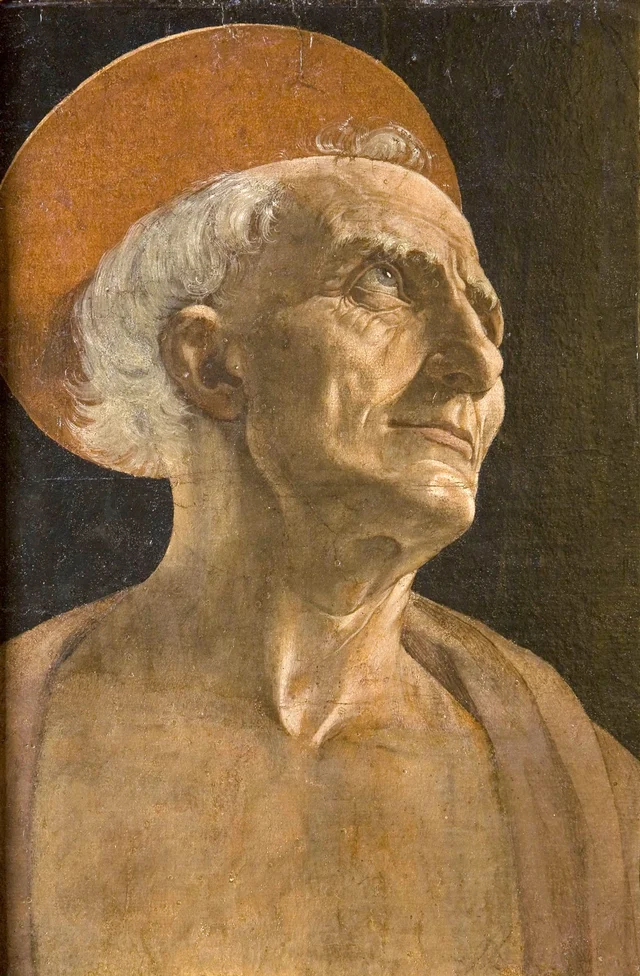 El rostro de san JerónimoAndrea del Verrocchio, 1473
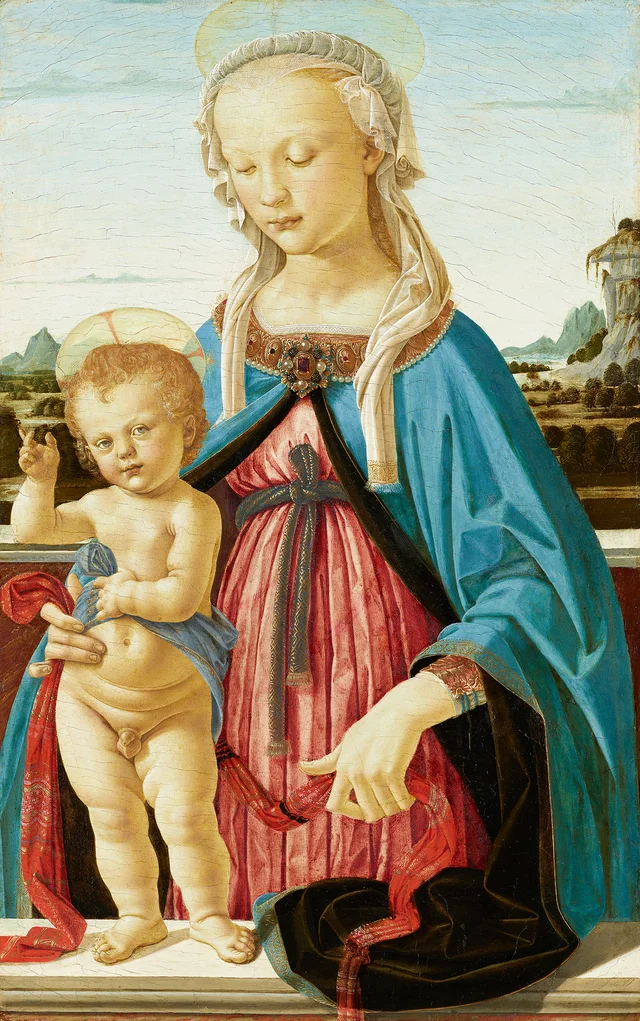 Virgen con el NiñoAndrea del Verrocchio, 1473
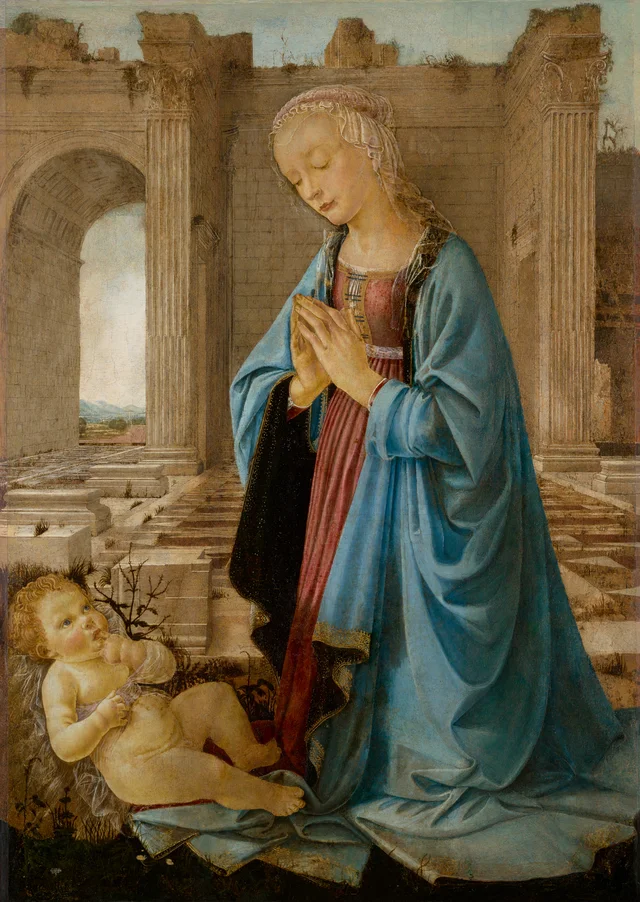 La Virgen adorando al Niño JesúsAndrea del Verrocchio, 1470
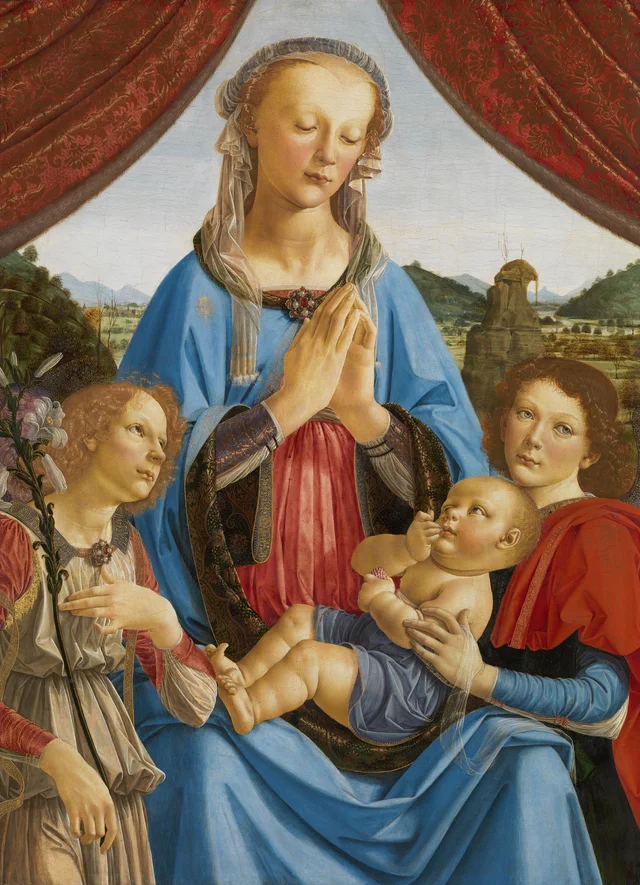 La Virgen y el Niño con dos ángelesAndrea del Verrocchio, 1476
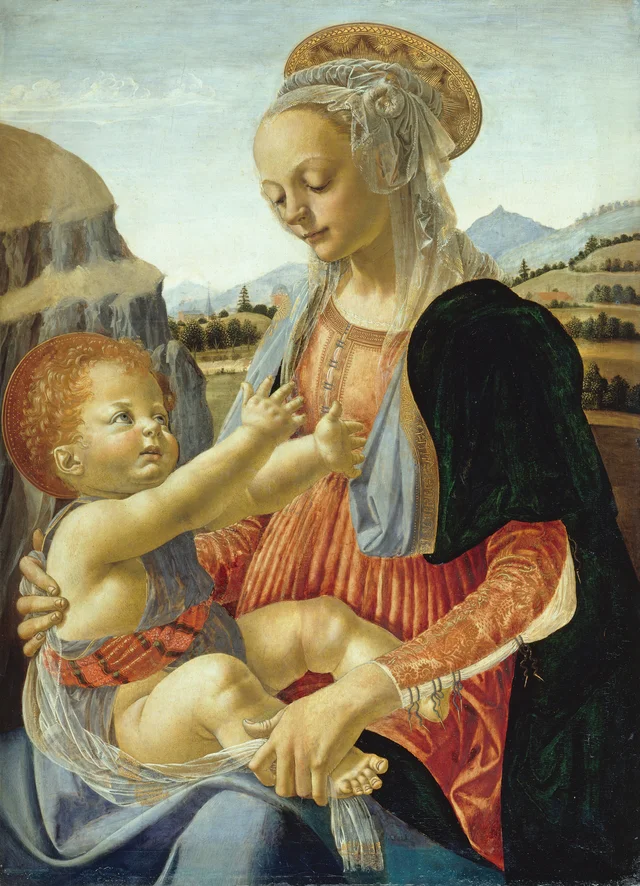 Virgen con el Niño sentadoAndrea del Verrocchio, 1470