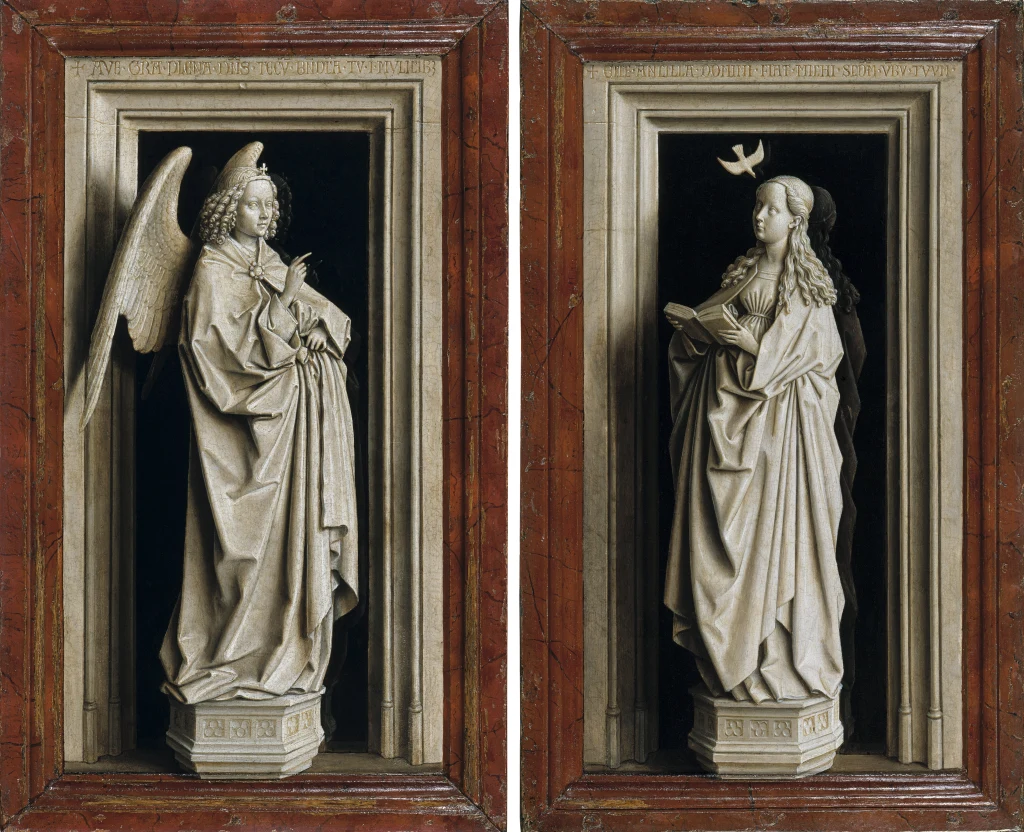
Jan van Eyck, Annunciation, 1440. Wikimedia Commons. · PD
La Anunciación
Ficha
La historia
Jan van Eyck pintó esta Anunciación hacia 1435 imitando la piedra: el ángel Gabriel y la Virgen parecen dos esculturas grises colocadas en hornacinas, tan convincentes que engañan al ojo. Se pintaron en grisalla, con solo tonos de gris, porque eran las caras exteriores de las alas de un tríptico hoy perdido. Cerrado el retablo, el fiel veía estas dos figuras fingidas de piedra, y solo al abrirlo aparecía la escena en color. Van Eyck, el pintor de la corte de Borgoña que llevó el óleo a una precisión nunca vista, alardea aquí de su destreza haciendo pasar la pintura por escultura. Hasta las sombras que las figuras proyectan sobre el fondo están calculadas como si una luz real cayera sobre ellas.