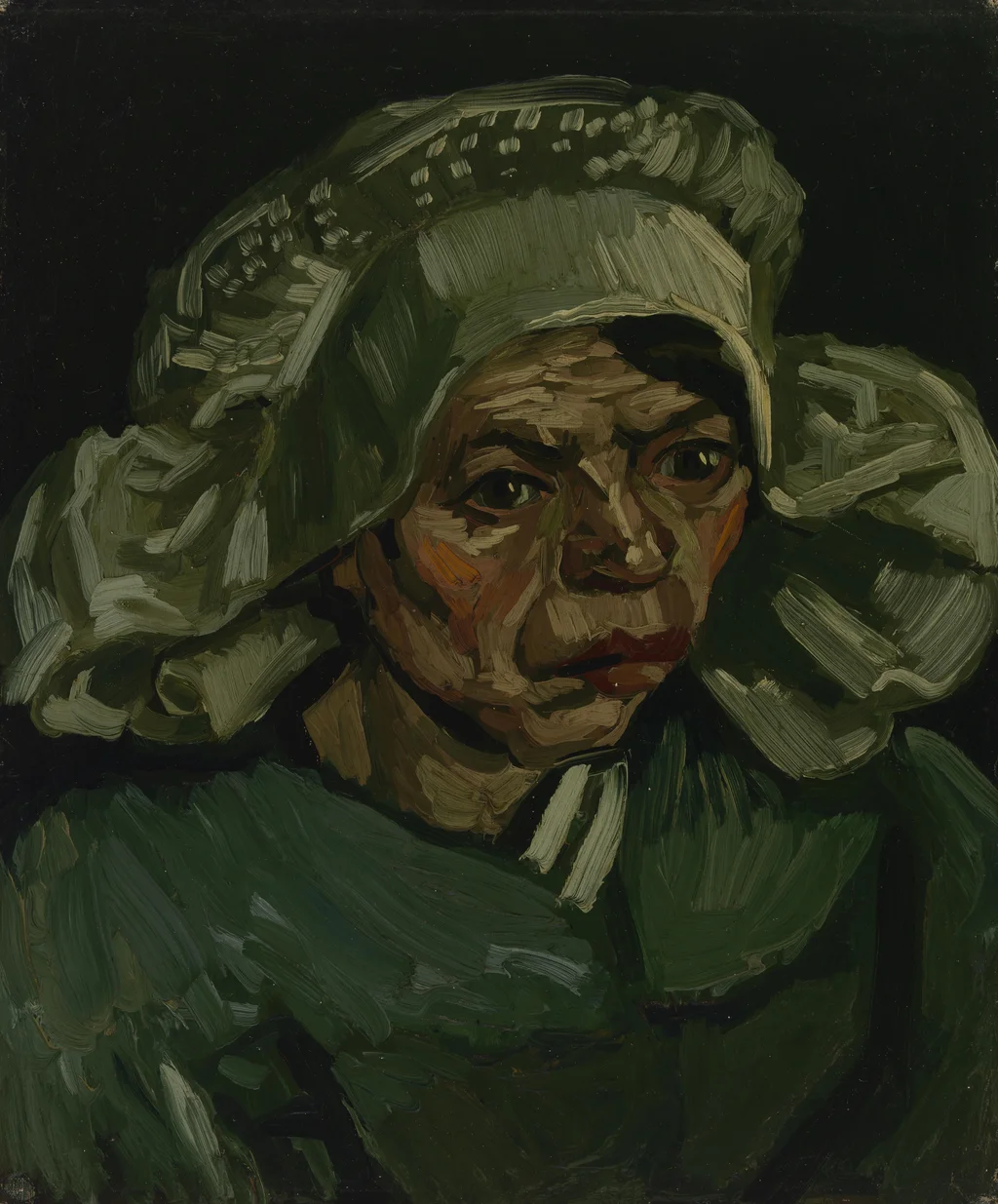
Vincent van Gogh, Head of a Woman, 1885. Wikimedia Commons. · PD
Cabeza de mujer
Ficha
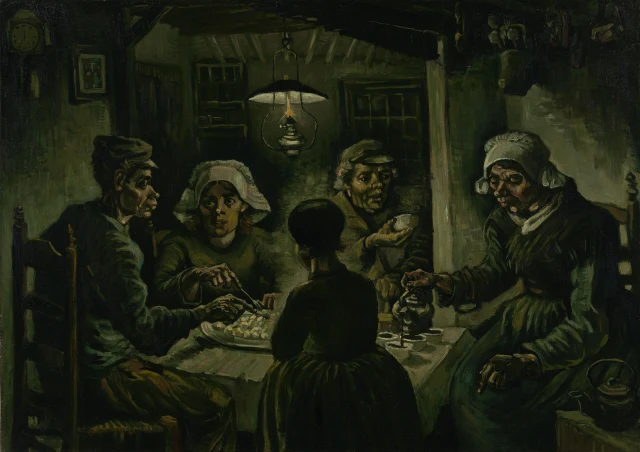
La historia
Al otro lado de este lienzo hay otro cuadro. La cara que vemos es la de una campesina con cofia blanca, pintada en mayo de 1885 en Nuenen, una de las muchas cabezas que Van Gogh hizo aquellos meses con los labradores de la zona, en colores de tierra y sin embellecer nada. De ese trabajo salió su primera obra ambiciosa, Los comedores de patatas. Dos años más tarde, en el verano de 1887, ya en París, dio la vuelta a la tela y pintó por detrás un huerto en la colina de Montmartre, con un girasol y las chimeneas de las fábricas de Clichy al fondo. El lino para pintar costaba dinero y él reutilizaba lo que tenía. El museo de Ámsterdam conserva las dos caras con el mismo número de inventario.