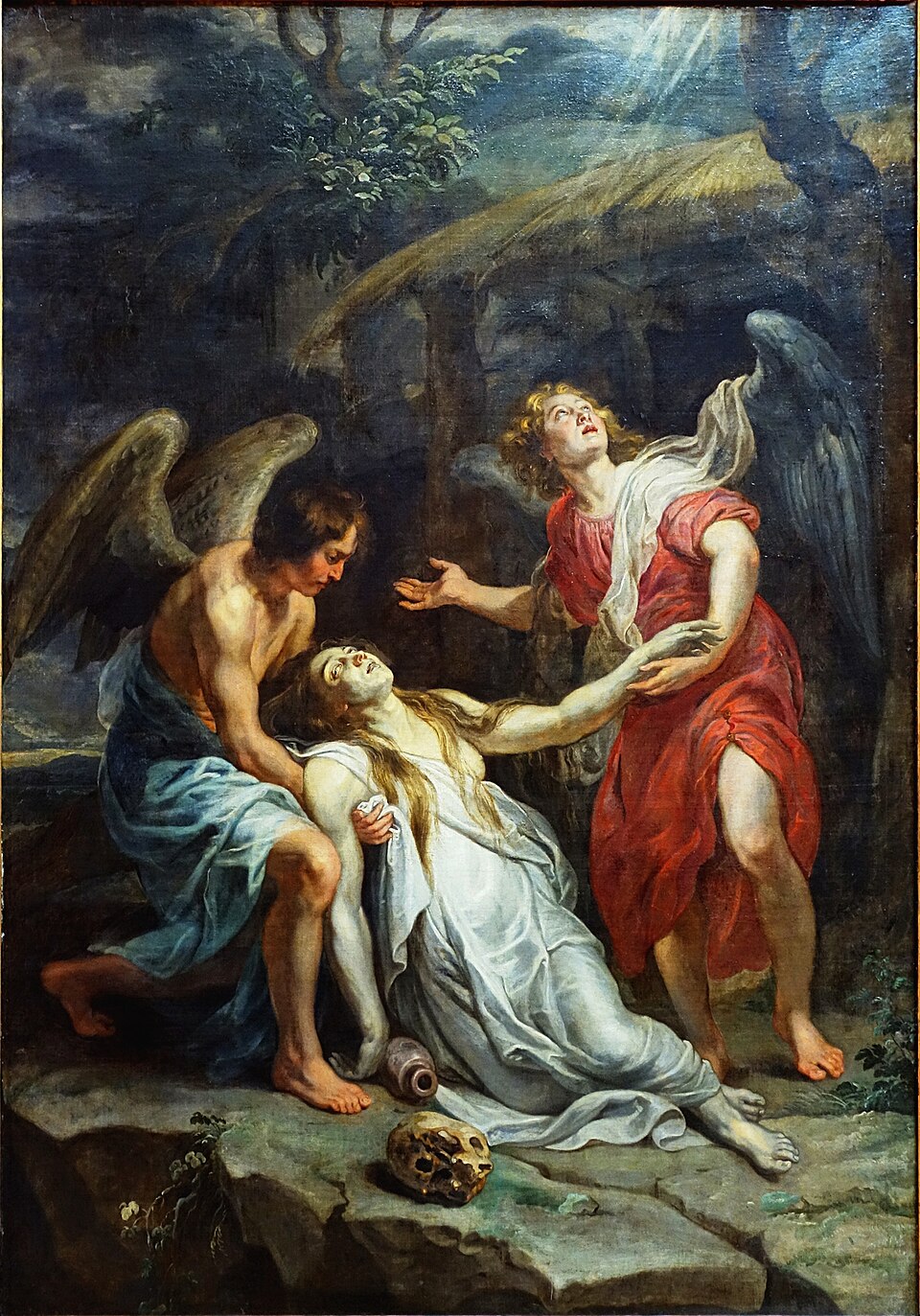
Peter Paul Rubens, St Mary Magdalene in Ecstasy, 1620. Wikimedia Commons. · PD
Santa María Magdalena en éxtasis
Ficha
La historia
Rubens pintó esta tela hacia 1619 para un convento franciscano de Gante, en plena Contrarreforma, cuando la Iglesia católica respondía a la sobriedad protestante con imágenes pensadas para conmover tanto el cuerpo como el alma. María Magdalena se había convertido para entonces en el modelo de la pecadora arrepentida, y la leyenda contaba que pasó sus últimos años como ermitaña en una gruta de la Provenza. El pintor la muestra allí, a la boca de la roca, medio desvanecida en el arrebato místico, sostenida por dos ángeles para que no caiga. En 1794 las tropas francesas se la llevaron, y desde entonces cuelga en el museo de Lille.