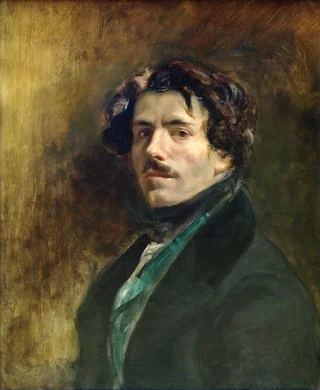
Eugène Delacroix
1798–1863 · France · Romantisme
L'histoire
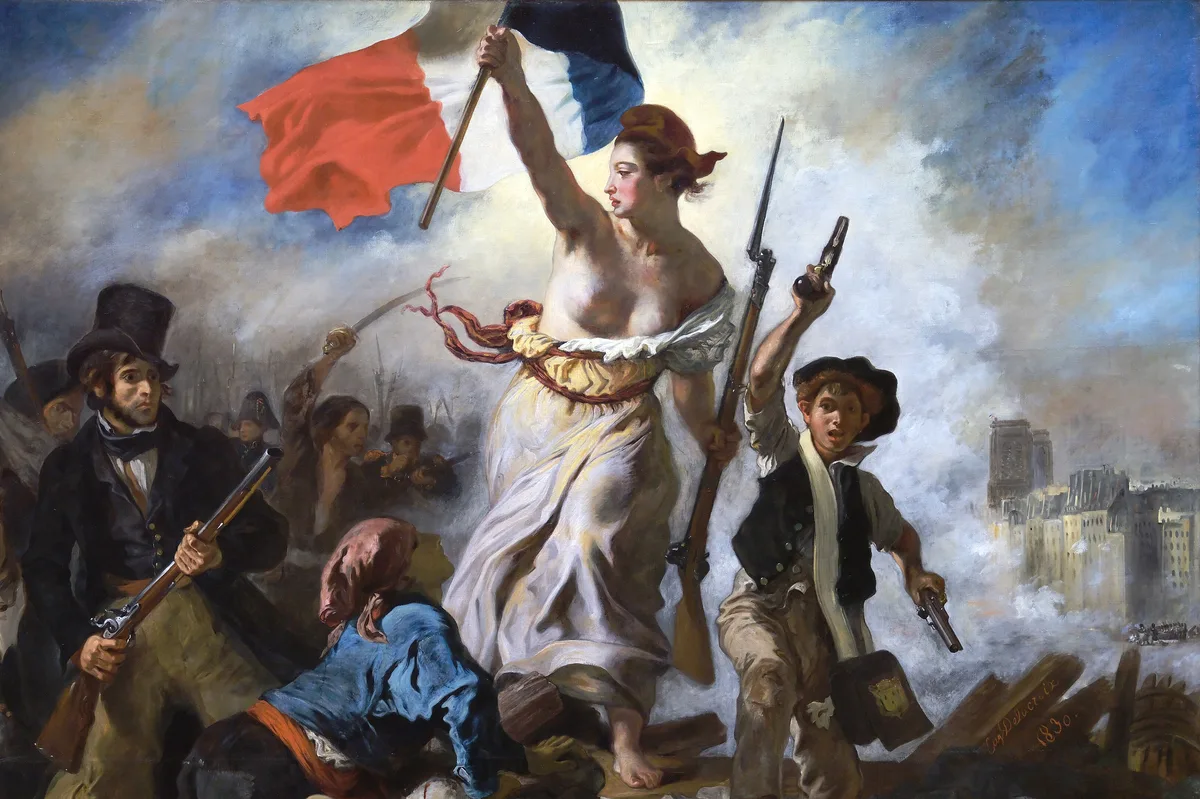
Fin juillet 1830, le peuple de Paris passe trois jours sur les barricades et chasse son roi, Charles X. Eugène Delacroix, 32 ans, observe depuis la marge et sent qu'il n'a pas fait sa part, alors il la fait au pinceau. Cet hiver-là, il peint une femme au sein découvert enjambant les morts, un drapeau tricolore dans une main, un mousquet dans l'autre, menant une foule d'ouvriers et de gamins des rues à travers la fumée des combats. La Liberté guidant le peuple transforma une semaine de véritables combats de rue en l'image à laquelle la France revient encore chaque fois qu'elle se soulève.
Delacroix menait, face à Ingres, l'autre moitié de la peinture française, celle qui faisait confiance à la couleur, au mouvement et au sentiment plutôt qu'au dessin propre. Deux ans après la Liberté, il vécut l'expérience qui embrasa sa palette. En 1832, il se rend au Maroc avec une mission diplomatique française, et la lumière, les vêtements, les chevaux et les cours d'Afrique du Nord le frappent comme une révélation. Il remplit des carnets d'aquarelles rapides et puisera dans ce voyage de six mois pendant les trente années suivantes, en tirant plus de soixante-dix tableaux.
Il était romantique aussi dans ses amitiés, proche du compositeur Frédéric Chopin, qu'il peignit au piano, et de l'écrivaine George Sand. Pendant une grande partie de sa vie, il tint un journal encore lu aujourd'hui comme l'un des textes les plus pénétrants qu'un peintre ait jamais écrits sur la peinture. Vers la fin de sa vie, il couvrit de peintures murales une chapelle de l'église Saint-Sulpice à Paris, dont un ange luttant avec Jacob parmi des arbres qu'il avait étudiés dans un bois près de la ville ; il les acheva en 1861 et mourut deux ans plus tard.
Autres articles
Œuvres
139 œuvres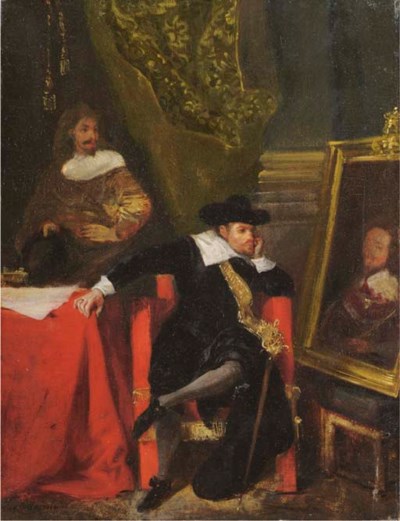 Cromwell dans le château de WindsorEugène Delacroix, 1828
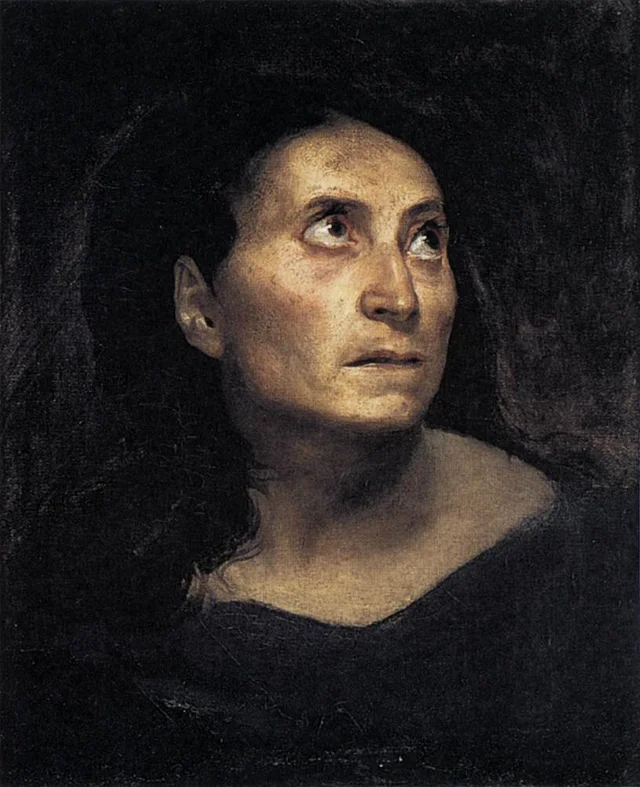 Tête de femmeEugène Delacroix, 1822
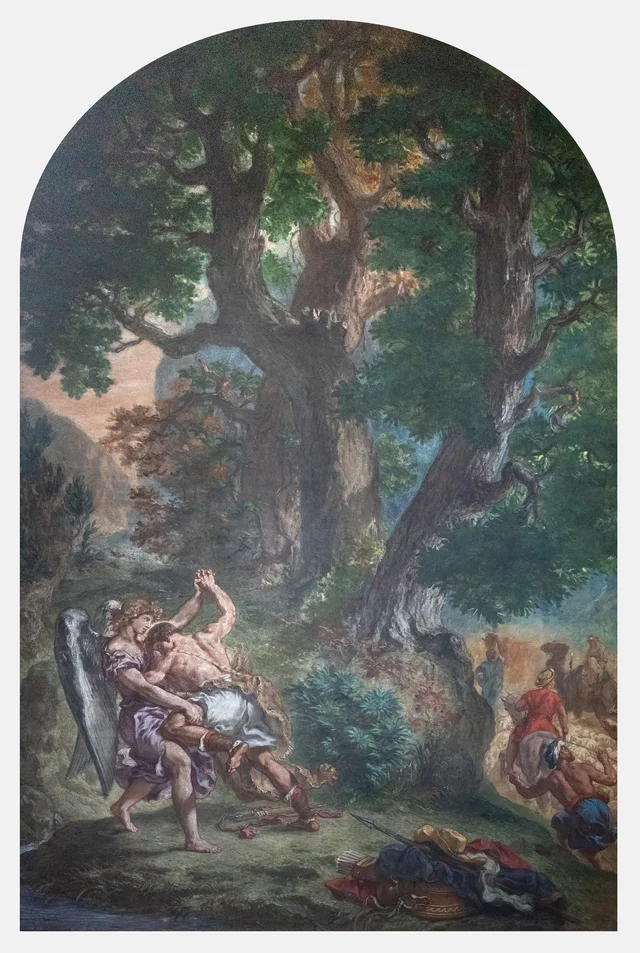 La Lutte de Jacob avec l'AngeEugène Delacroix, 1860
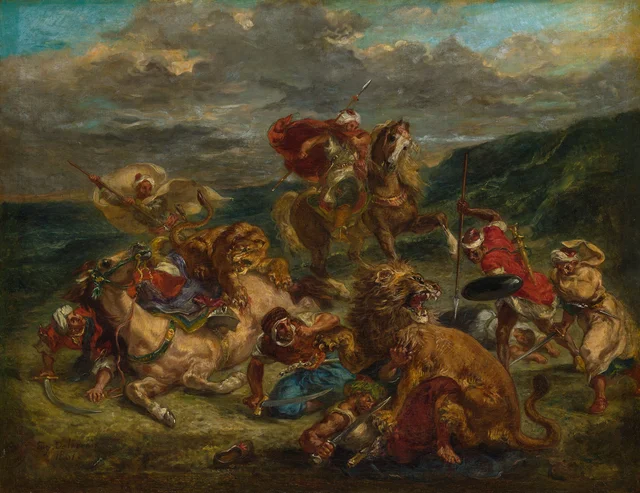 La Chasse aux lions au MarocEugène Delacroix, 1861
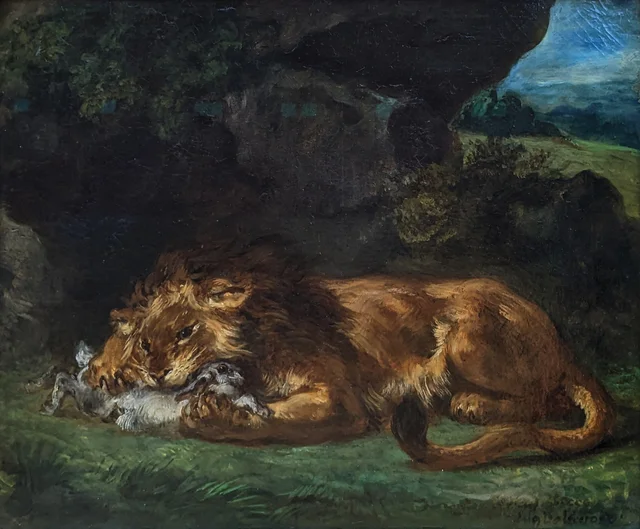 Lion dévorant un lapinEugène Delacroix, 1853
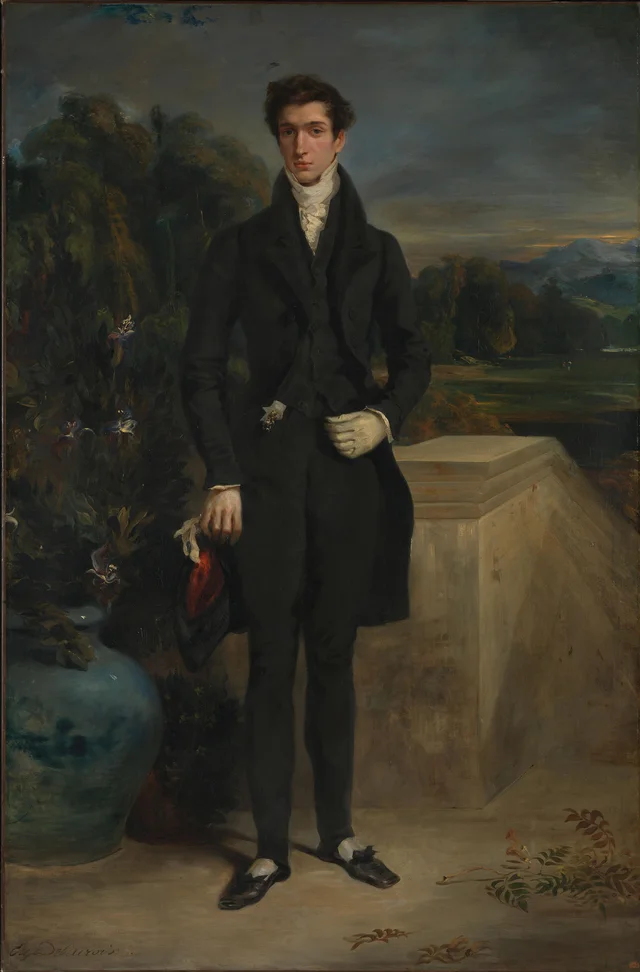 Portrait de Louis-Auguste SchwiterEugène Delacroix, 1827
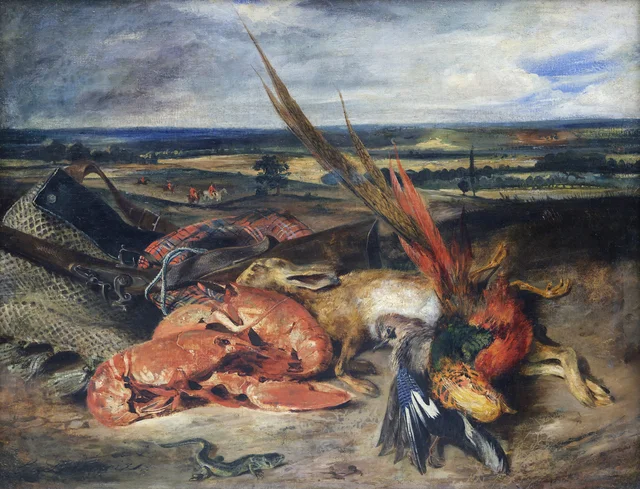 Nature morte au homard et trophées de chasse et de pêcheEugène Delacroix, 1827
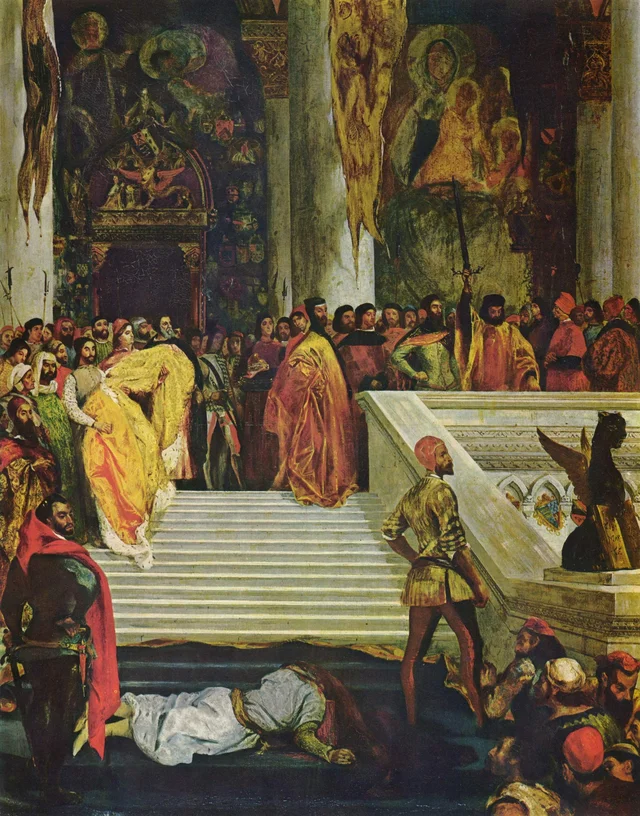 L'Exécution du doge Marino FalieroEugène Delacroix, 1826
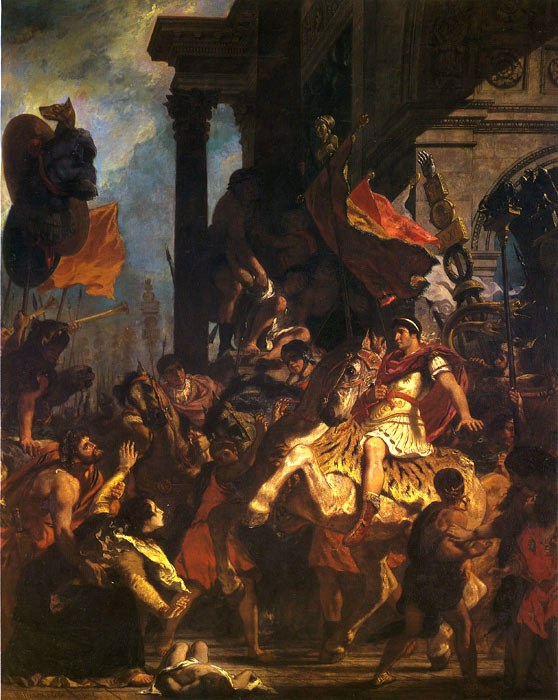 La Justice de TrajanEugène Delacroix, 1840
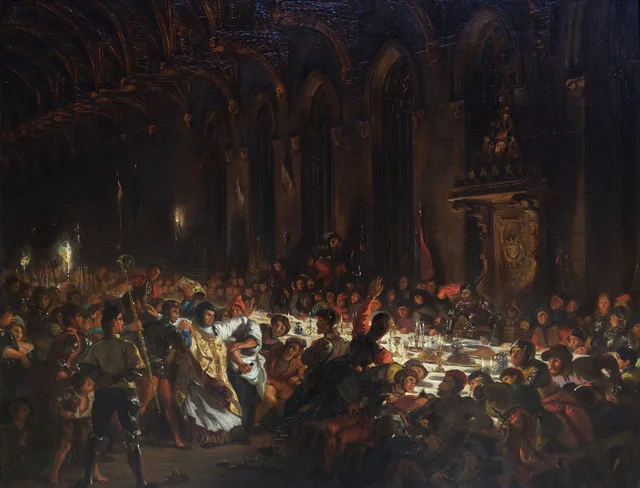 L'Assassinat de l'évêque de LiègeEugène Delacroix, 1828
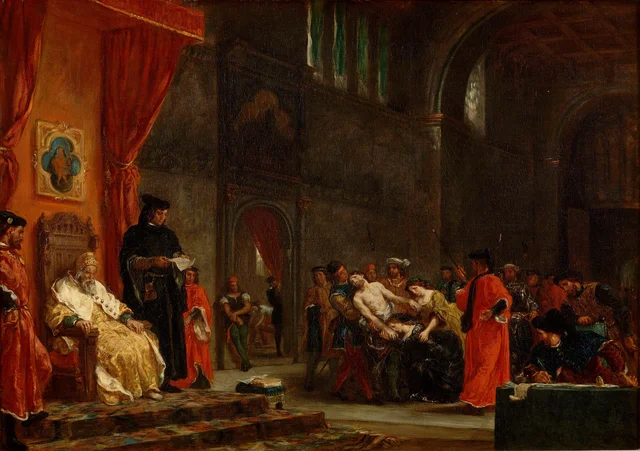 Les Deux FoscariEugène Delacroix, 1855
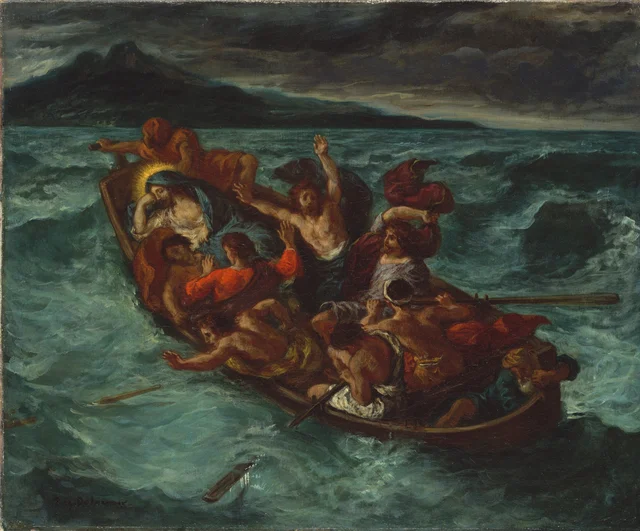 Le Christ endormi pendant la tempêteEugène Delacroix, 1853
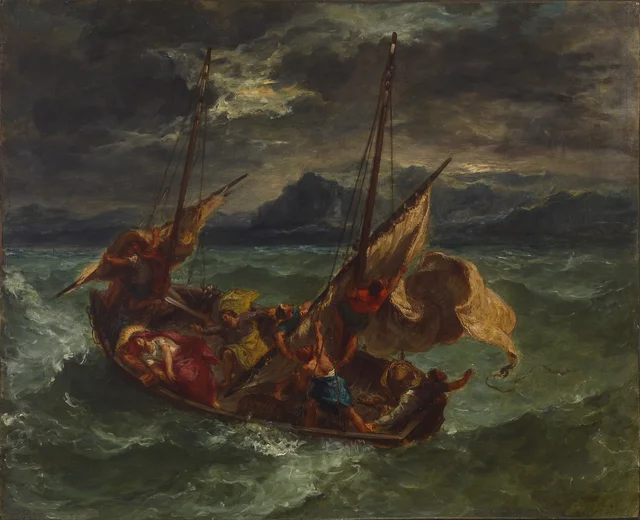 Le Christ sur la mer de GaliléeEugène Delacroix, 1854
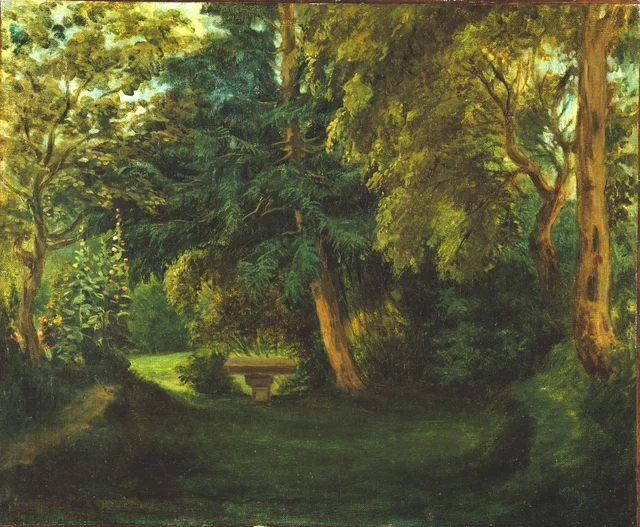 Le Jardin de George Sand à NohantEugène Delacroix, 1842
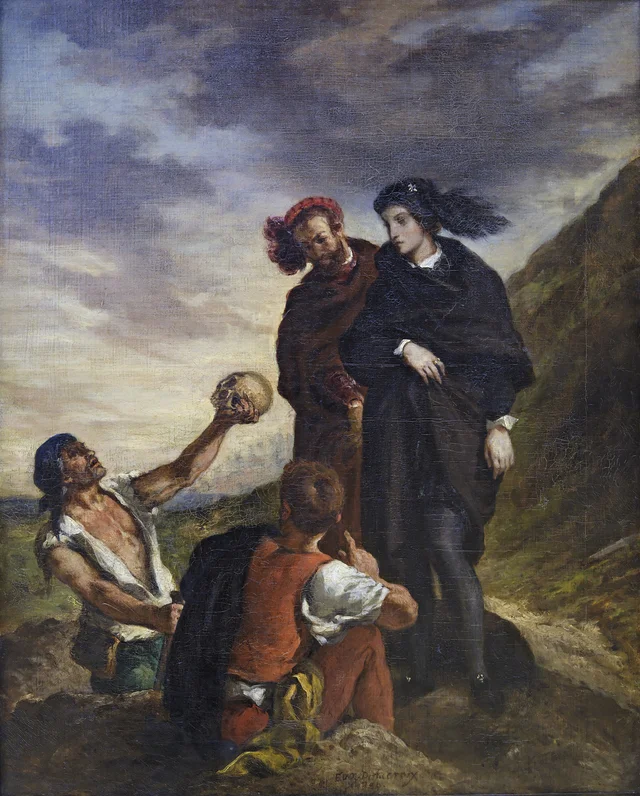 Hamlet et Horatio au cimetièreEugène Delacroix, 1839
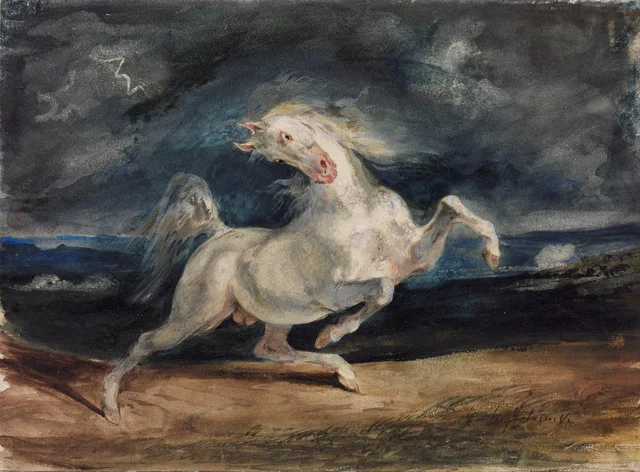 Cheval effrayé par la foudreEugène Delacroix, 1824
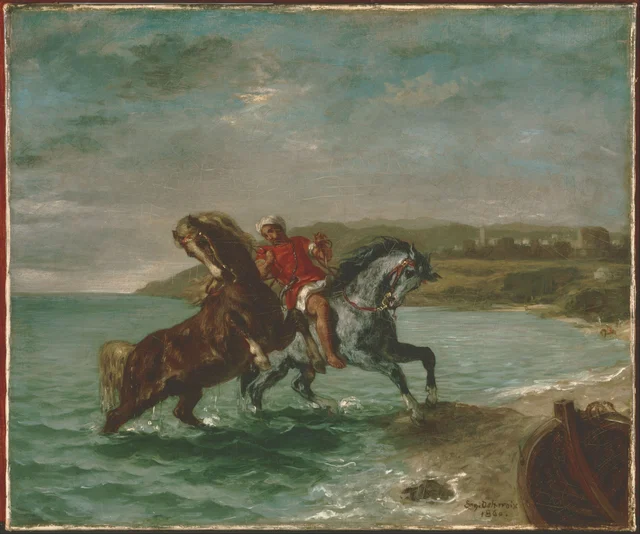 Chevaux sortant de la merEugène Delacroix, 1860
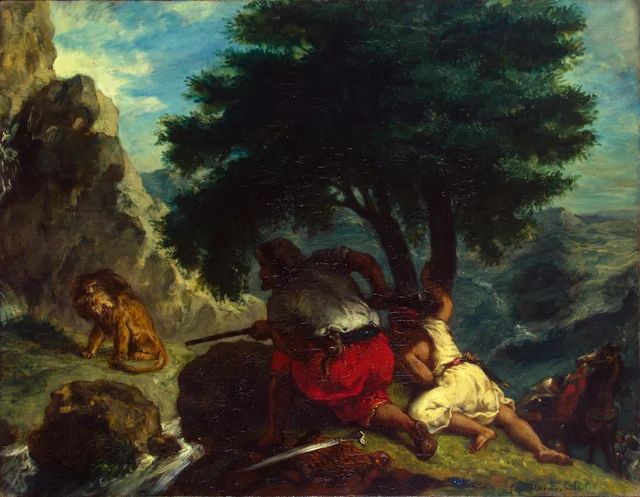 Chasse aux lions au MarocEugène Delacroix, 1854
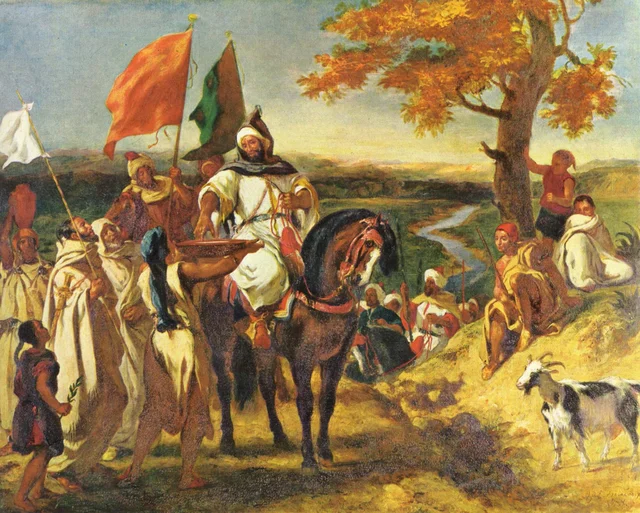 Le Kaïd, chef marocainEugène Delacroix, 1837
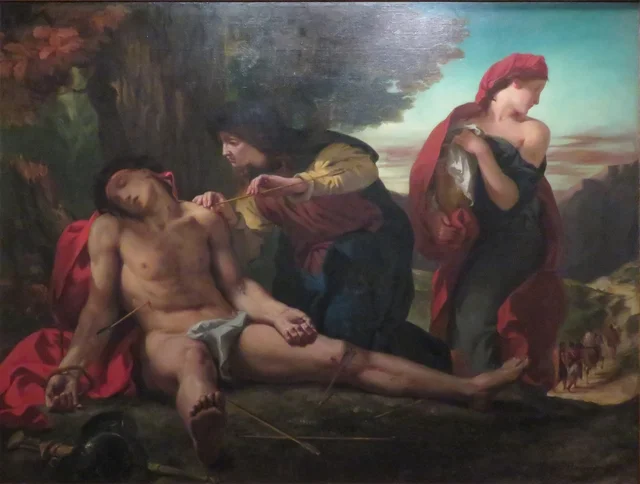 Saint Sébastien secouru par les Saintes FemmesEugène Delacroix, 1836
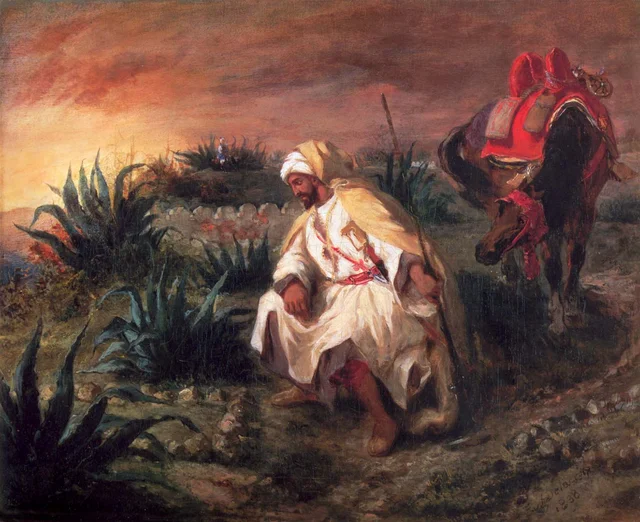 Les Arabes près de la tombeEugène Delacroix, 1838
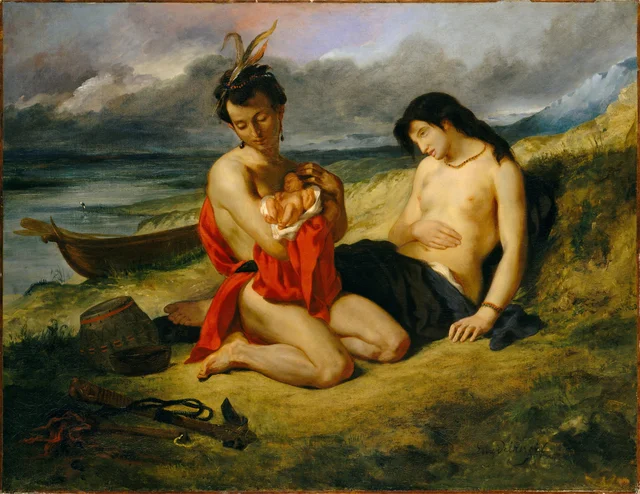 Les NatchezEugène Delacroix, 1835
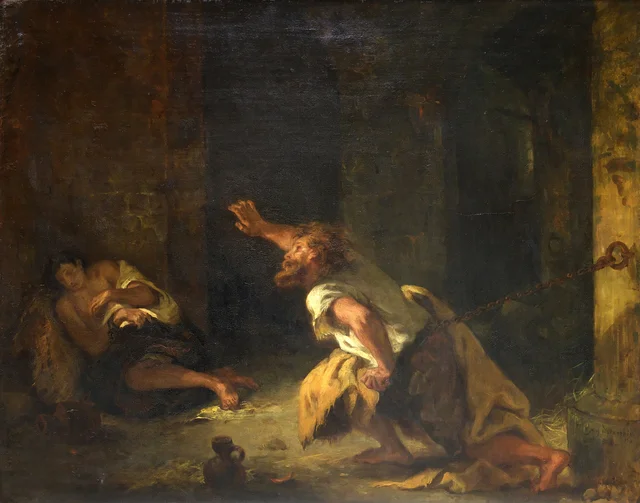 Le Prisonnier de ChillonEugène Delacroix, 1834
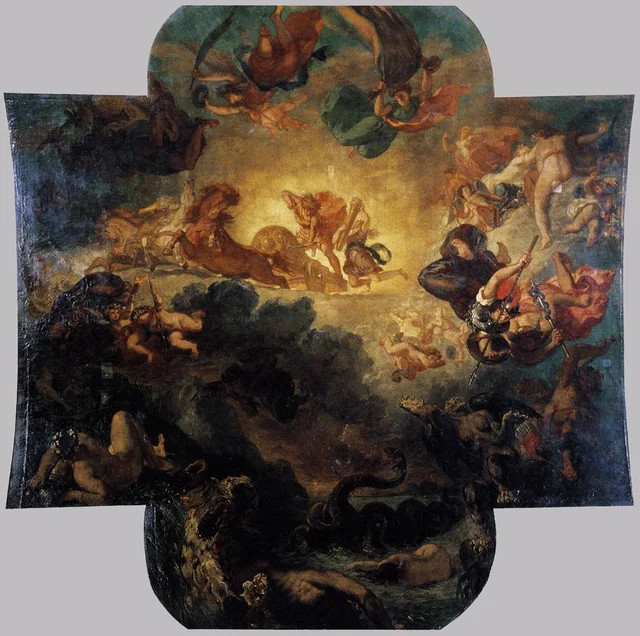 Apollon terrassant PythonEugène Delacroix, 1850
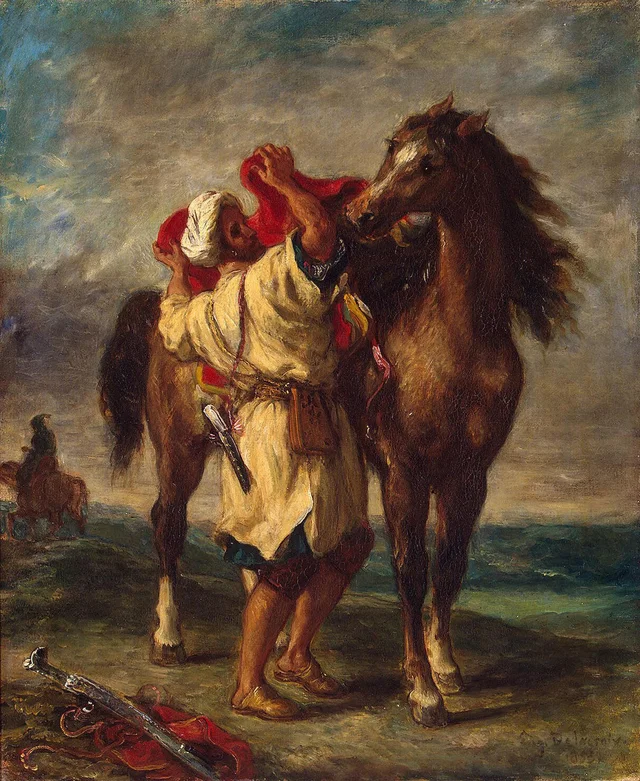 Arabe sellant son chevalEugène Delacroix, 1855