Grant Wood
1891–1942 · États-Unis · Régionalisme
L'histoire
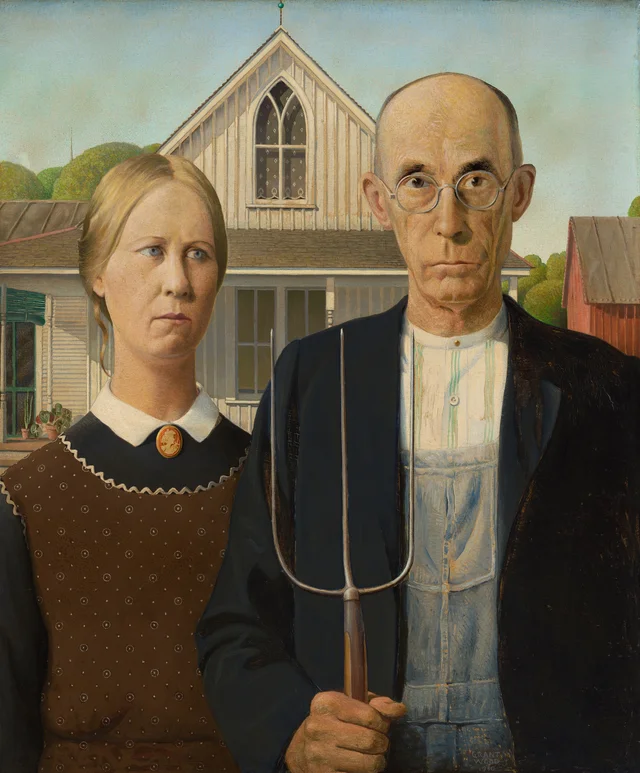
À l'été 1930, Grant Wood traversait en voiture la petite ville d'Eldon, dans l'Iowa, quand il remarqua une simple ferme blanche dotée d'une fenêtre pointue d'une grandeur absurde, bâtie dans un style dit Carpenter Gothic. Il décida de peindre la maison et le genre de gens qu'il imaginait y vivre.
Pour ces deux figures sévères, il fit appel à des proches. La femme était sa propre sœur, Nan, et l'homme austère à la fourche était son dentiste, le docteur Byron McKeeby de Cedar Rapids. Il les fit poser séparément et allongea légèrement leurs visages pour répondre à la haute fenêtre derrière eux. Le tableau, American Gothic, remporta un prix à l'Art Institute de Chicago cette année-là et devint l'une des images les plus reconnues de l'art américain, parodiée sans fin depuis.
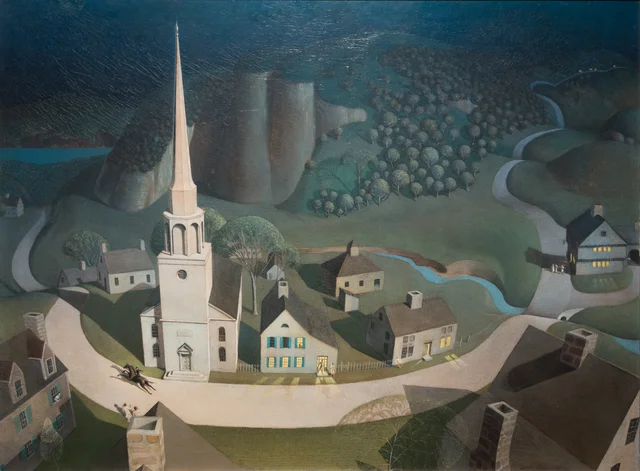
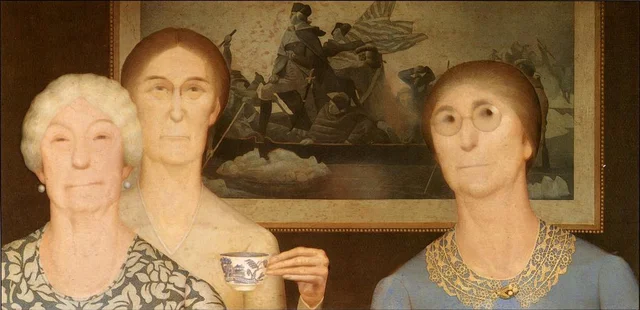
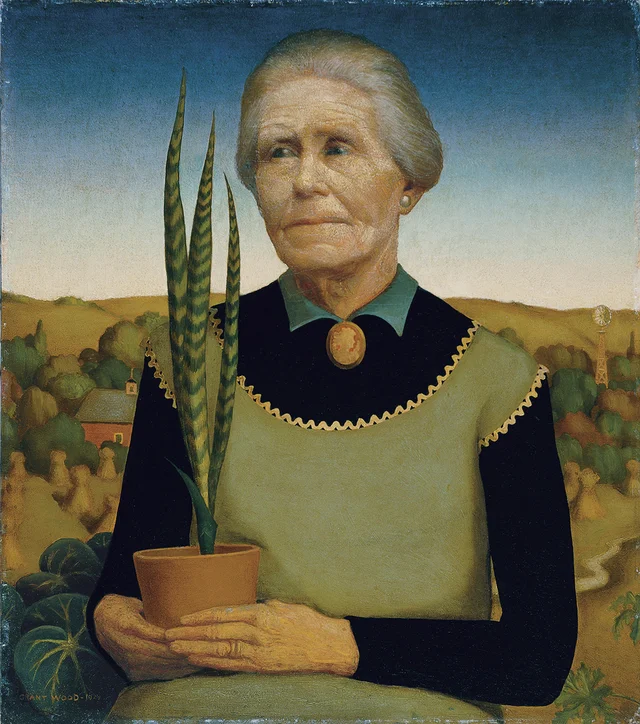
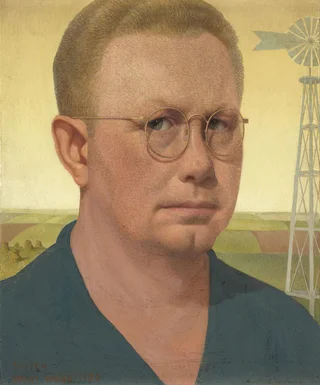
Wood était un chef de file du régionalisme, un mouvement des années 1930 qui se détournait de l'abstraction européenne pour de simples scènes du Midwest américain, ses fermes et ses champs vallonnés. Il passa presque toute sa vie dans l'Iowa et enseigna à l'université de l'État. Sa sœur Nan vécut jusqu'en 1990 et passa des décennies à rappeler que Wood avait voulu ces deux figures en père et fille, un lien que les spectateurs prenaient souvent pour autre chose.