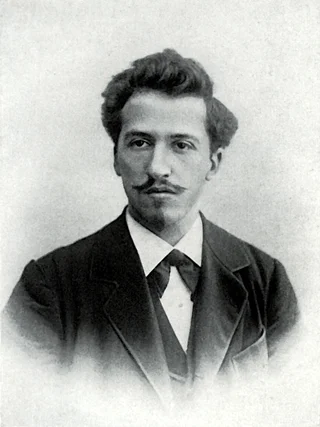
Piet Mondrian
1872–1944 · Royaume des Pays-Bas · De Stijl, Post-impressionnisme
L'histoire
En 1912, Mondrian quitta la Hollande pour Paris, alors capitale de l'art nouveau, et se retrouva d'emblée en plein cubisme. Picasso et Braque décomposaient les objets en plans plats, et Mondrian reprit leur grille de lignes droites, mais la poussa plus loin qu'aucun des deux ne l'aurait voulu. Il continua d'aplatir ses arbres et ses façades d'église jusqu'à ce que le sujet disparaisse entièrement, ne laissant que des horizontales, des verticales et des aplats de couleur.
Au début des années 1920, il avait réduit sa palette à trois couleurs, le rouge, le jaune et le bleu, plus le noir, le blanc et le gris, et à deux directions, la verticale et l'horizontale. Il appela cela le néoplasticisme et bâtit autour toute une philosophie avec le groupe néerlandais De Stijl, persuadé que ces éléments dépouillés pouvaient porter une harmonie universelle que les images de choses réelles ne pouvaient atteindre. Pendant vingt ans, il ne peignit presque plus que cela, ajustant le poids d'une ligne noire ou la taille d'un carré rouge sur un fond blanc.
Puis la guerre le chassa. Il passa deux ans à Londres et, en 1940, alors que les bombardements se rapprochaient, embarqua pour New York à l'âge de 67 ans. La ville défit sa sévérité : il se prit de passion pour le jazz boogie-woogie et le rythme des feux de circulation de Manhattan, et remplaça sa lourde grille noire par des chaînes de petits carrés colorés courant sur la toile. Il retravaillait encore ce style tardif, sur une toile qu'il appelait Victory Boogie Woogie, quand il mourut d'une pneumonie au début de 1944.
Autres articles
Œuvres
112 œuvres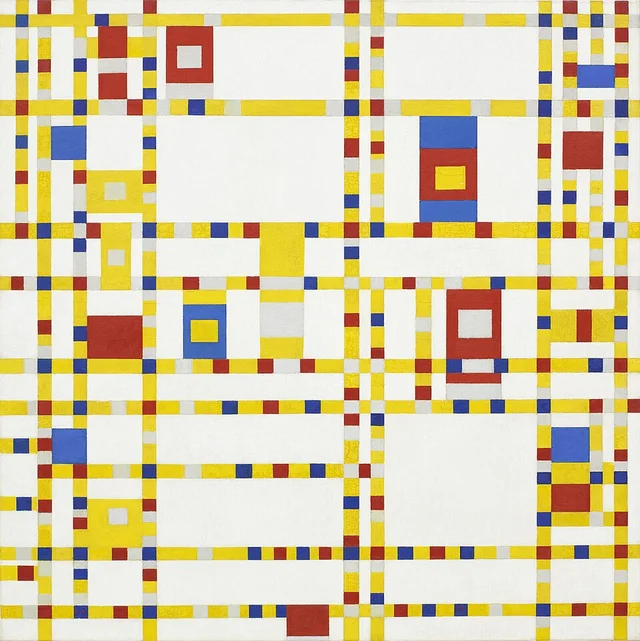 Broadway Boogie-WoogiePiet Mondrian, 1942
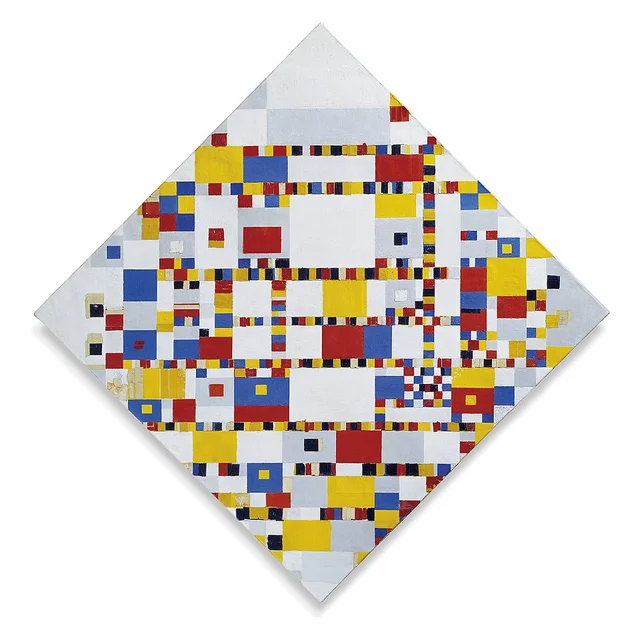 Victory Boogie WoogiePiet Mondrian, 1942
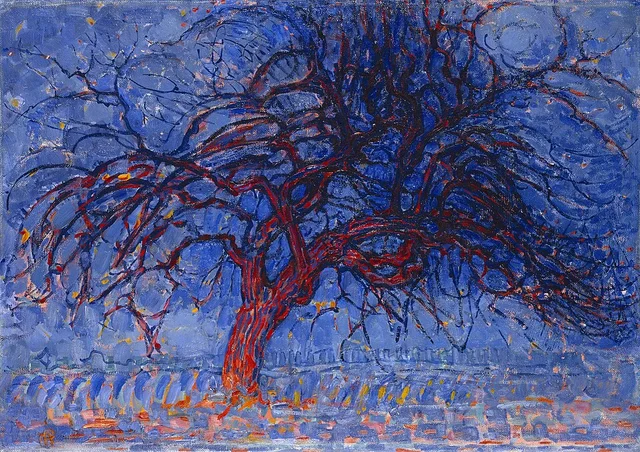 L'Arbre rougePiet Mondrian, 1909
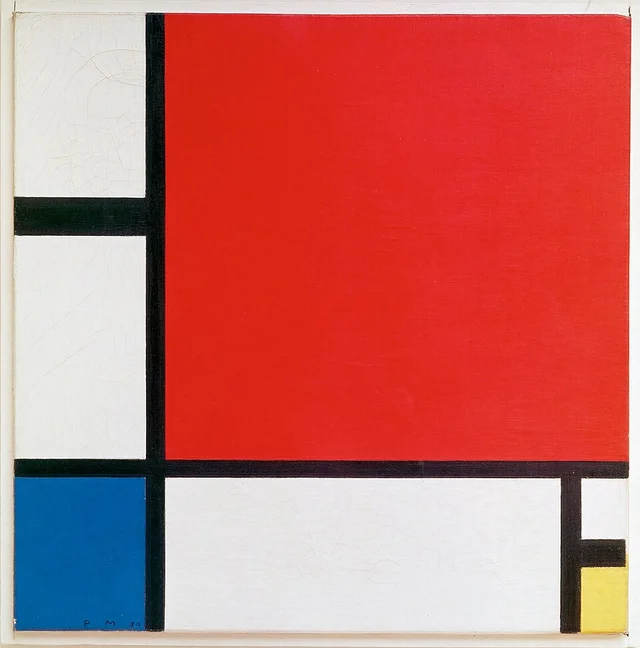 Composition II en rouge, bleu et jaunePiet Mondrian, 1930
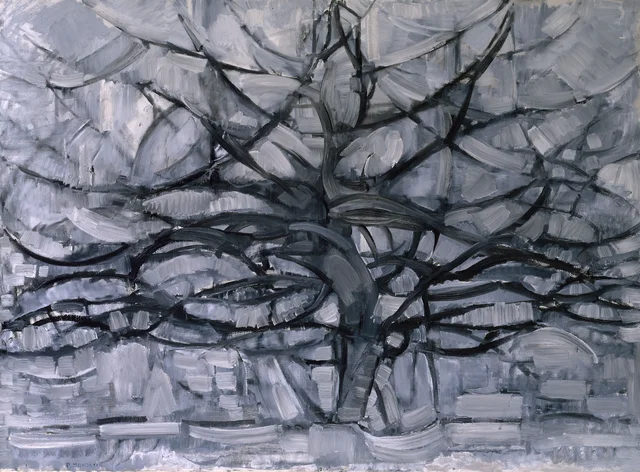 L'Arbre grisPiet Mondrian, 1911
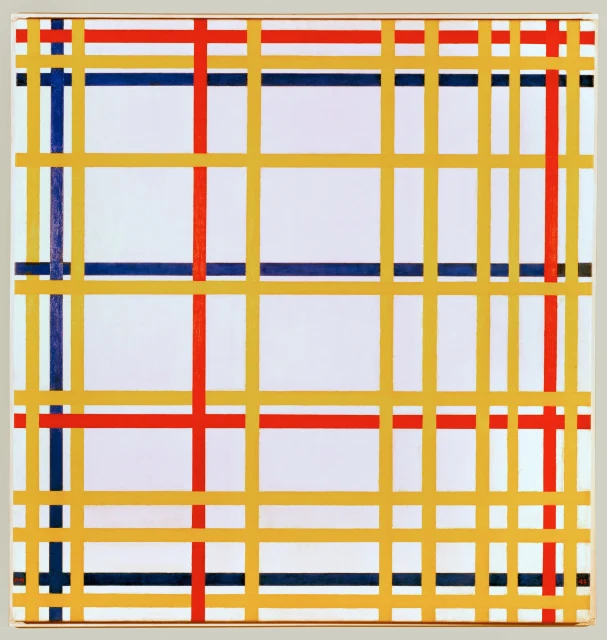 New York CityPiet Mondrian, 1942
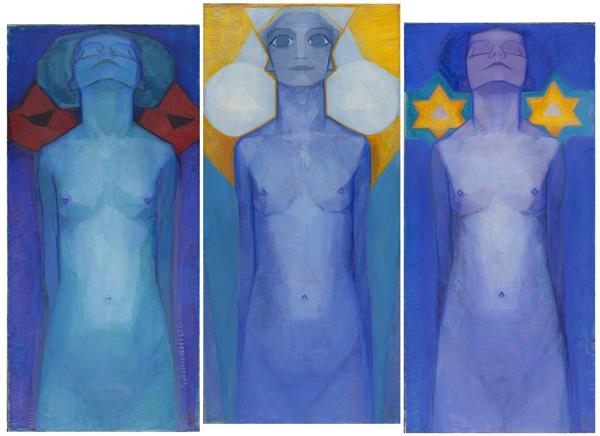 ÉvolutionPiet Mondrian, 1911
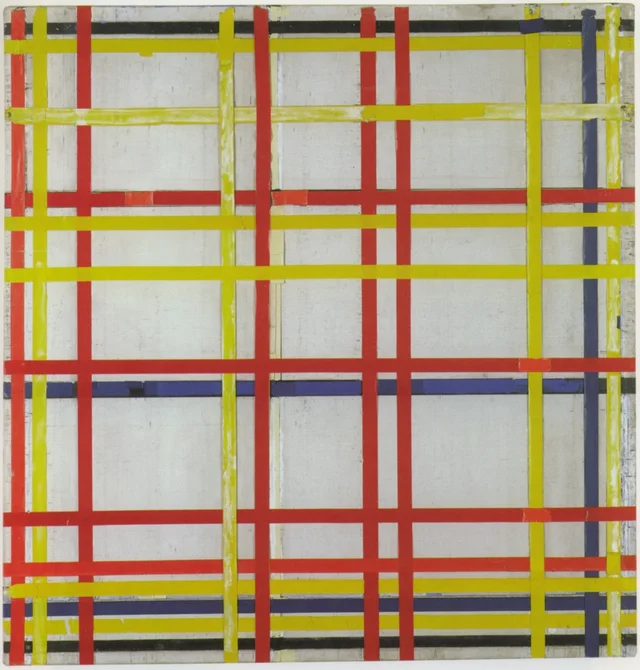 New York City IPiet Mondrian, 1941
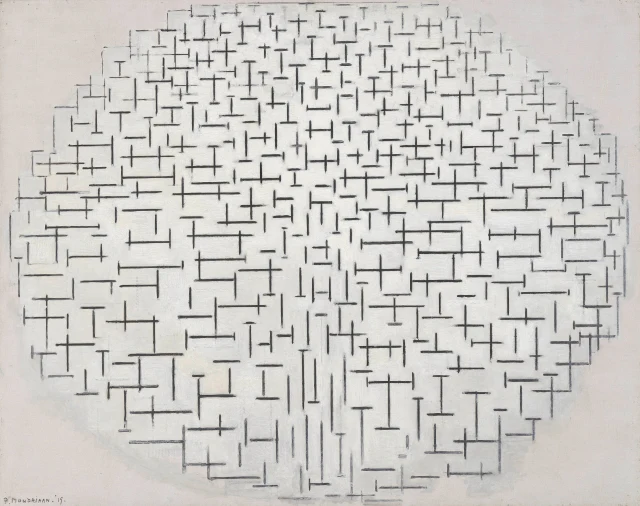 Composition 10 en noir et blancPiet Mondrian, 1915
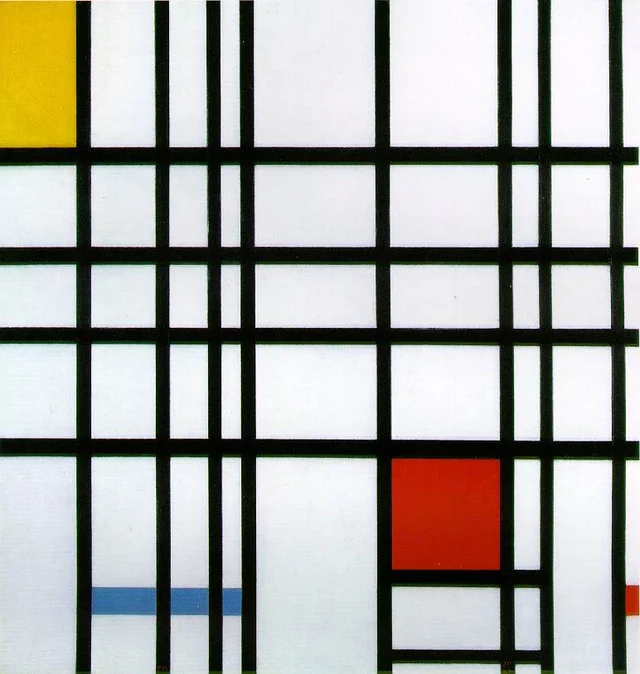 Composition avec rouge, jaune et bleuPiet Mondrian, 1937
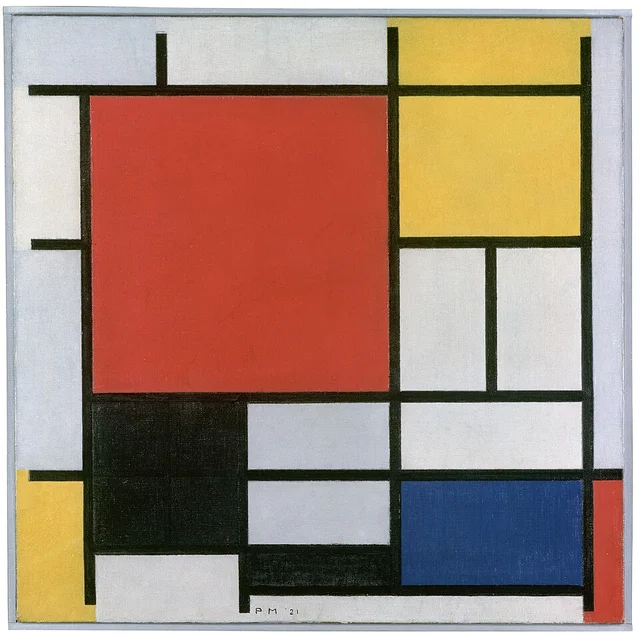 Composition avec grand plan rouge, jaune, noir, gris et bleuPiet Mondrian, 1921
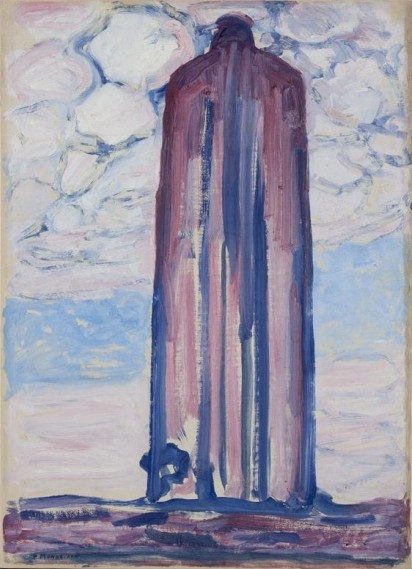 Le Phare de WestkapellePiet Mondrian, 1908
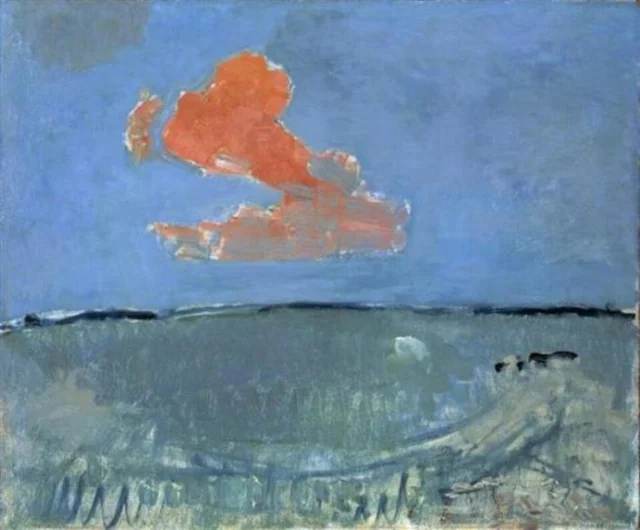 Le Nuage rougePiet Mondrian, 1907
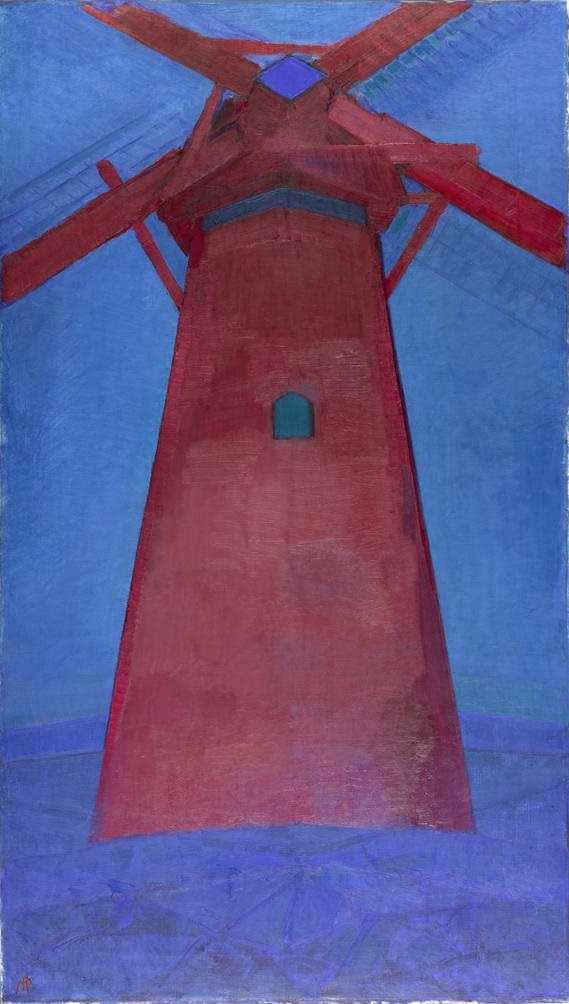 Le Moulin rougePiet Mondrian, 1910
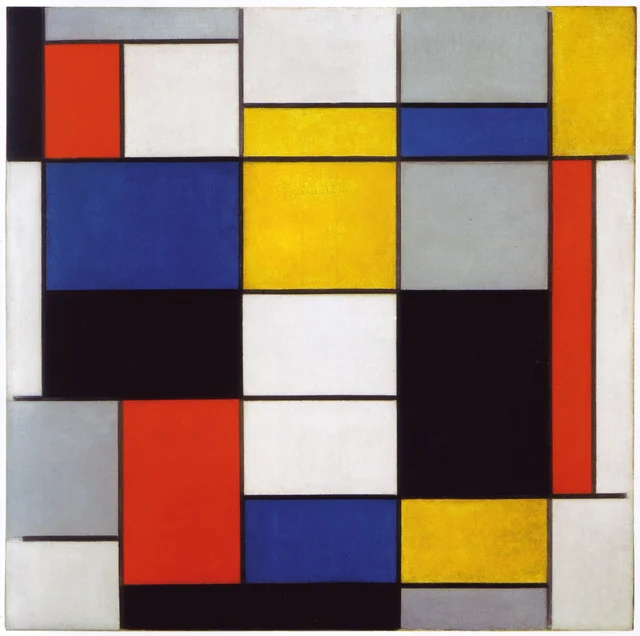 Composition A : composition avec noir, rouge, gris, jaune et bleuPiet Mondrian, 1920
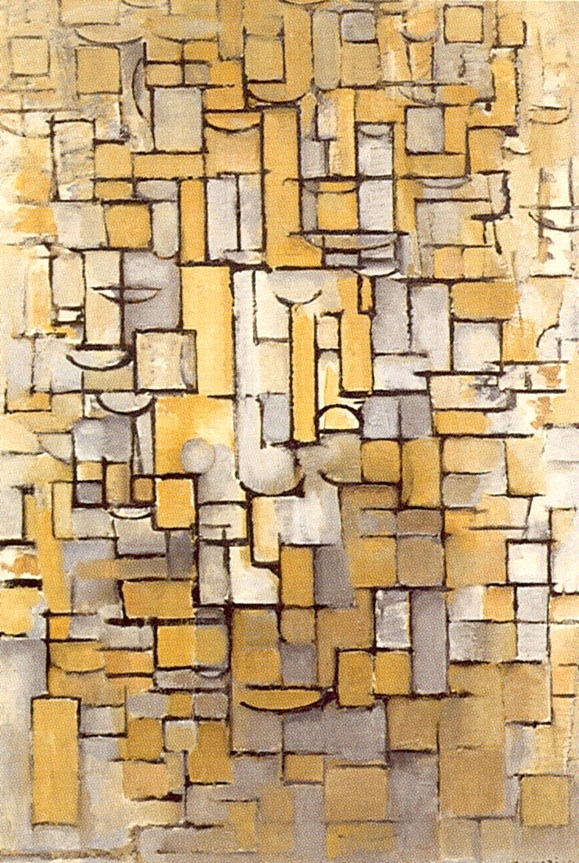 Composition XIVPiet Mondrian, 1913
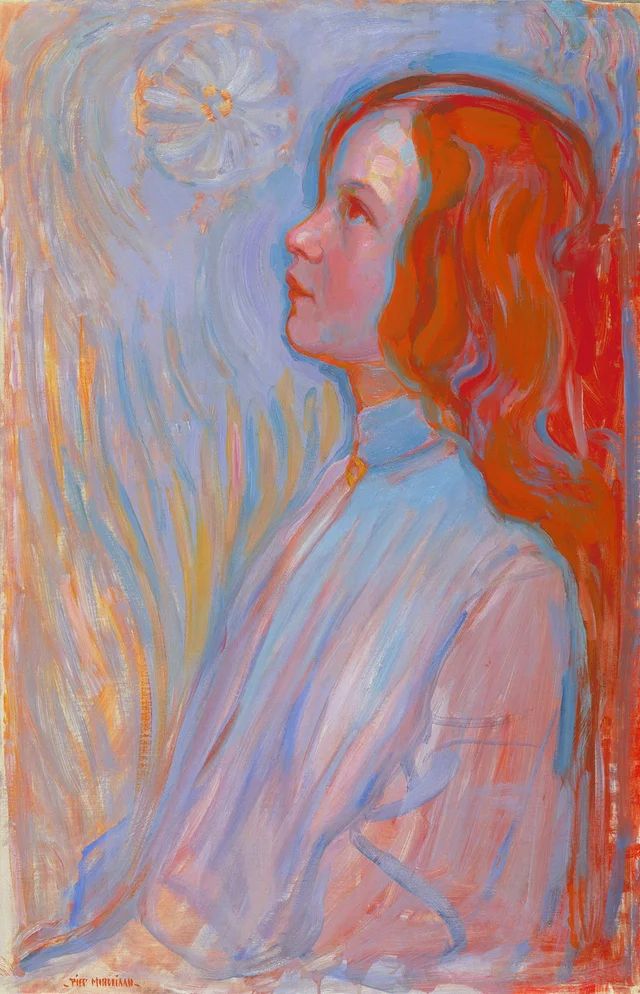 DévotionPiet Mondrian, 1908
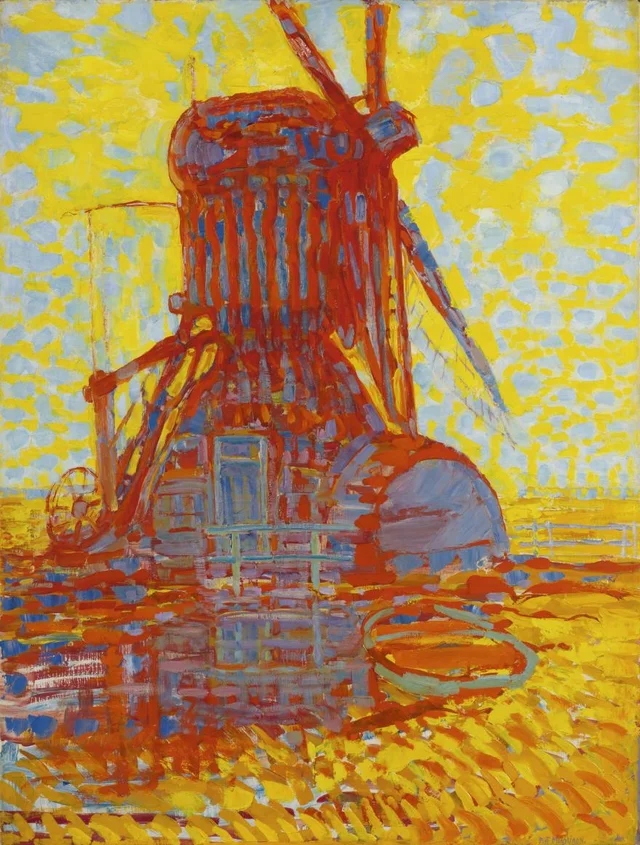 Moulin au soleilPiet Mondrian, 1908
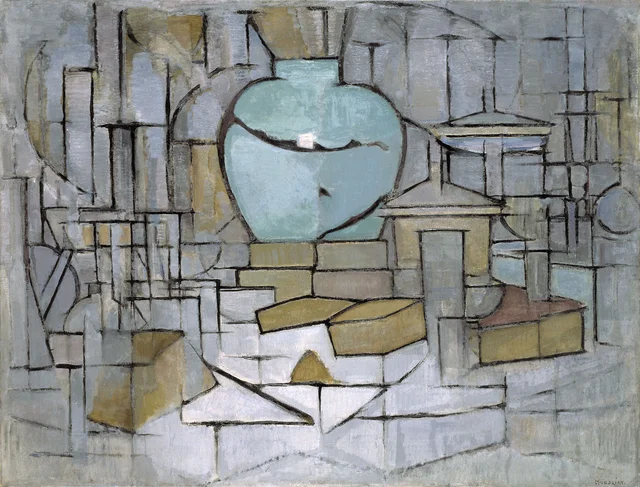 Nature morte au pot à gingembre 2Piet Mondrian, 1912
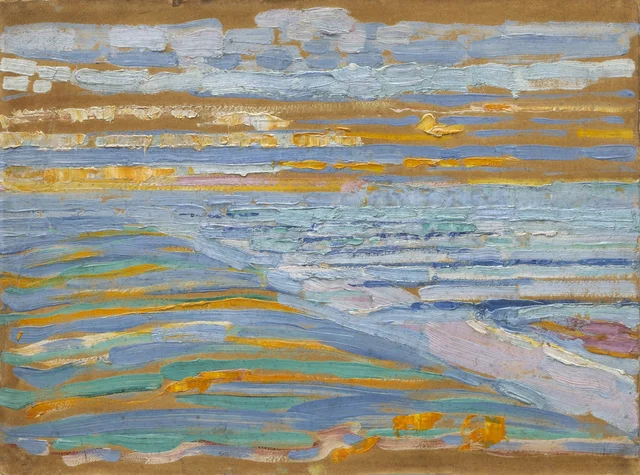 Vue depuis les dunes avec plage et jetées, DomburgPiet Mondrian, 1909
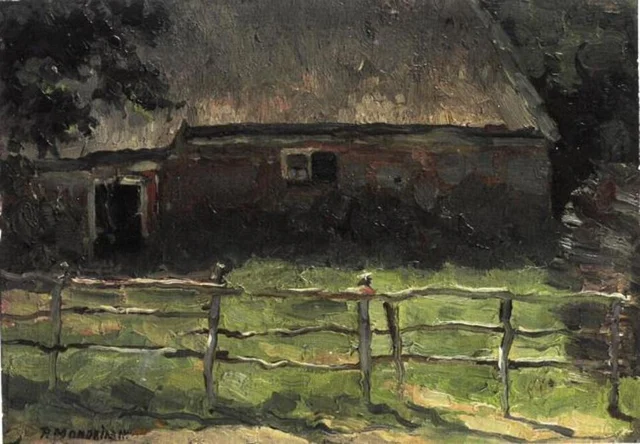 Ferme derrière une clôturePiet Mondrian, 1904
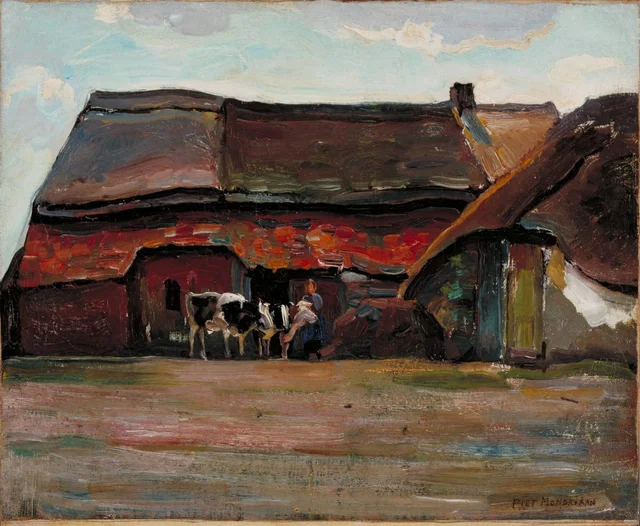 Cour de ferme brabançonnePiet Mondrian, 1904
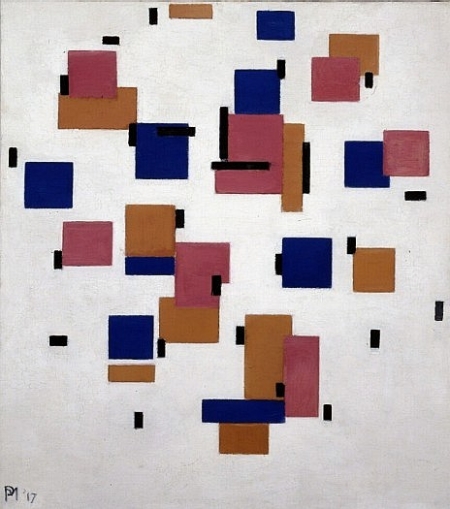 Composition en couleur BPiet Mondrian, 1917
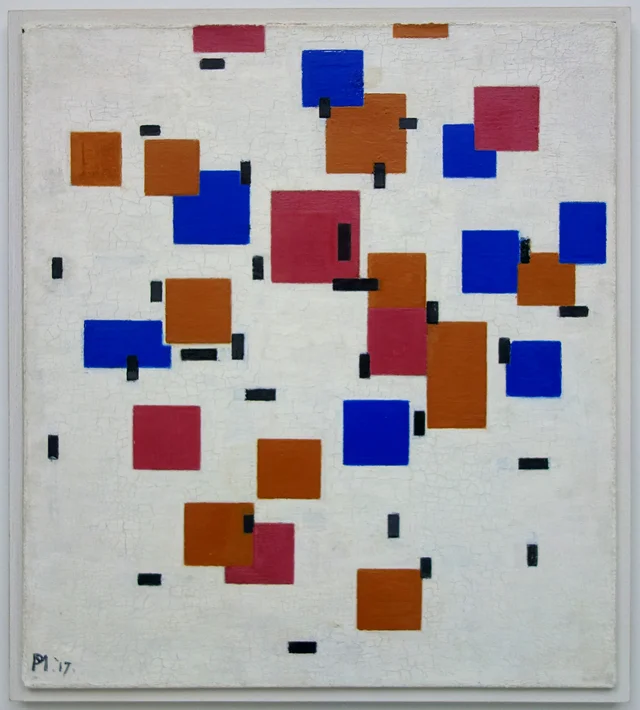 Composition en couleur APiet Mondrian, 1917
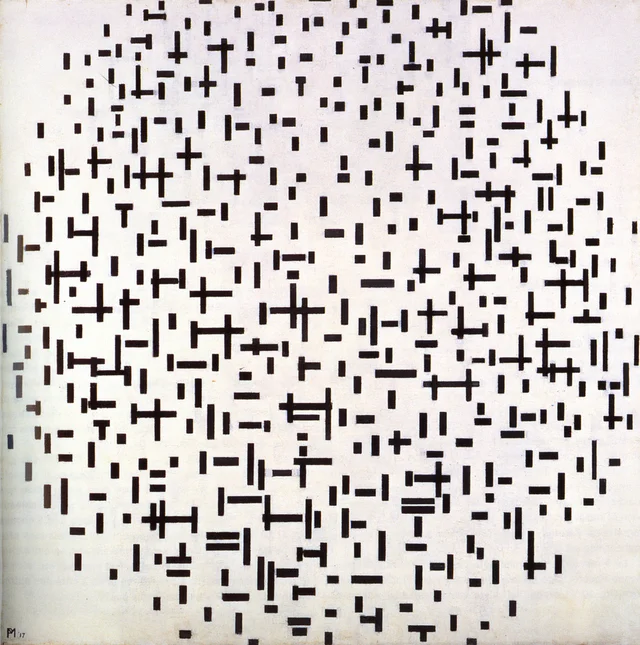 Composition en ligne, deuxième étatPiet Mondrian, 1916