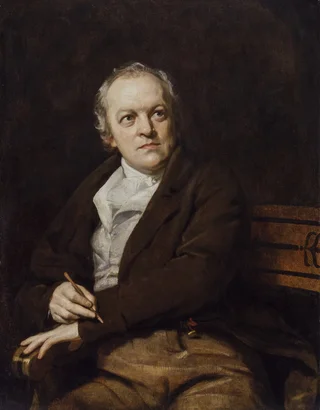
William Blake
1757–1827 · Royaume-Uni de Grande-Bretagne et d'Irlande · Romantisme
L'histoire
On se souvient d'abord de William Blake comme d'un poète, l'homme qui écrivit Le Tigre et les vers devenus l'hymne Jérusalem. Mais il s'est formé comme graveur et gagnait sa vie de ce métier, reportant sur cuivre les compositions d'autrui pour le compte des libraires, et c'est pour cela qu'il figure ici parmi les peintres. Le dessin et l'impression furent son art bien avant que ses vers ne trouvent le moindre lecteur.
Vers 1788, à Londres, il met au point une méthode qu'il appelle l'impression enluminée. Au lieu de la répartition habituelle du travail, où l'un écrivait, l'autre dessinait, et un graveur reportait le tout sur la plaque, Blake faisait tout lui-même. Il peignait directement ses mots et ses images sur le cuivre à l'aide d'un vernis résistant à l'acide, mordait la plaque pour que le dessin ressorte en relief, l'imprimait, puis coloriait chaque page à la main avec sa femme Catherine. Poème et image sortaient de la même plaque, inséparables, comme il pensait qu'ils devaient l'être.
Presque personne n'achetait ses livres. Il vendait ses ouvrages enluminés en tout petit nombre à une poignée de fidèles mécènes, passait aux yeux de beaucoup pour un fou, et consacra ses dernières années à de grandes aquarelles tirées de Dante pour un unique ami bienveillant, le peintre John Linnell. Il mourut à Londres en août 1827, et les personnes à son chevet racontèrent qu'il passa ses dernières heures à chanter, à pleine voix, des hymnes et des chants de son cru.
Œuvres
9 œuvres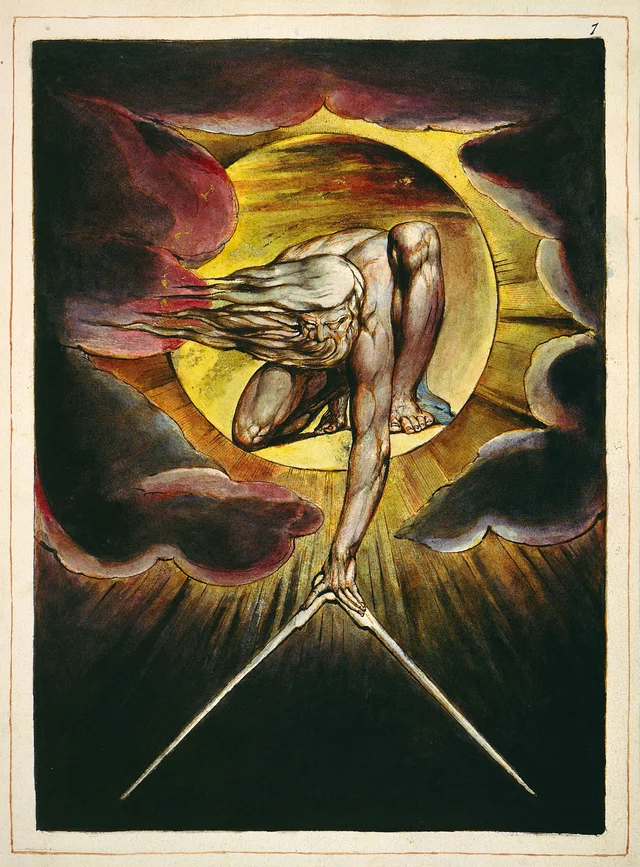 L'Ancien des joursWilliam Blake, 1794
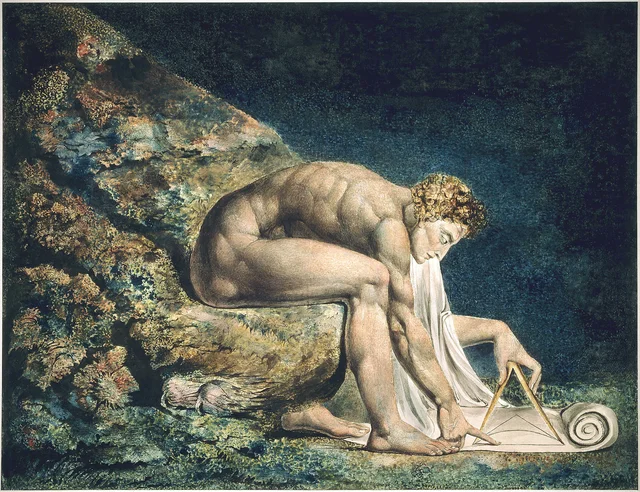 NewtonWilliam Blake, 1795
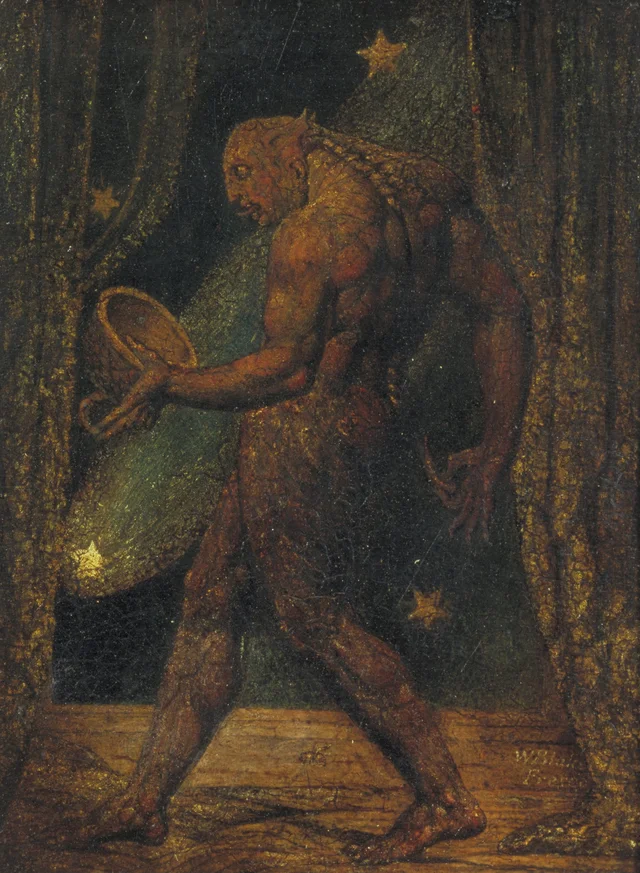 Le Fantôme d'une puceWilliam Blake, 1819
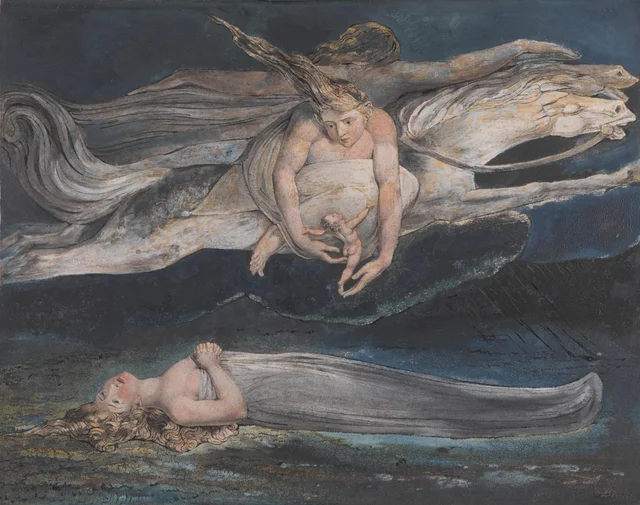 La PitiéWilliam Blake, 1795
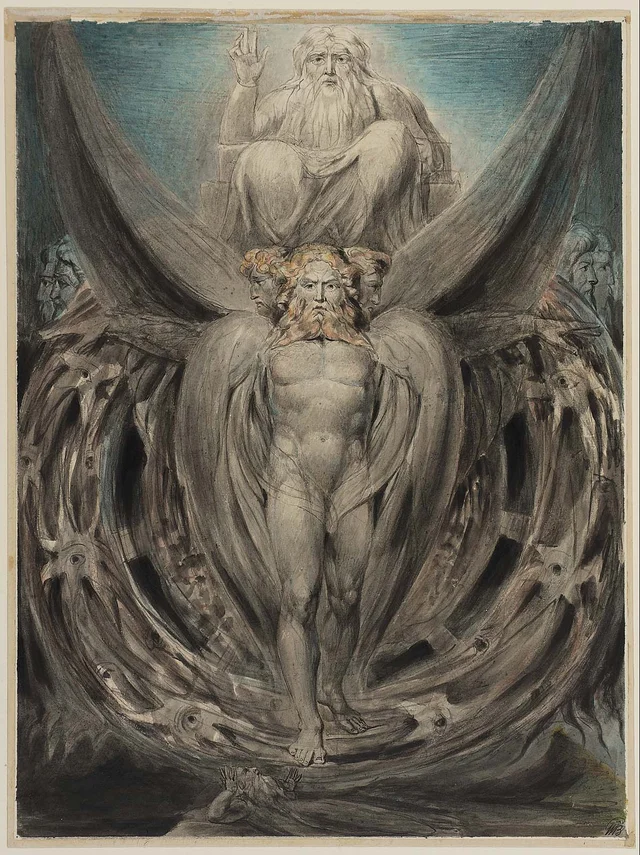 Les Roues d'ÉzéchielWilliam Blake, 1804
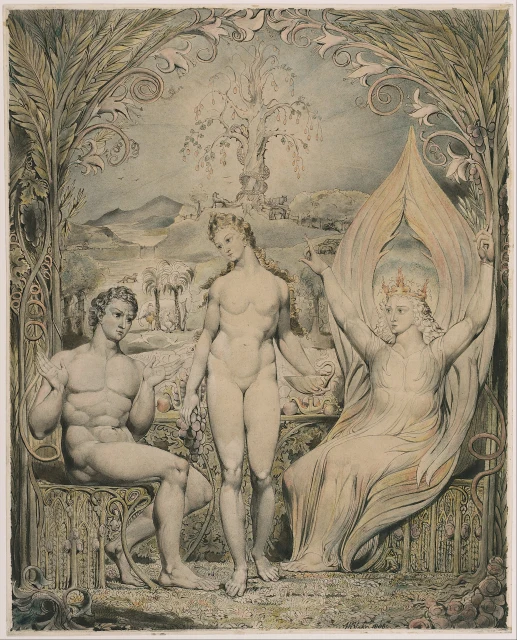 L'archange Raphaël avec Adam et Ève (illustration du « Paradis perdu » de Milton)William Blake, 1808
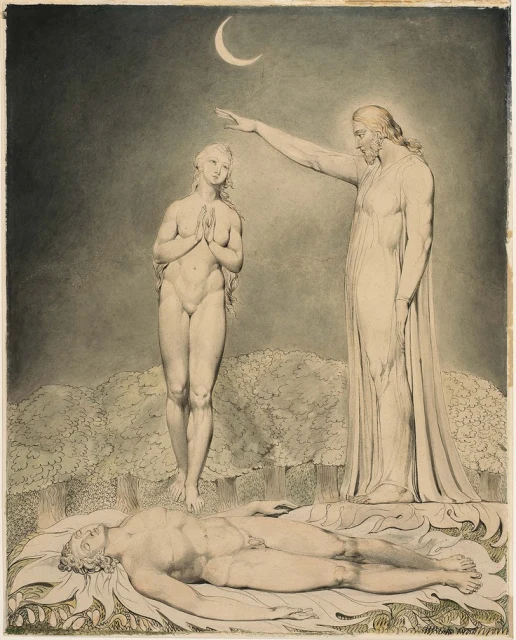 La Création d'Ève (illustration du « Paradis perdu » de Milton)William Blake, 1808
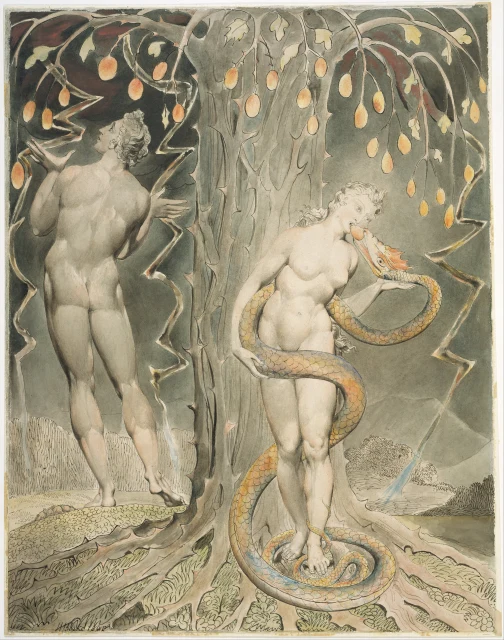 La Tentation et la Chute d'Ève (illustration du « Paradis perdu » de Milton)William Blake, 1808