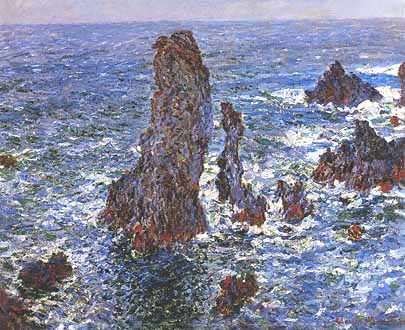
Claude Monet, Belle-Île Rocks, 1886. Wikimedia Commons. · PD
Rochers à Belle-Île
Détails
L'histoire
À l'automne 1886, Monet quitte ses jardins lumineux et part seul pour Belle-Île, sur la côte atlantique de Bretagne, ce littoral que l'on appelait la côte sauvage. Il comptait rester dix jours et resta dix semaines. La mer l'a déconcerté. Habitué aux reflets doux de la Seine, il découvre une houle sombre et brutale qui se brise contre les rochers, et pour la peindre il doit lester son chevalet et s'abriter du vent et de la pluie. De ces semaines sont nées une quarantaine de toiles. Ici, les aiguilles de pierre de Port-Coton se dressent au-dessus d'une eau verte et épaisse, bien loin du calme de ses futurs nymphéas.