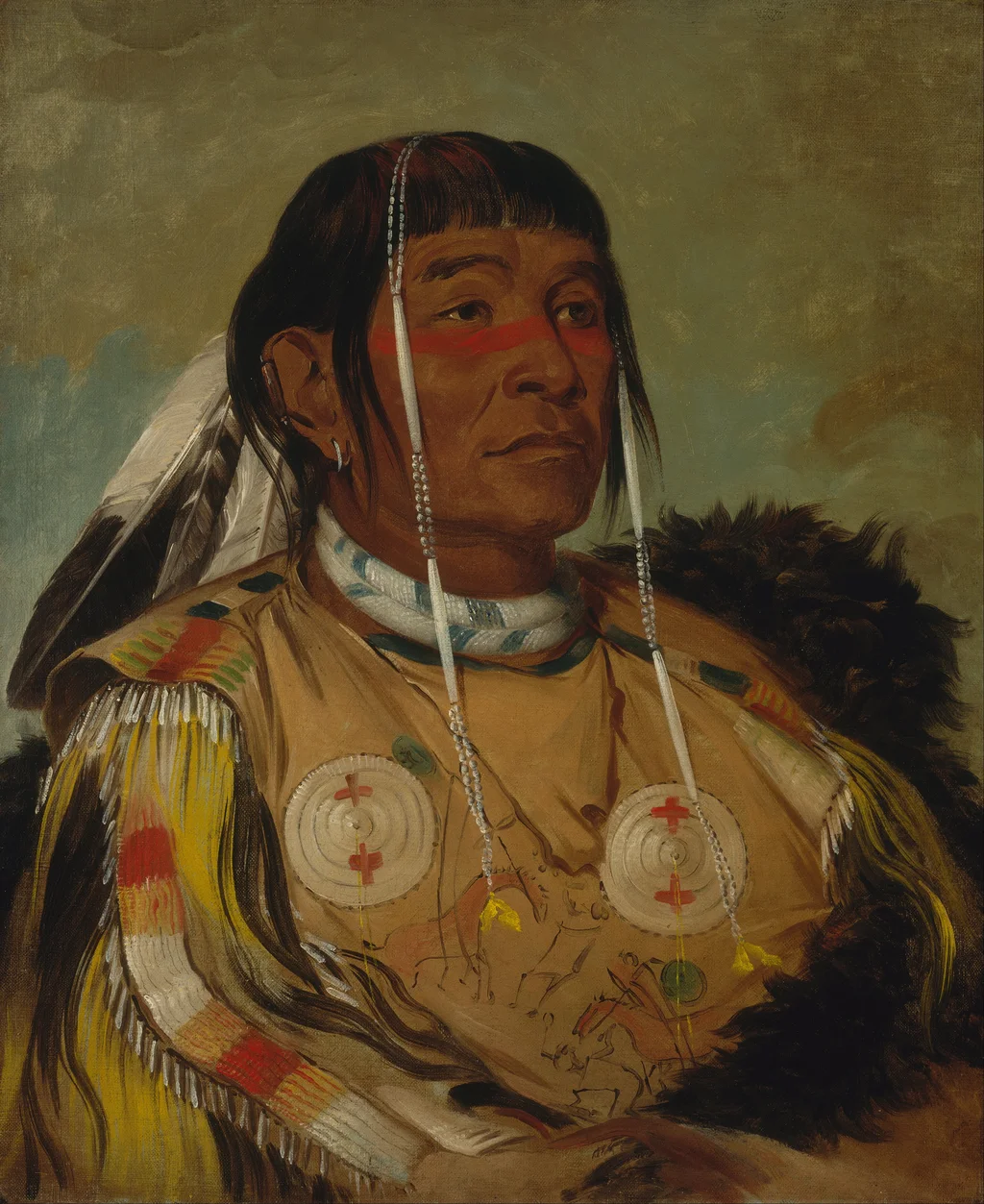
George Catlin · PD
Sha-có-pay, le Six, chef des Ojibwés des plaines
Détails
L'histoire
In 1832 George Catlin travelled up the Missouri River by steamboat to Fort Union, near what is now the border of North Dakota and Montana, on a project he had set himself: to paint the peoples of the plains before, as he believed, their world was swept away. The Indian Removal Act had passed two years earlier, and the pressure westward was already on. There he painted Sha-co-pay, a chief of the Plains Ojibwe, a big man whom Catlin described as sitting with great dignity. He wears a fringed buckskin shirt and a buffalo robe, and Catlin noted that the fringe was made of scalp locks taken from enemies in his younger years. Behind him Catlin left the canvas almost bare, so that nothing pulls the eye from the face and the dress.