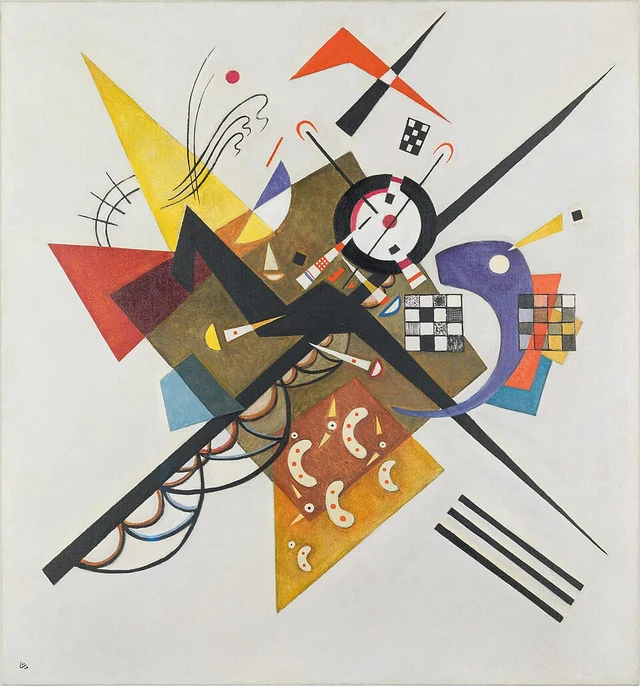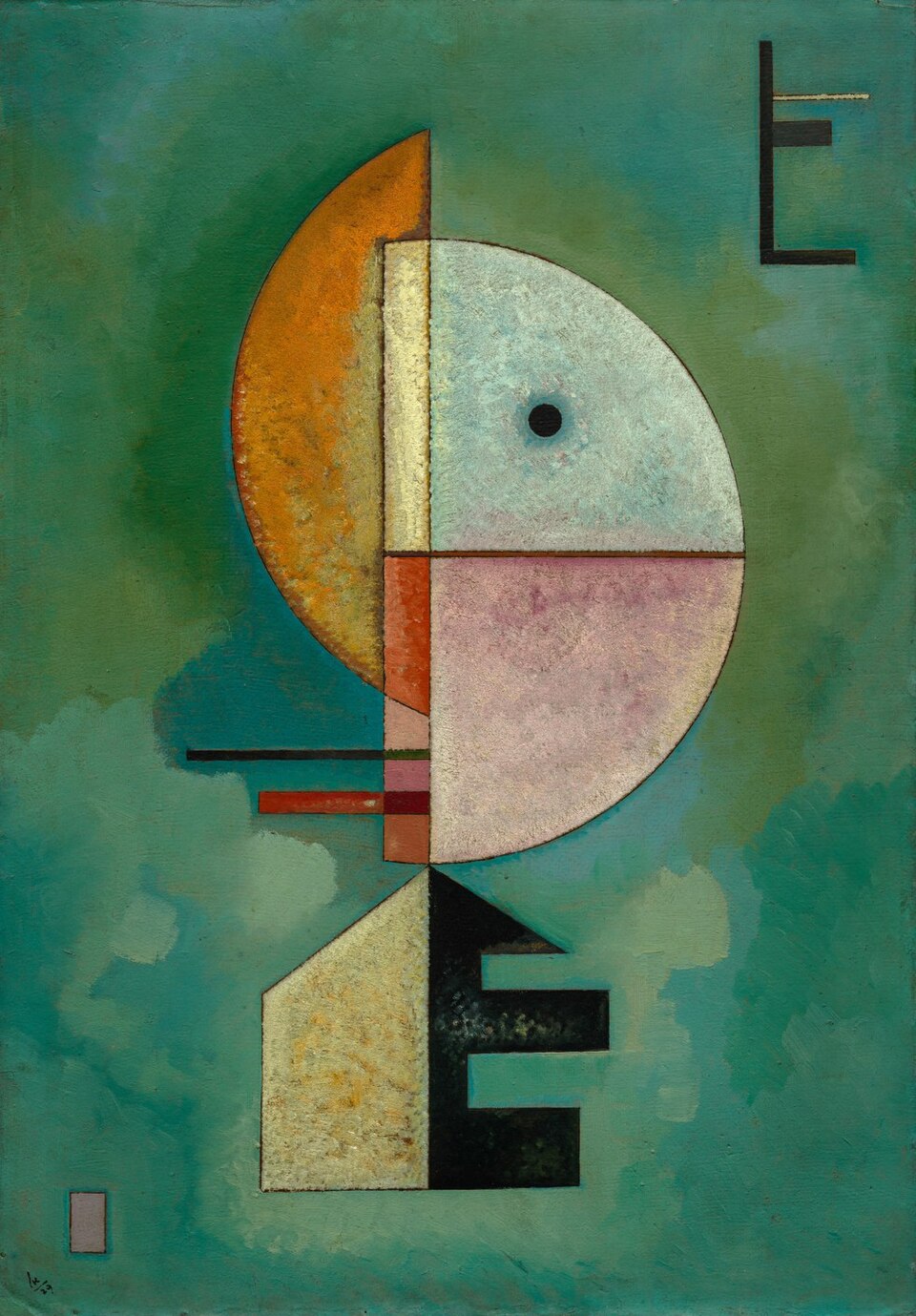
Wassily Kandinsky, Upward, 1929. Wikimedia Commons. · PD
Vers le haut
Détails
L'histoire
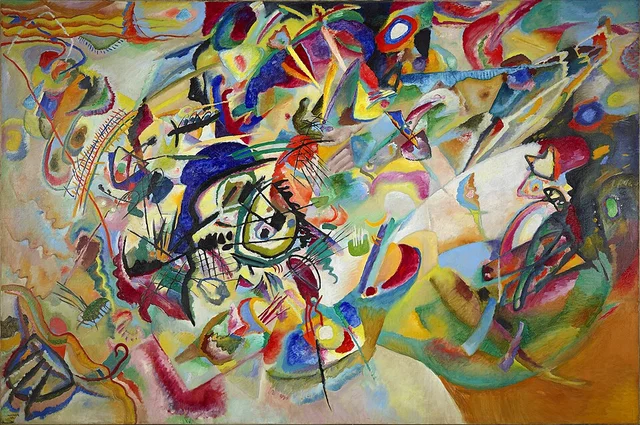
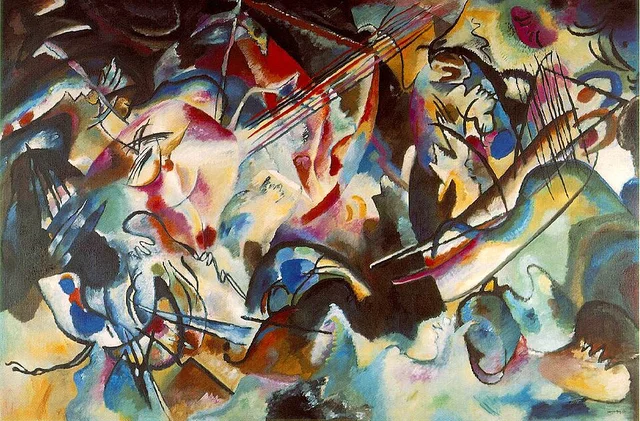
Vers 1929, le peintre qui, vingt ans plus tôt, avait contribué à inventer l'abstraction enseigne au Bauhaus de Dessau, et sa couleur débridée des débuts s'est refroidie en lignes tirées à la règle, en cercles et en triangles nets. Ce petit panneau, peint en octobre de cette année-là, empile ces formes en une seule figure qui semble décoller du sol. Son titre allemand, 'Empor', veut simplement dire vers le haut, et si l'on regarde la base de la forme et le coin supérieur droit, on trouve la lettre E glissée dans la géométrie, un écho discret du mot. Dans le même couloir de Dessau travaillait son ami Paul Klee, et quelque chose de la précision joueuse de Klee a déteint ici. Quatre ans plus tard, les nazis feraient fermer l'école et Kandinsky quitterait l'Allemagne pour de bon.