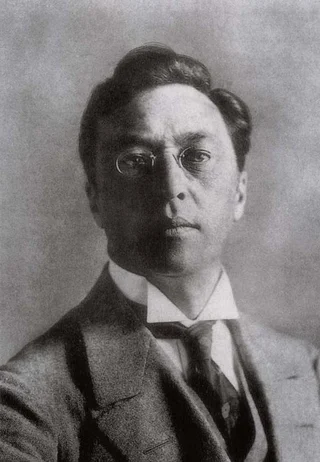
Vassily Kandinsky
1866–1944 · Empire russe · Expressionnisme
L'histoire
Vassily Kandinsky est venu tard à la peinture, et par choix. Né à Moscou en 1866, il fait des études de droit, réussit assez bien pour se voir offrir une chaire universitaire de droit romain, puis, à 30 ans, renonce à tout cela pour s'installer à Munich et apprendre à peindre. Il évoquera plus tard deux chocs qui l'y poussèrent : une meule de foin de Monet qu'il parvenait à peine à reconnaître comme telle, et un opéra de Wagner qui lui emplit la tête de couleurs pendant qu'il écoutait.
Ce dernier point n'était pas une simple image. Kandinsky semble avoir réellement perçu le son comme couleur et la couleur comme son, et il en vint à croire qu'un tableau pouvait agir sur le spectateur comme la musique, sans avoir besoin de montrer le moindre objet reconnaissable. Vers 1910, il réalise quelques-unes des premières peintures purement abstraites de l'art européen, des toiles de taches et de lignes flottantes portant des titres empruntés à la musique, comme Composition ou Improvisation.
En 1911, avec le peintre Franz Marc, il fonde à Munich un cercle appelé le Cavalier bleu, réuni autour de l'idée que l'art devait tendre vers le spirituel. La Première Guerre mondiale disperse le groupe et renvoie Kandinsky en Russie. Il revient en Allemagne dans les années 1920 pour enseigner au Bauhaus, la célèbre école de design, où ses formes se font plus resserrées et plus géométriques, tout en cercles et en angles durs. Quand les nazis ferment le Bauhaus et qualifient son œuvre de dégénérée, il part pour Paris. Il meurt juste à côté, à Neuilly, en 1944.
Autres articles
Œuvres
312 œuvres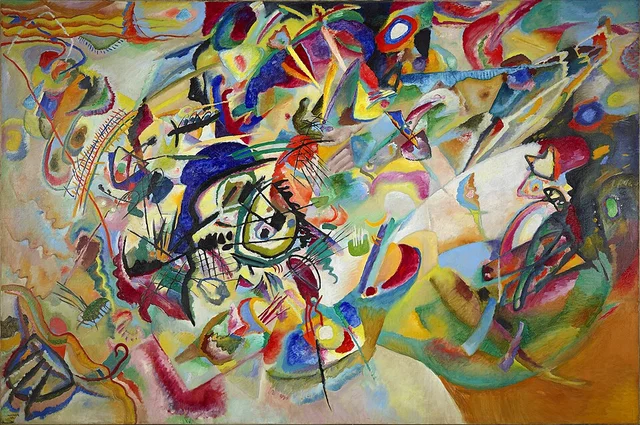 Composition VIIVassily Kandinsky, 1913
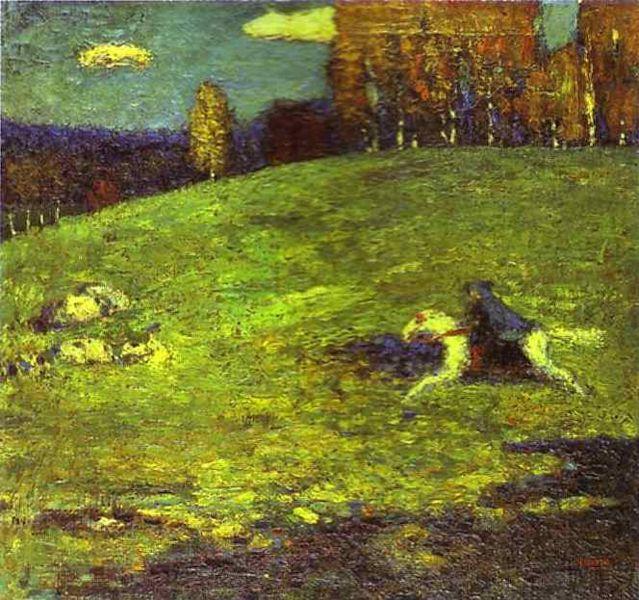 Le Cavalier bleuVassily Kandinsky, 1903
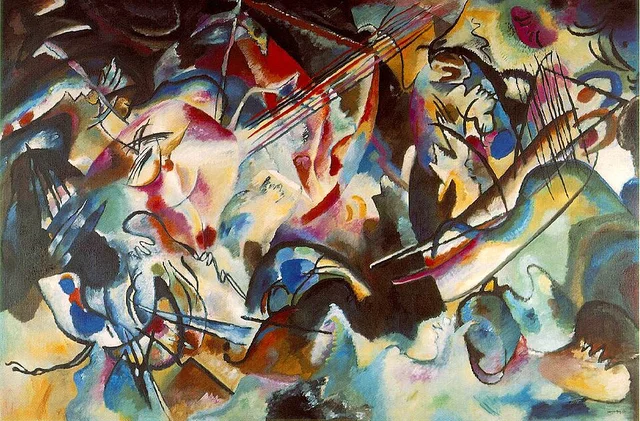 Composition VIVassily Kandinsky, 1913
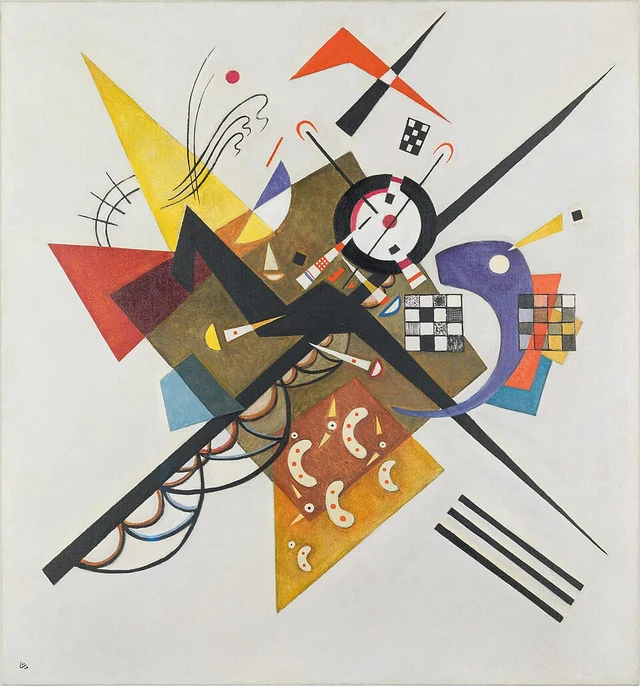 Sur blanc IIVassily Kandinsky, 1923
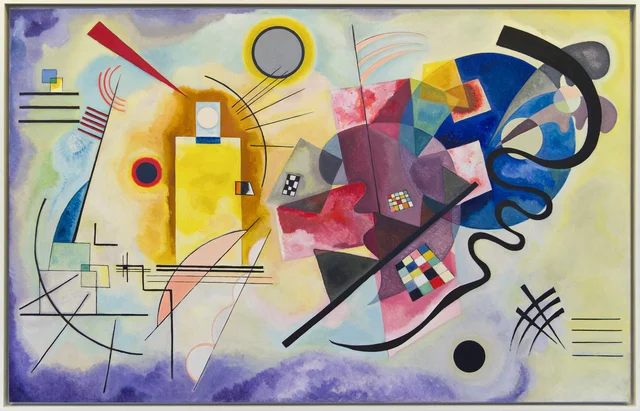 Jaune-Rouge-BleuVassily Kandinsky, 1925
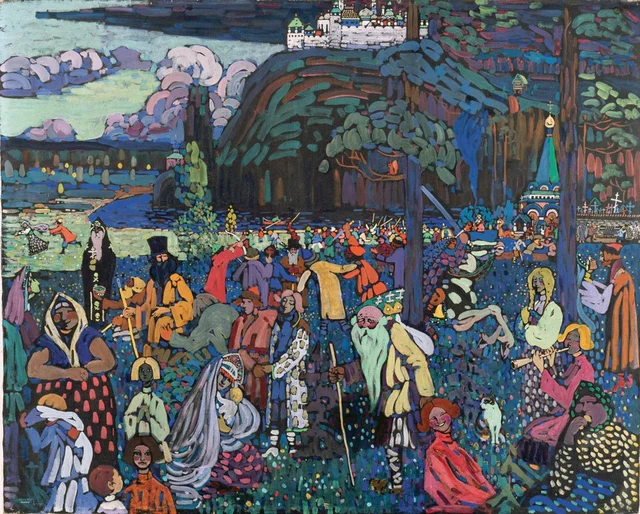 La Vie mélangéeVassily Kandinsky, 1907
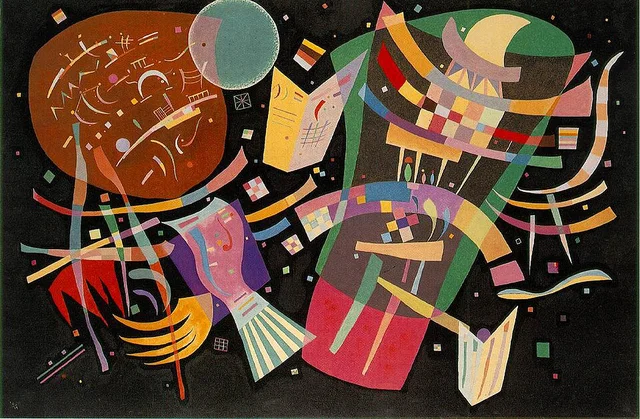 Composition XVassily Kandinsky, 1939
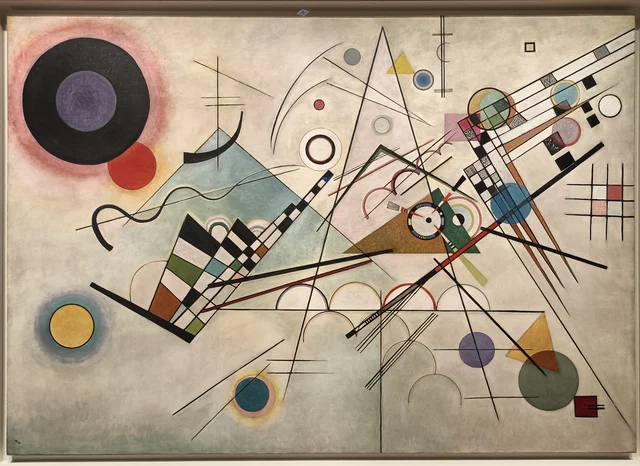 Composition VIIIVassily Kandinsky, 1923
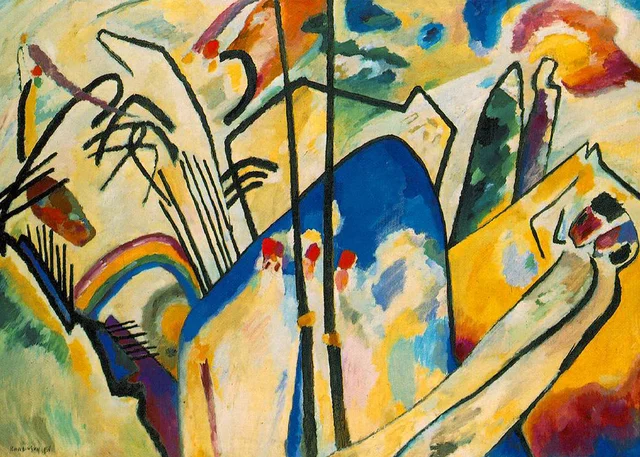 Composition IVVassily Kandinsky, 1911
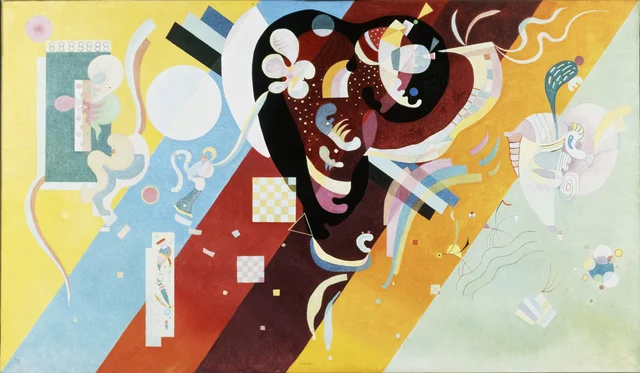 Composition IXVassily Kandinsky, 1936
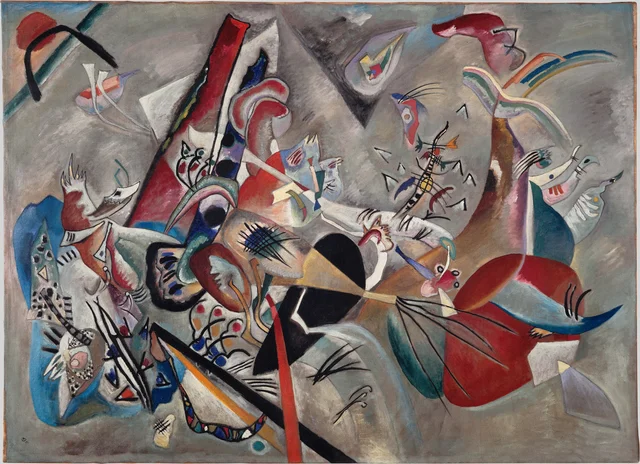 En grisVassily Kandinsky, 1919
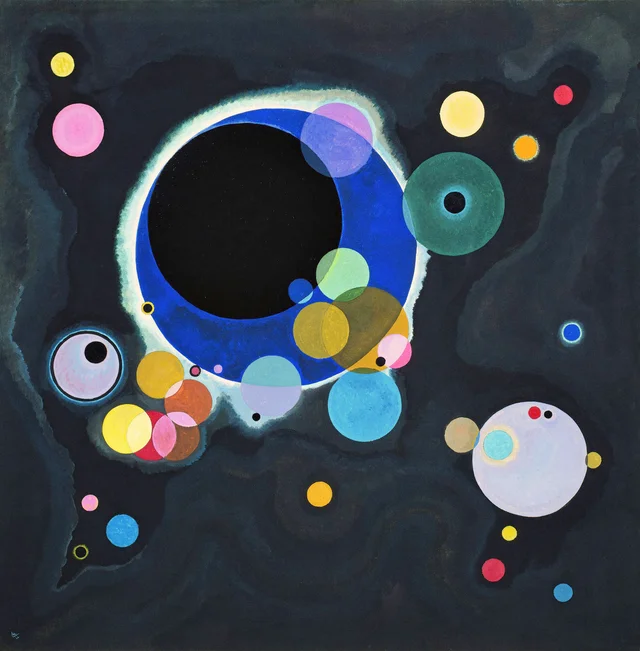 Quelques cerclesVassily Kandinsky, 1926
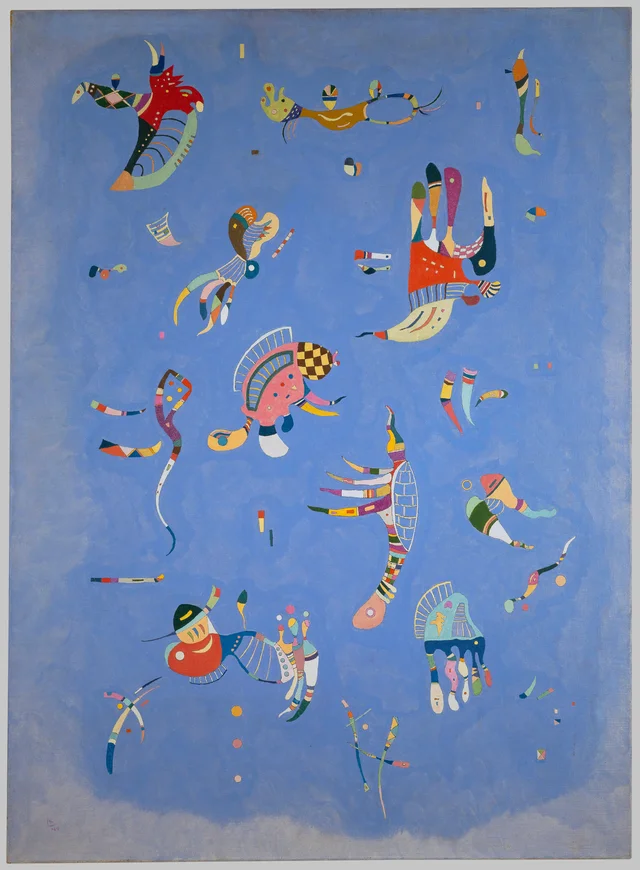 Bleu de cielVassily Kandinsky, 1940
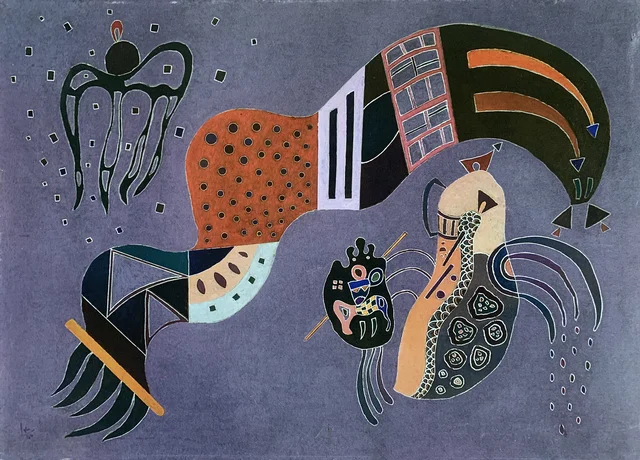 Élan tempéréVassily Kandinsky, 1944
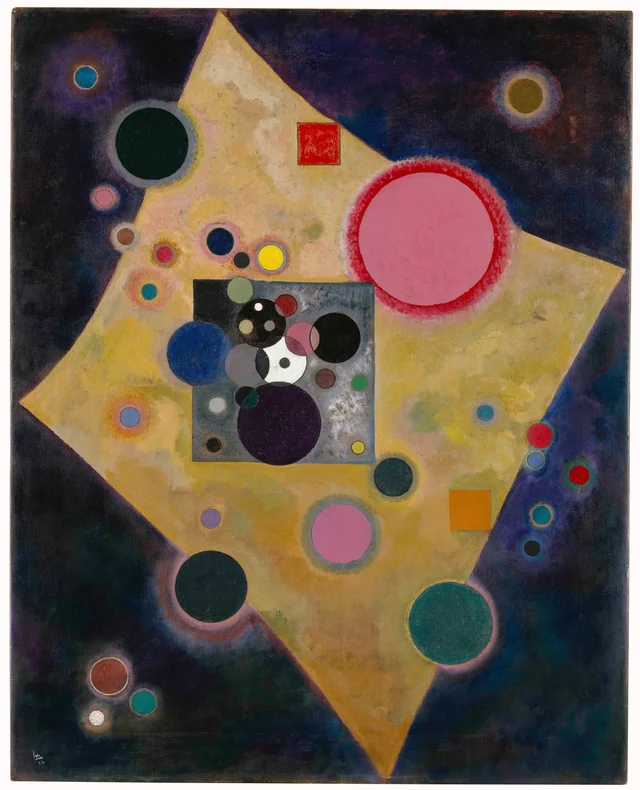 Accent en roseVassily Kandinsky, 1926
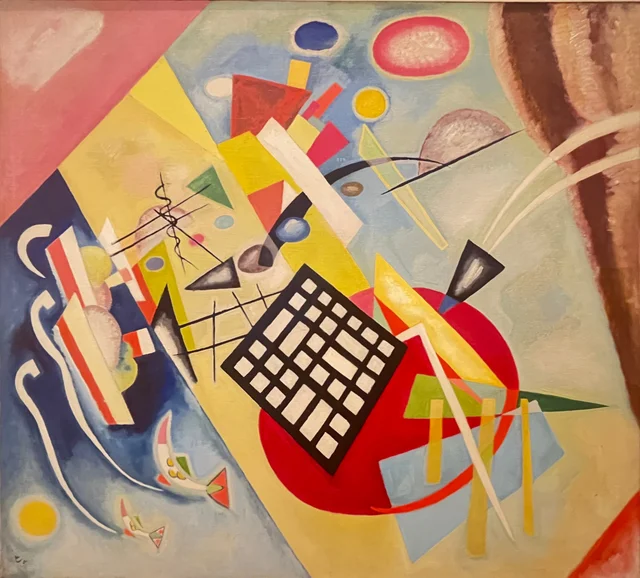 Grille noireVassily Kandinsky, 1922
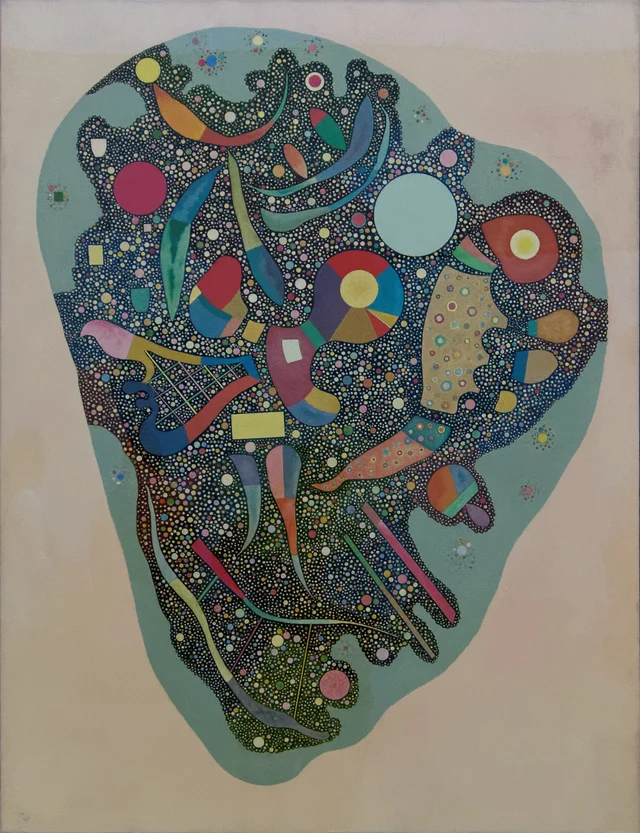 Ensemble multicoloreVassily Kandinsky, 1938
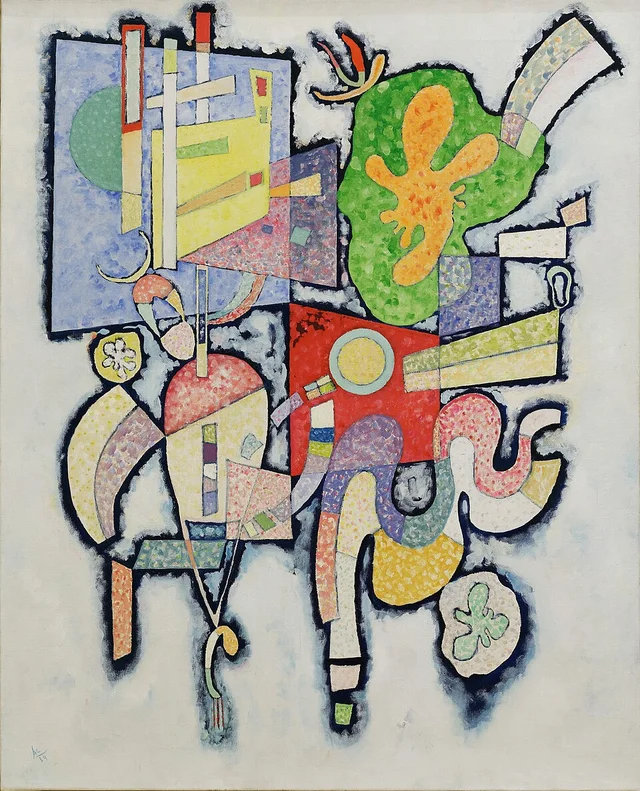 Complexe-simpleVassily Kandinsky, 1939
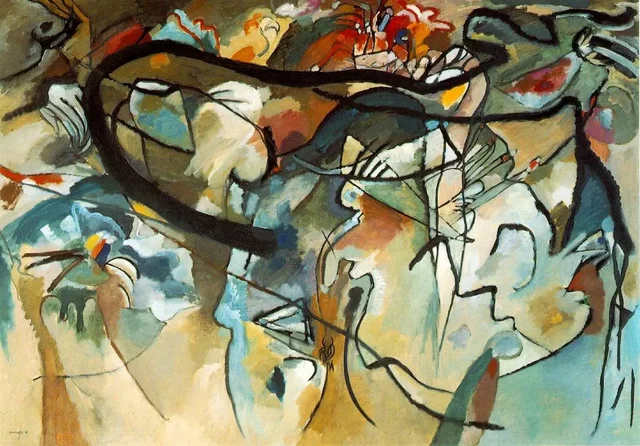 Composition VVassily Kandinsky, 1911
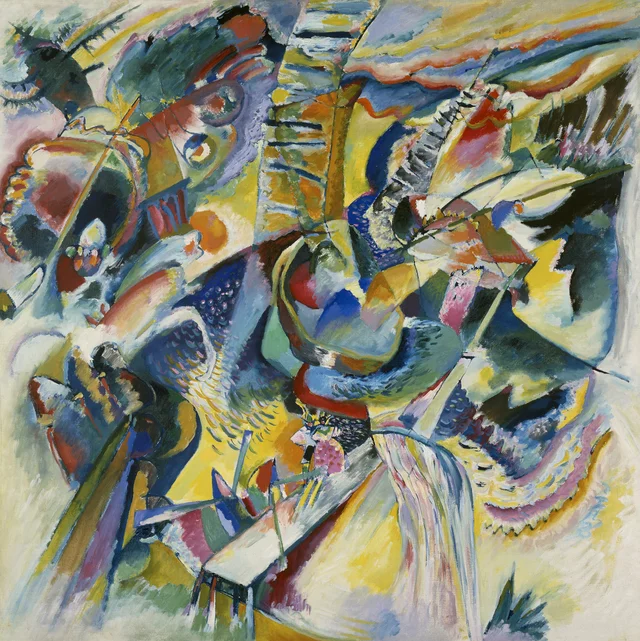 GorgeVassily Kandinsky, 1914
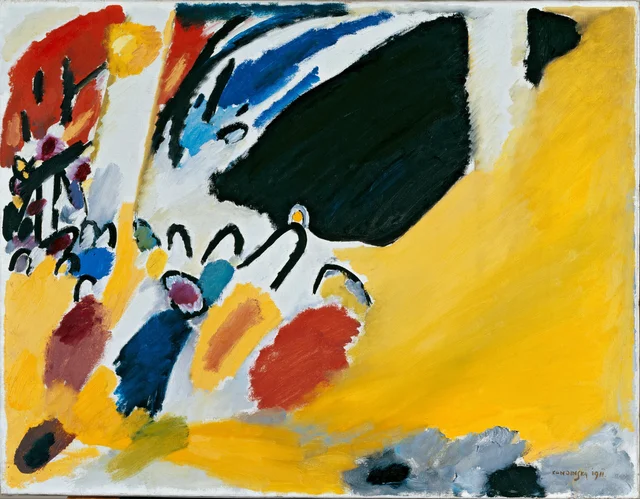 Impression III (Concert)Vassily Kandinsky, 1911
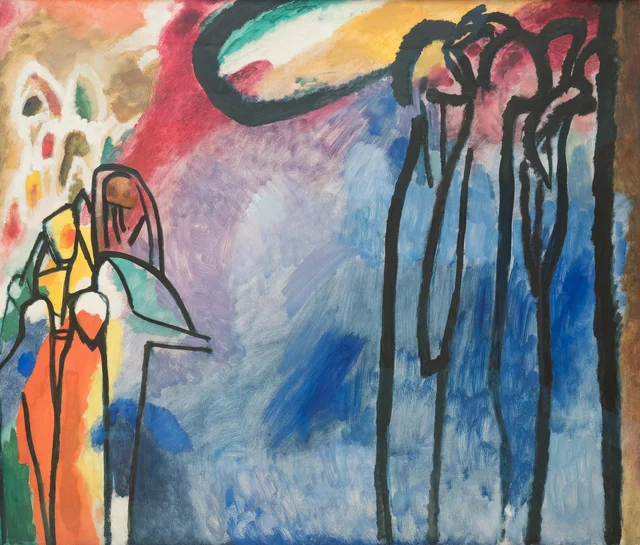 Improvisation 19Vassily Kandinsky, 1911
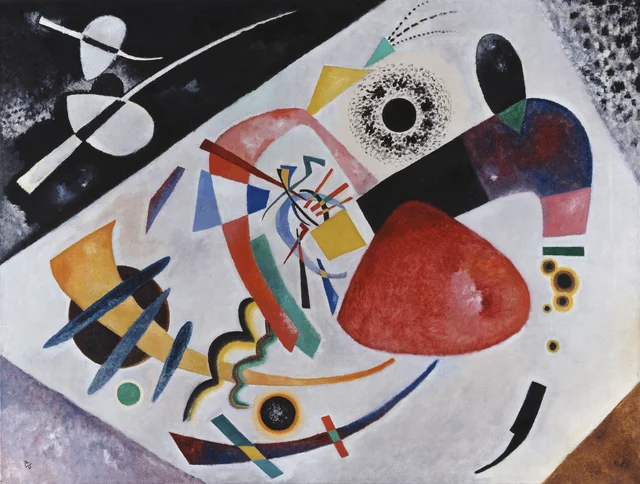 Tache rouge IIVassily Kandinsky, 1921
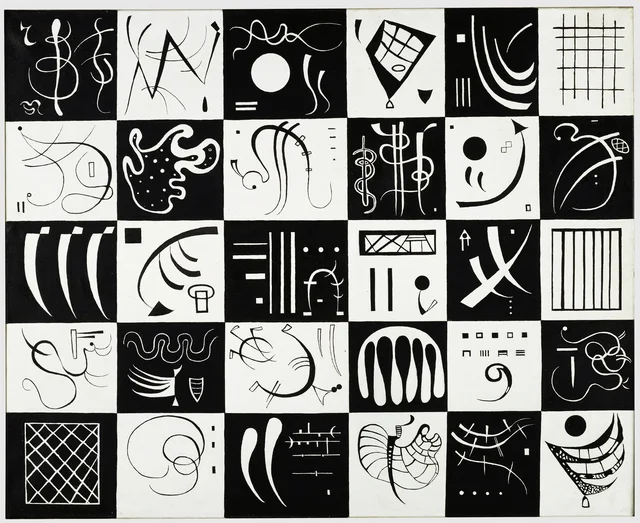 TrenteVassily Kandinsky, 1937
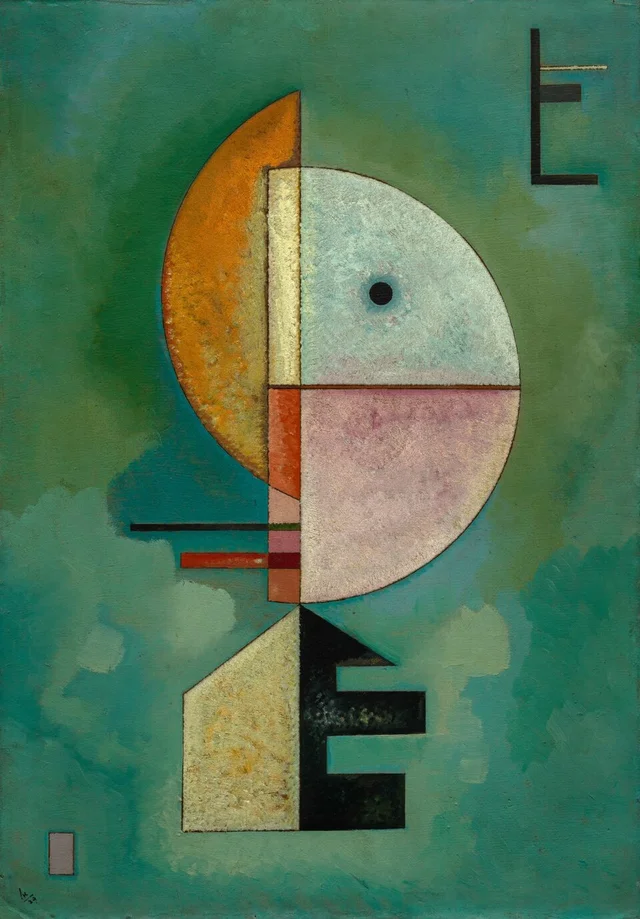 Vers le hautVassily Kandinsky, 1929