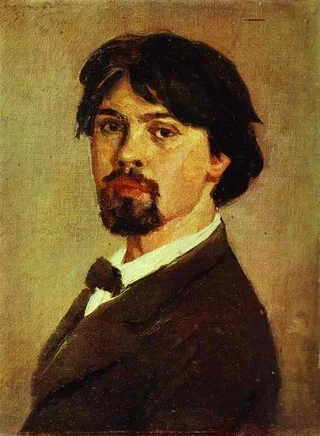
Vasilij Surikov
1848–1916 · Impero russo · Realismo
La storia
Vasilij Surikov crebbe a Krasnojarsk, nel cuore della Siberia, in una famiglia cosacca che viveva ancora secondo usanze anteriori alle riforme di Pietro il Grande, e da bambino assistette alle fustigazioni pubbliche eseguite nella piazza della città. Per raggiungere l'Accademia di Belle Arti di San Pietroburgo nel 1868 percorse migliaia di chilometri verso ovest con una carovana di mercanti che trasportava pesce congelato alla capitale, perché non c'era modo più rapido di arrivarci.
Quella Russia siberiana e pre-petrina rimase il suo vero soggetto una volta compiuta la formazione. I suoi tre grandi dipinti di storia, 'Il mattino dell'esecuzione degli strelizzi' del 1881, 'Menšikov a Berëzovo' del 1883 e 'La bojarina Morozova' del 1887, tornano tutti allo stesso periodo, il brutale passaggio dalla vecchia Russia moscovita all'impero moderno di Pietro. 'La bojarina Morozova' mostra una nobildonna in arresto per aver rifiutato le riforme ecclesiastiche del patriarca Nikon, trascinata per una strada di Mosca su una slitta con due dita alzate, il segno della croce dei Vecchi Credenti, ormai proibito.
La tela è larga più di cinque metri, e Surikov passò anni a studiare volti reali nei mercati e nei monasteri di Mosca per popolarla. Pavel Tret'jakov la comprò per la sua galleria moscovita l'anno stesso in cui fu terminata, insieme al resto dei principali dipinti storici di Surikov.
Opere
6 opere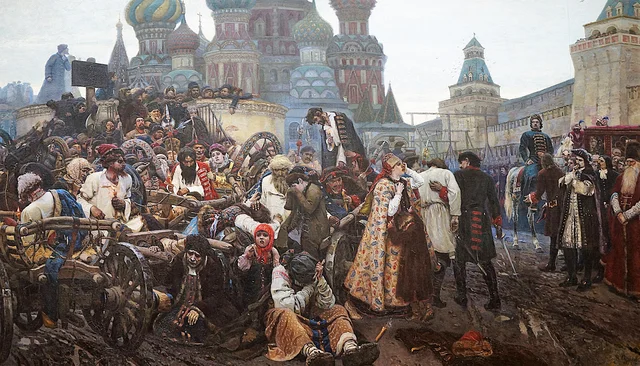 Il mattino dell'esecuzione degli streltsyVasilij Surikov, 1881
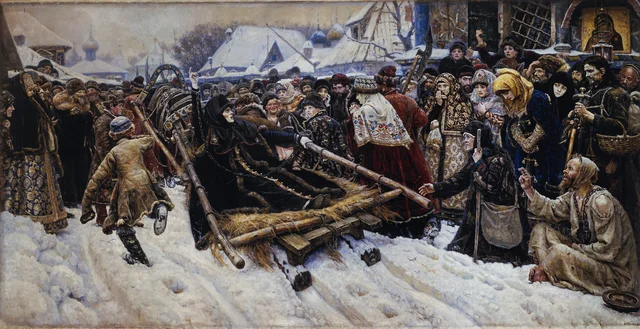 La bojara MorozovaVasilij Surikov, 1887
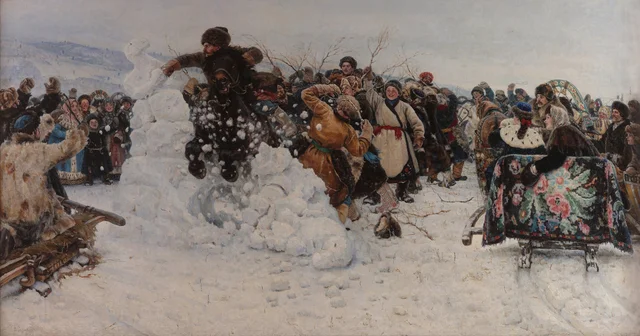 La presa della città di neveVasilij Surikov, 1891
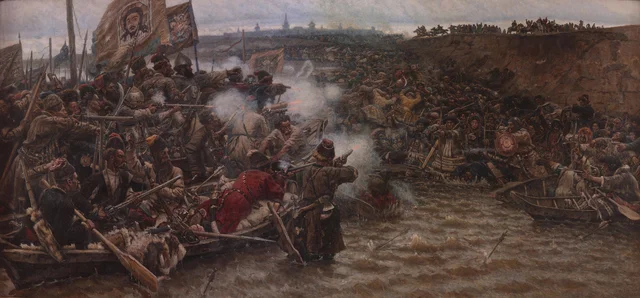 La conquista della Siberia da parte di ErmakVasilij Surikov, 1895
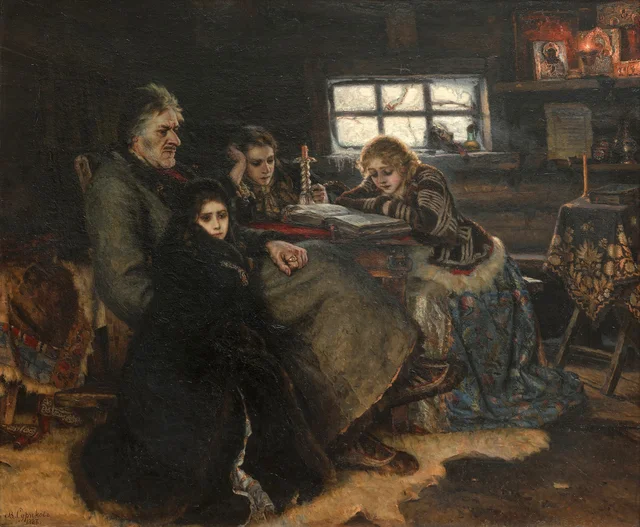 Menšikov a BerëzovoVasilij Surikov, 1883
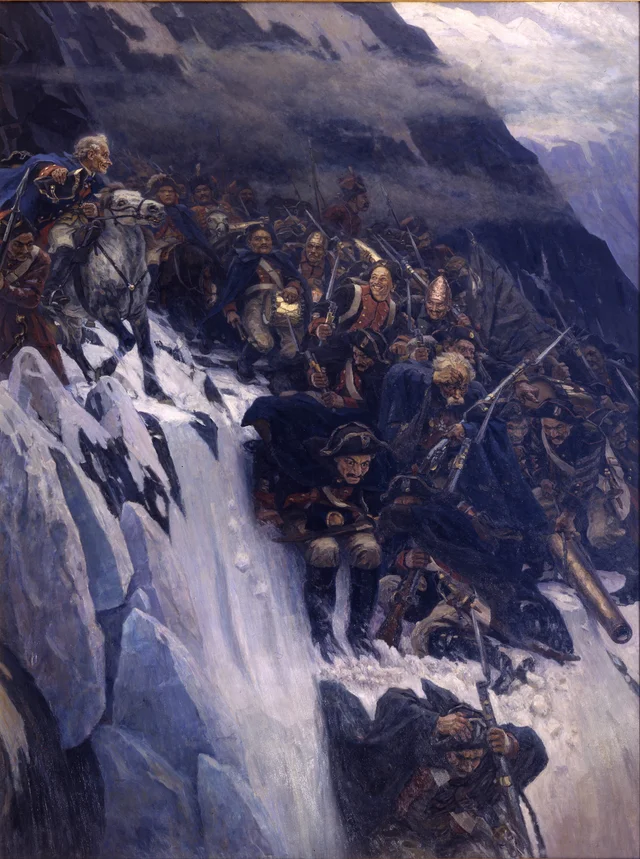 Suvorov attraversa le Alpi nel 1799Vasilij Surikov, 1899