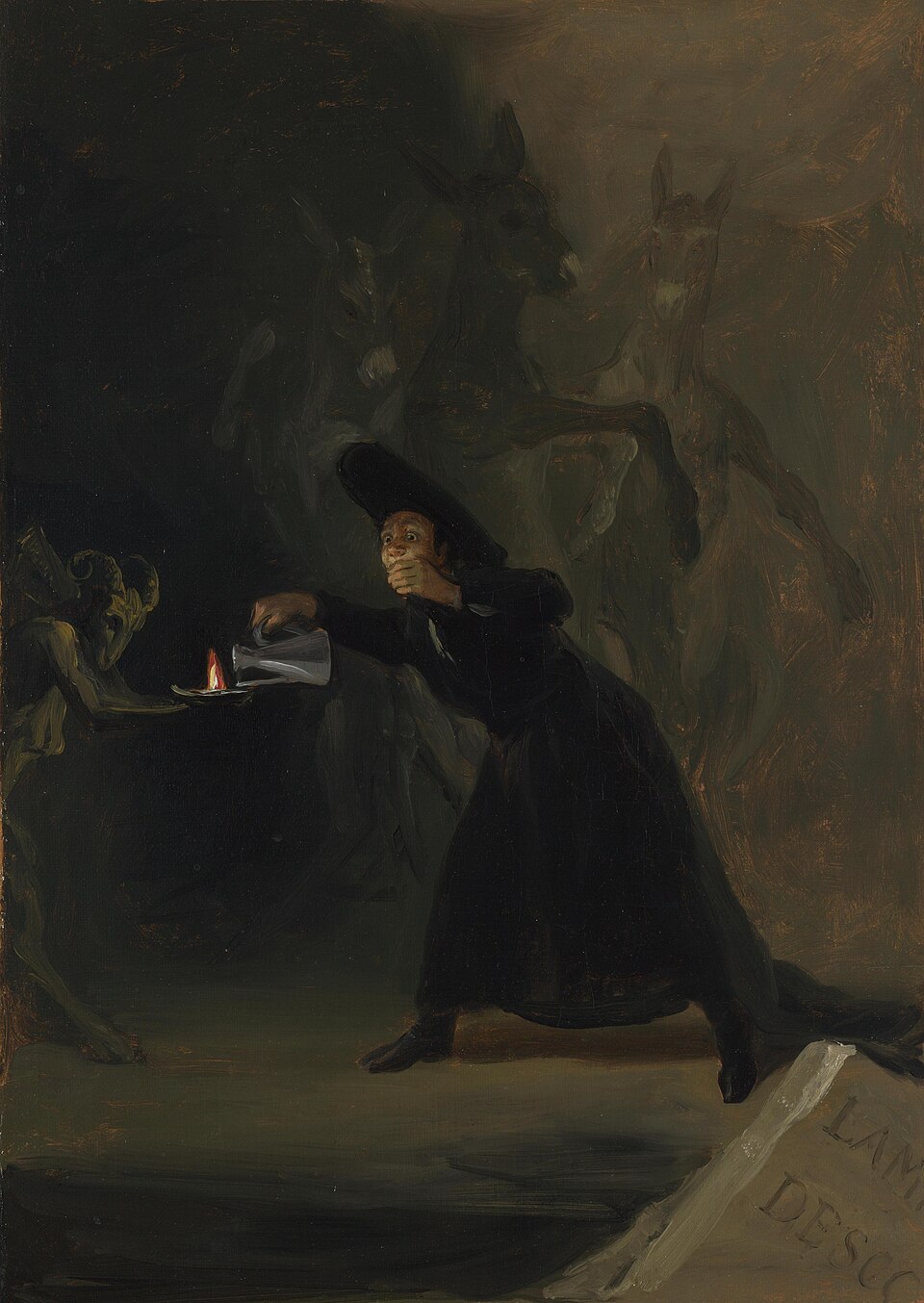
Francisco Goya, The Bewitched Man, 1798. Wikimedia Commons. · PD
L'uomo stregato
Dettagli
La storia
Nel 1798 Goya dipinse una serie di sei piccoli quadri sulla stregoneria per la casa di campagna dei duchi di Osuna, colti aristocratici che ridevano delle superstizioni popolari. Questa scena viene da una commedia di Antonio de Zamora, allora molto nota. Un prete terrorizzato è convinto che la sua vita durerà solo finché resterà accesa una lampada, e così, tremante, versa altro olio per tenerla viva. A reggere il lume è un demone dalle sembianze di capro, mentre dietro, nel buio, alcuni asini dipinti sulla parete sembrano danzare. Goya mette in ridicolo la paura del sovrannaturale. Gli altri quadri della serie mostravano sabba e voli di streghe, tutti pensati per divertire i padroni di casa.