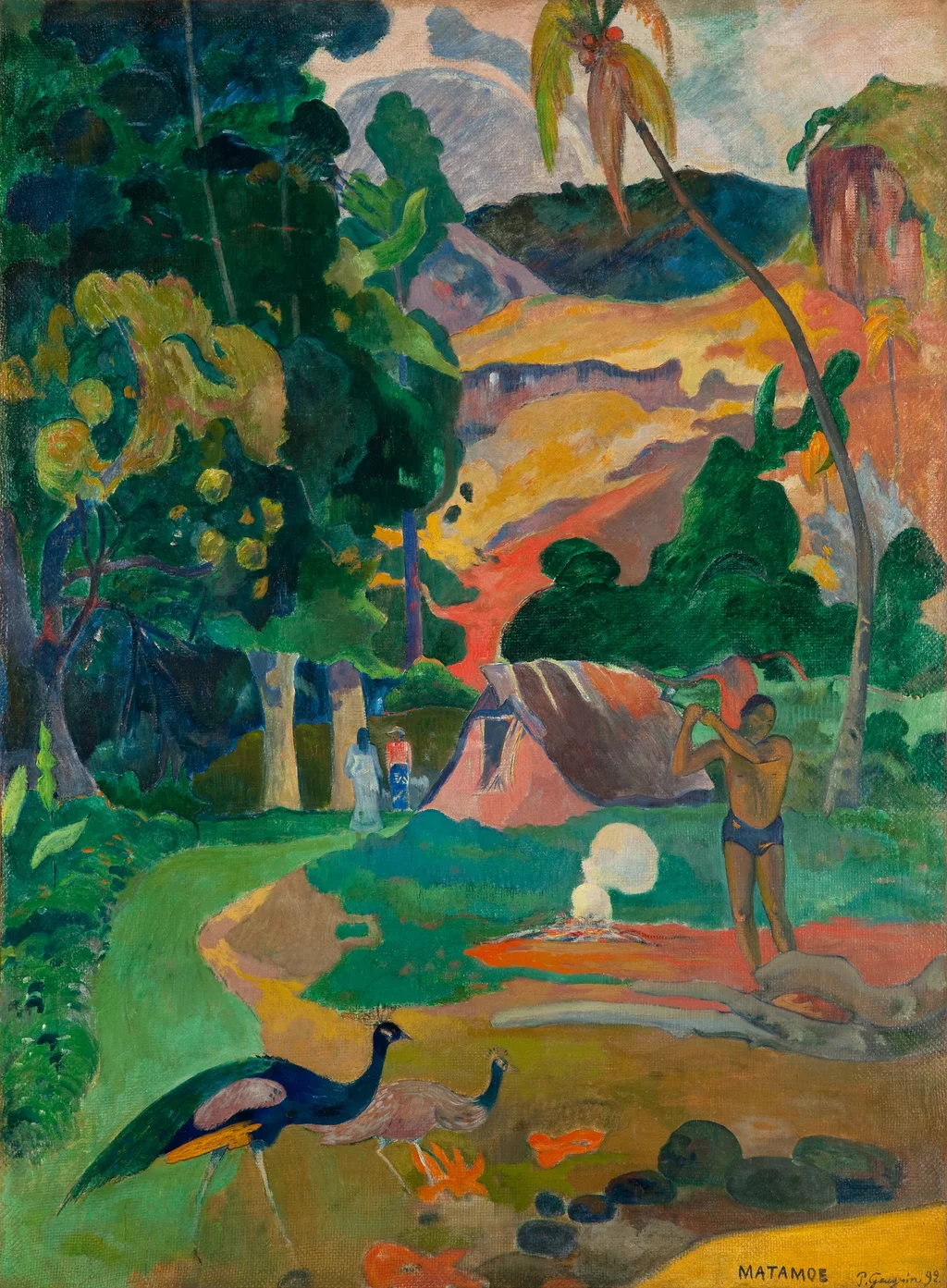
Paul Gauguin, Matamoe (Death), Landscape with Peacocks, 1892. Wikimedia Commons. · PD
マタモエ(死)、孔雀のいる風景
作品情報
ストーリー
1892年ごろ、ゴーギャンは植民地の町パペーテを離れ、タヒチ南岸の村マタイエアへ移っていた。ヨーロッパがすでに損なってしまったと感じるタヒチではない、本当のタヒチを求めてのことだった。到着してまもなく、彼は一人の若者が斧を頭上に振りかぶり、病んだヤシの木を切り倒すのを見たと記している。その人物が画面の中央に立ち、倒れた幹へと振り下ろす、まさにその一瞬をとらえている。背後には小屋、小さな火、そして空き地を歩む二羽の孔雀がいるが、孔雀はこの島にはいない鳥で、彼が実際に見たものというより、ゴーギャンが思い描いた楽園に属している。画布には彼がタヒチ語の「マタモエ」と書き込んだ。以来、その意味は論じられてきた。ある者は死と読み、ある者は眠り、あるいは過ぎ去った日々と読む。ゴーギャン自身は、それを死と訳していた。