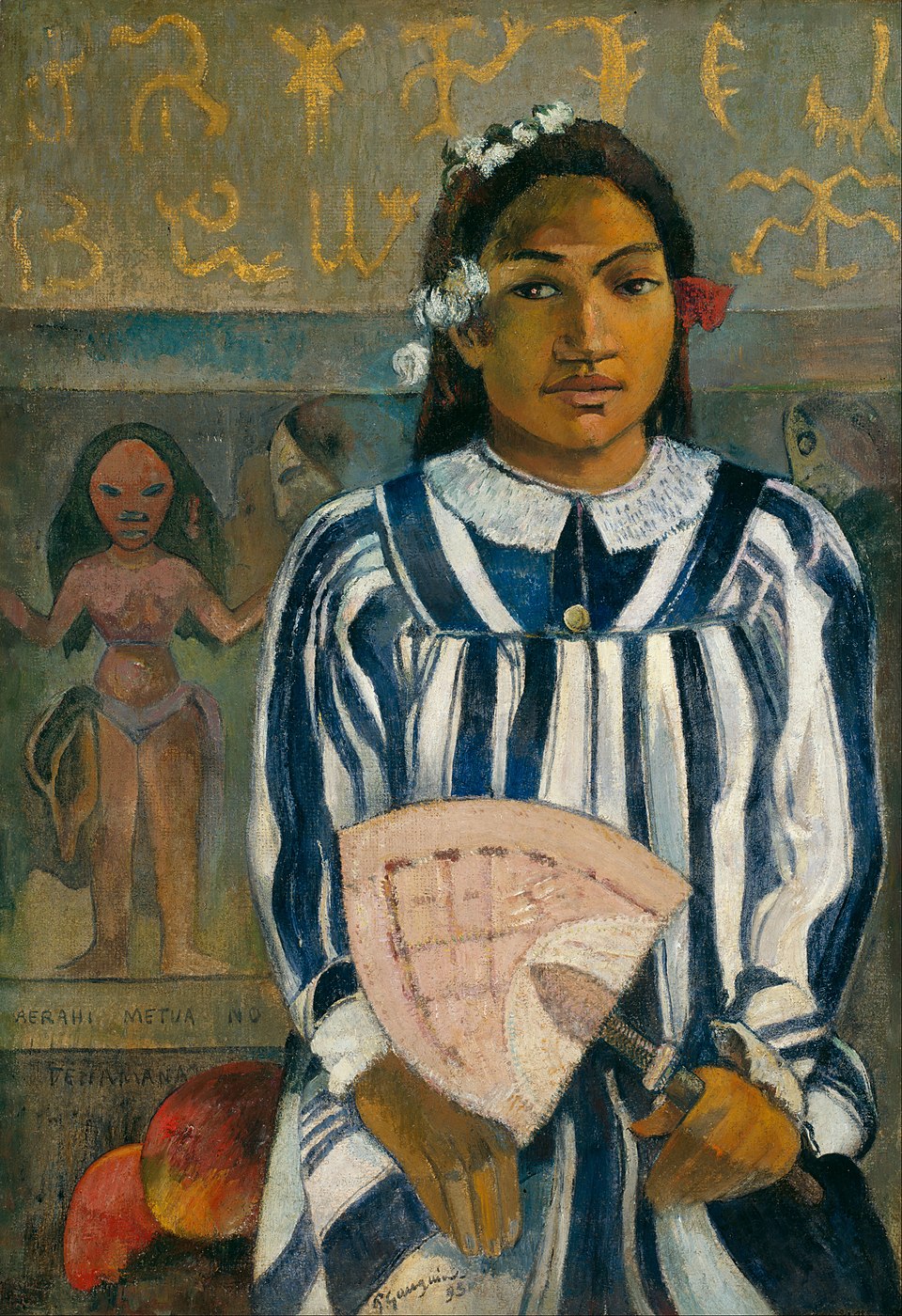
メラヒ・メトゥア・ノ・テハマナ(テハマナの祖先)

Paul Gauguin, Merahi metua no Tehamana, 1893. Wikimedia Commons. · PD

メラヒ・メトゥア・ノ・テハマナ(テハマナの祖先)


作品情報

アーティスト
ポール・ゴーギャン
制作年
1893
技法
油彩・キャンバス
種類
絵画
寸法
76.3 × 54.3 cm

ストーリー

Gauguin painted this in 1893, at the end of his first stay in Tahiti, as a portrait of Teha'amana, the local girl of about 13 or 14 who had become his companion there. The Tahitian title means roughly that Teha'amana has many ancestors, and behind her he sets glyphs and shadowy figures meant to suggest an old Polynesian world of gods and forebears. Much of that background is invention. The traditions he claimed to be recording were already broken by the time he arrived, half-remembered or gone, and some of his signs he simply made up. She sits in a prim missionary dress holding a woven fan, a young woman placed between two worlds that were both slipping away. He carried the picture back to Paris that same year.