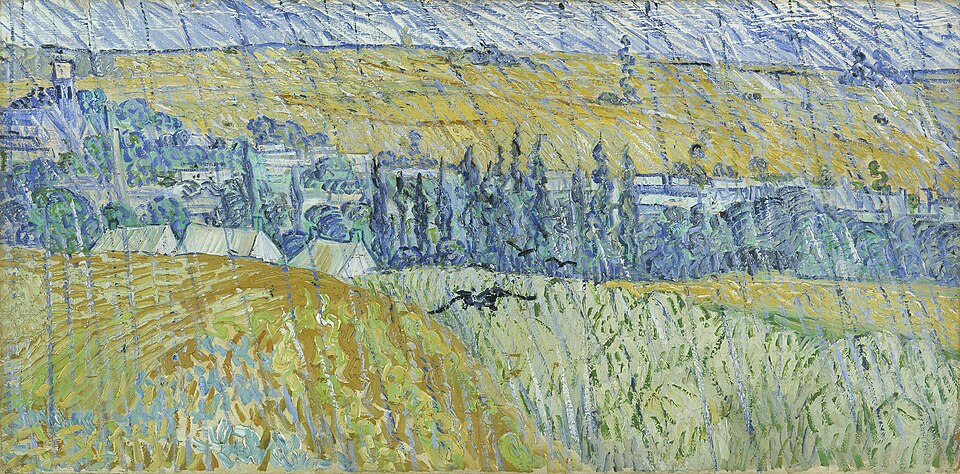
Vincent van Gogh, Rain, Auvers, 1890. Wikimedia Commons. · PD
雨、オーヴェル
作品情報
ストーリー
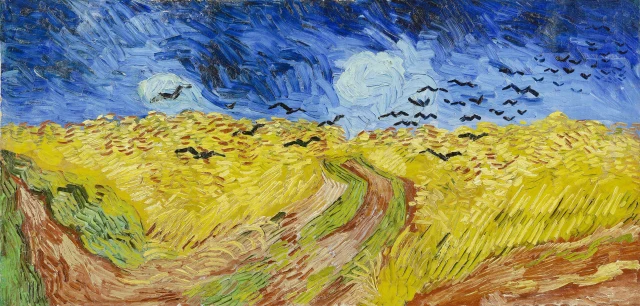
In the summer of 1890 Van Gogh had about six weeks left to live. He had come to Auvers-sur-Oise, a village north of Paris, and was painting at a furious pace, 13 wide double-square canvases of wheatfields in a matter of weeks. This is one of them. Around the 10th of July he wrote to his brother Theo that these fields under troubled skies were his way of putting down sadness and extreme loneliness. The rain itself is the surprise. Those hard diagonal scratches raked across the whole surface come straight from a Japanese woodcut, Hiroshige's bridge in a downpour, which he had copied by hand three years earlier in Paris. He turned that borrowed shorthand for rain onto a grey French field.