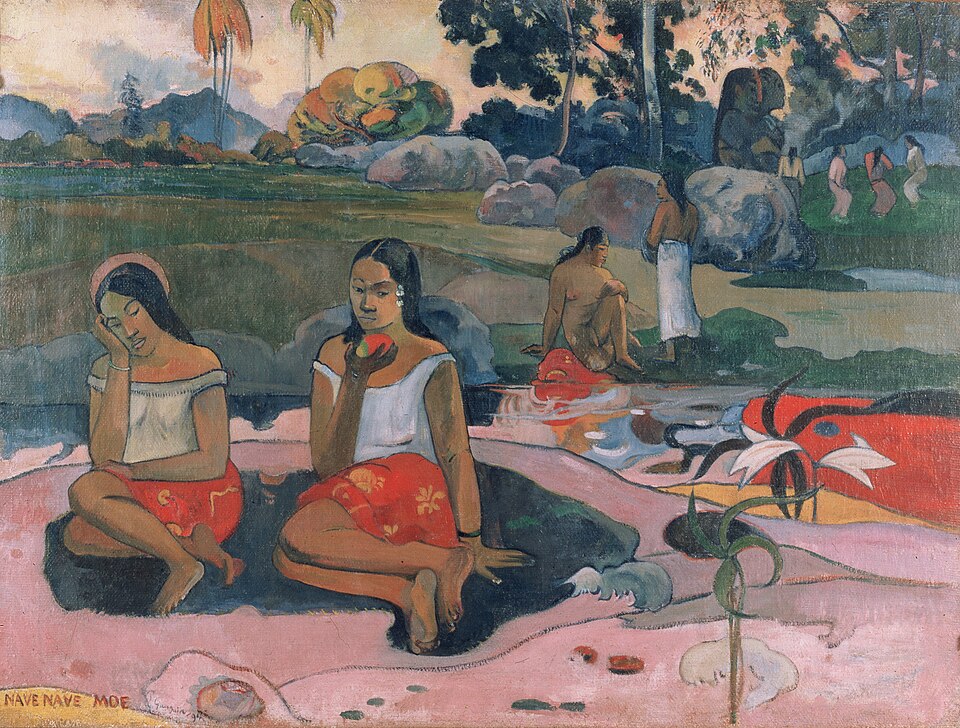
聖なる泉、甘美な夢(ナヴェ・ナヴェ・モエ)

Paul Gauguin, Sacred Spring: Sweet Dreams (Nave nave moe), 1894. Wikimedia Commons. · PD

聖なる泉、甘美な夢(ナヴェ・ナヴェ・モエ)


作品情報

アーティスト
ポール・ゴーギャン
制作年
1894
技法
油彩
種類
絵画
寸法
74 × 100 cm

ストーリー

Gauguin painted this in Paris at the start of 1894, not in the tropics. He had come back from Tahiti two years earlier, out of money, and was living in a studio hung with his own island pictures, still working the memory. So the scene is remembered rather than seen. Two Tahitian women sit by a pool, one asleep with a faint halo over her head, the other holding fruit like an Eve about to bite. Gauguin folded Christian signs into a Polynesian world that never used them, the halo and the lily standing for purity. He even lettered the Tahitian words Nave nave moe onto the canvas, which he glossed as a sweet, drowsy delight. The Moscow collector Ivan Morozov bought it in 1907, and it reached the Hermitage in 1931.

聖なる泉、甘美な夢(ナヴェ・ナヴェ・モエ) — ポール・ゴーギャン — MuseScope