絞首台の上のカササギ

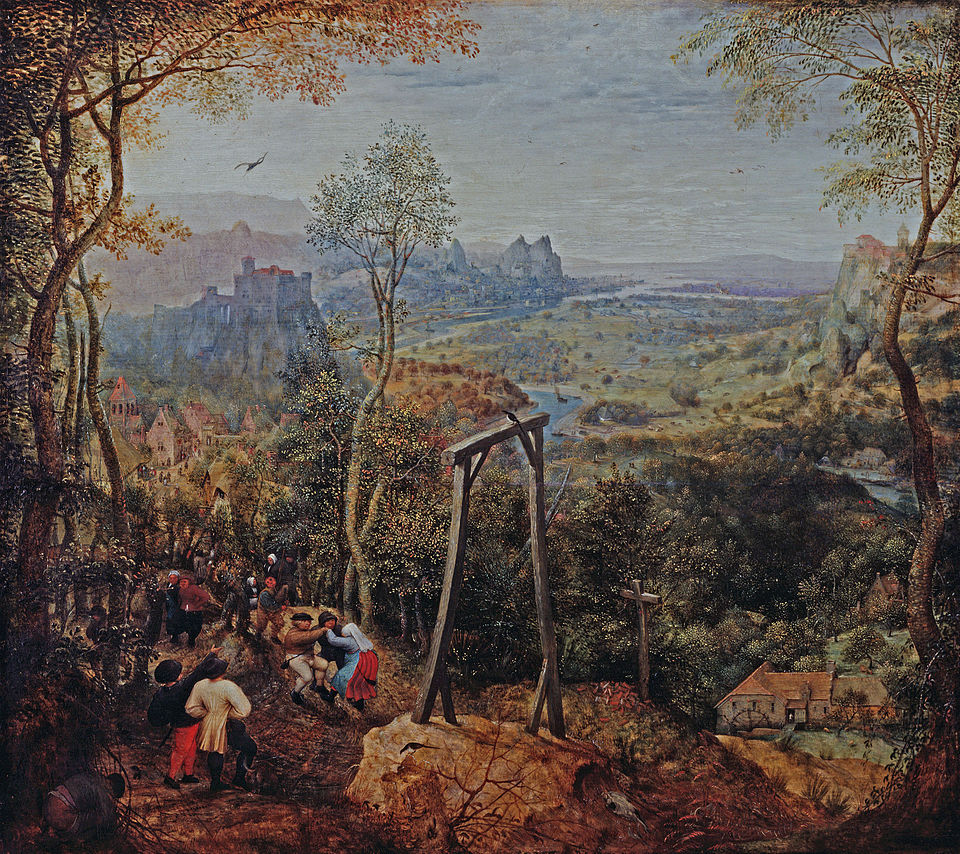
Pieter Brueghel the Elder, The Magpie on the Gallows, 1568. Wikimedia Commons. · PD

絞首台の上のカササギ


作品情報

制作年
1568
技法
板に油彩
種類
絵画
寸法
46 × 51 cm

ストーリー

In the middle of a wide green valley Bruegel puts a gallows, and on top of it a magpie. Peasants are dancing to bagpipes right beside it, on ground that leads pleasantly up to the scaffold. He painted this in 1568, the year after the Duke of Alba arrived to put down the Dutch revolt, when a gallows was not a symbol but a working piece of equipment. The magpie carries an old meaning here, the bird of gossip, and there was a saying that idle talk could lead a man straight to the gallows, so the two sit together on purpose. Look at the scaffold itself and its beams do not add up, an impossible shape lit from two directions at once. Bruegel died the next year. He asked his wife to burn some of his paintings, but this one he told her to keep for herself.