王の終焉

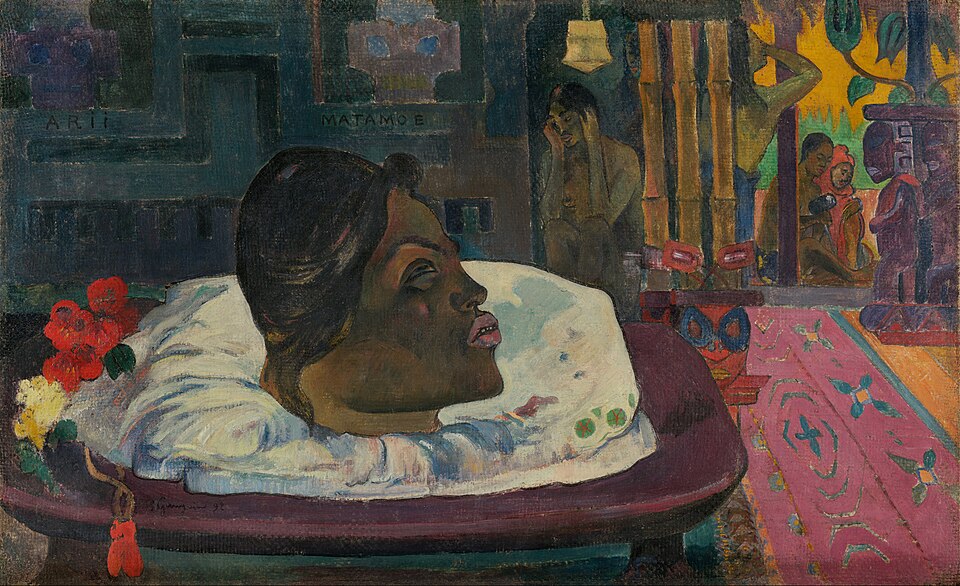
Paul Gauguin, The Royal End, 1892. Wikimedia Commons. · PD

王の終焉


作品情報

アーティスト
ポール・ゴーギャン
制作年
1892
技法
油彩
種類
絵画
寸法
45.1 × 74.3 cm

ストーリー

Gauguin reached Tahiti in 1891 expecting an untouched paradise and found a French colony, its old world already fading. Within weeks the island's last king, Pomare V, died, and Gauguin watched the public mourning. This picture grew out of that, though he freely admitted he invented most of it. He wrote to a friend that he had just finished a severed head, nicely arranged on a white cushion, in a palace of his own invention, guarded by women also of his invention. No Tahitian funeral looked like this. The two words painted top left, arii and matamoe, mean roughly royal and sleeping eyes, his phrase for a death. A Getty curator has guessed he built the whole grisly scene mainly to startle Paris when he brought it home.

王の終焉 — ポール・ゴーギャン — MuseScope