Culturawiki · CC-BY-SA-4.0
로마와 베네치아의 콰트로첸토
상세 정보
이야기
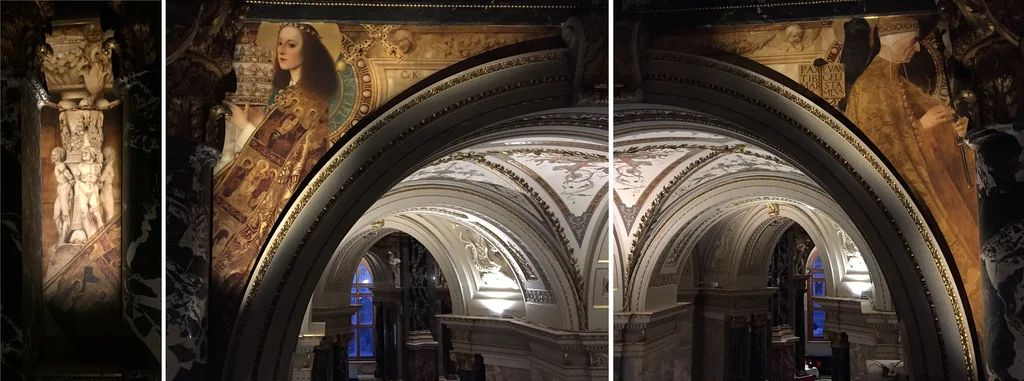
빈 미술사 박물관 대계단 높은 곳의 이 구획은 15세기, 곧 콰트로첸토를 나타내는데, 두 도시를 한꺼번에 담고 있습니다. 클림트가 1891년에 그린 것으로, 동생 에른스트, 프란츠 마치와 함께 아치 사이 삼각면과 기둥 사이를 장식했습니다. 초기 르네상스 교황의 로마를 대표하는 것은 화려한 교황 제의를 두른 성인과, 그 곁에서 교황관을 든 가냘픈 검은 머리 여인입니다. 베네치아를 대표하는 것은 오른쪽 삼각면의 도제인데, 그 얼굴은 유명한 그림에서 가져왔습니다. 지금 런던에 있는 조반니 벨리니의 도제 레오나르도 로레단 초상입니다. 그는 즉위식과 성대한 행렬 때만 쓰던 도제 모자를 쓰고 홀을 들었으며, 머리 뒤로 성 마르코의 사자가 보입니다. 기둥 사이에 그려 넣은 성수반에도 본보기가 있는데, 시에나 대성당에 있는 초기 르네상스 성수반입니다.