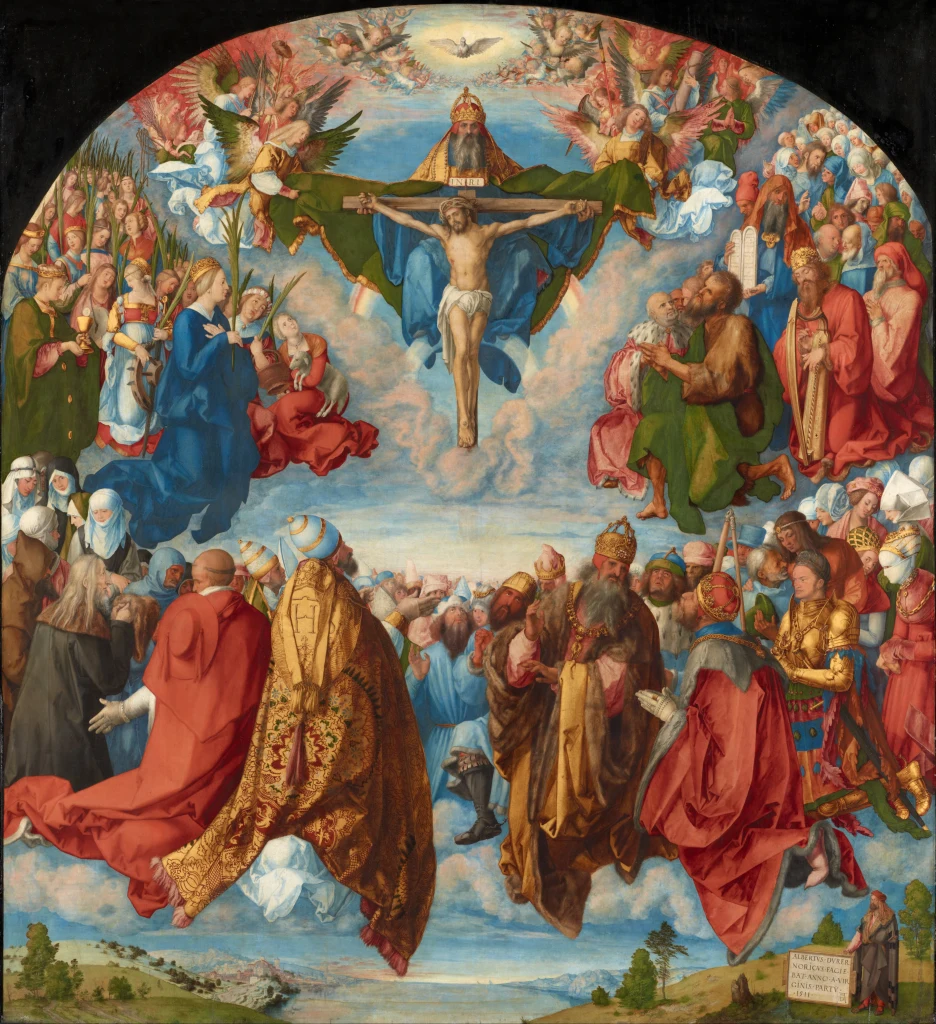
Albrecht Dürer, Adoration of the Trinity, 1511. Wikimedia Commons. · PD
Adoração da Trindade
Ficha técnica
A história
Em 1511, o rico comerciante Matthäus Landauer mandou Dürer pintar este painel para a capela de um asilo que fundara em Nuremberg, casa para doze homens idosos e pobres. O tema é toda a comunidade dos santos e dos fiéis adorando a Trindade, mostrada como Deus Pai segurando o Cristo crucificado. Céu e terra se dividem em faixas, com papas, imperadores, camponeses e mártires reunidos nas nuvens. Lá embaixo, num canto da paisagem vazia, Dürer se pintou pequeno, ao lado de uma placa com seu nome e a data, como quem assina a obra. Ele desenhou até a moldura entalhada, hoje conservada em Nuremberg, separada da tela que foi parar em Viena.