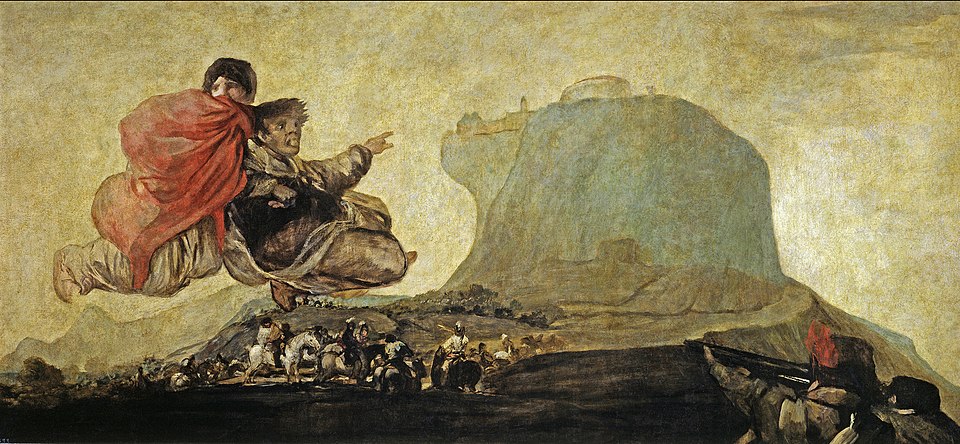
Francisco Goya, Asmodea, 1819. Wikimedia Commons. · PD
Asmodeia
Ficha técnica
A história
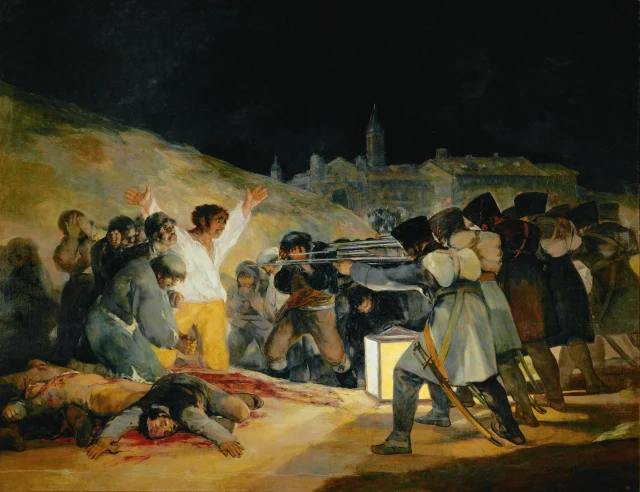
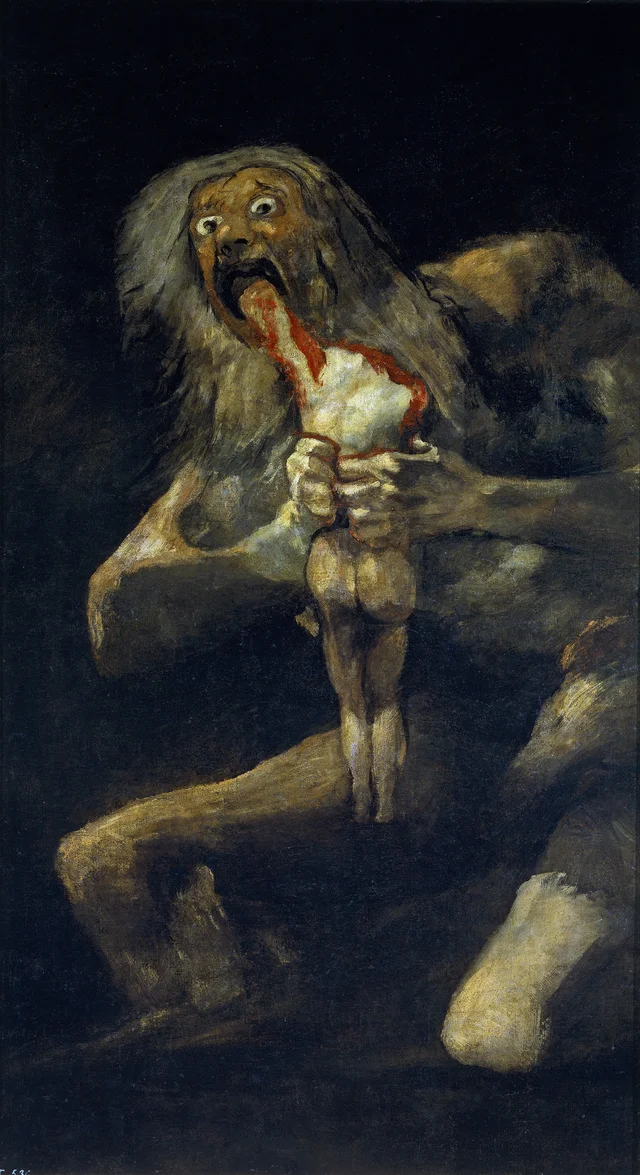
Em 1819, já com mais de 70 anos e surdo havia tempo, Goya comprou uma casa de campo nos arredores de Madri, conhecida como Quinta del Sordo, a casa do surdo. Nas paredes dela, sem encomenda e sem comprador, pintou direto sobre o reboco 14 cenas sombrias. Esta é uma delas. Sobre uma paisagem ampla, duas figuras flutuam no ar, uma mulher de manto cor-de-rosa e um homem ao lado, os dois apavorados. Ele aponta para uma cidade num monte distante. Num canto lá embaixo, uma fila de soldados faz pontaria, os mesmos mosquetes franceses que Goya já havia pintado nos fuzilamentos de Três de Maio de 1808. Goya nunca deu título ao quadro. O nome Asmodea, tirado de um demônio do Livro de Tobias, foi acrescentado depois por um amigo. As pinturas só foram arrancadas das paredes décadas após a morte dele e passadas para tela, e é assim que hoje estão no Museu do Prado.