Peter Paul Rubens · PD
Orfeu e Eurídice
Ficha técnica
A história
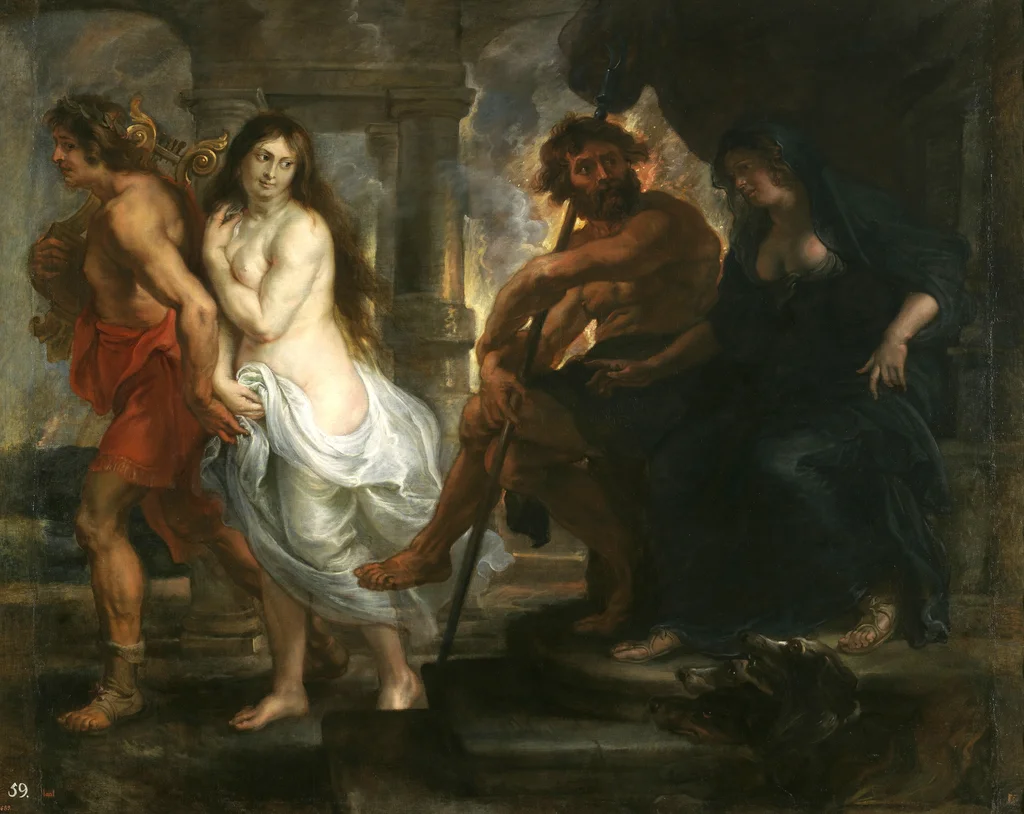
A cena vem das Metamorfoses de Ovídio e está pintada no segundo exato em que tudo se perde. Orfeu conseguiu dos donos do mundo dos mortos que a mulher voltasse com ele, sob uma condição, não olhar para ela antes de saírem. À direita, Plutão e Prosérpina erguem a mão para lembrar o acordo, e abaixo deles está Cérbero, o cão que guarda aquela entrada. Eurídice caminha com a brancura dos mortos e a mordida da serpente ainda na perna. Orfeu se vira, e ela vai se desfazer em fumaça. A tela foi executada por Rubens e sua oficina entre 1636 e 1638 para o pavilhão de caça de Filipe IV, perto de Madri.