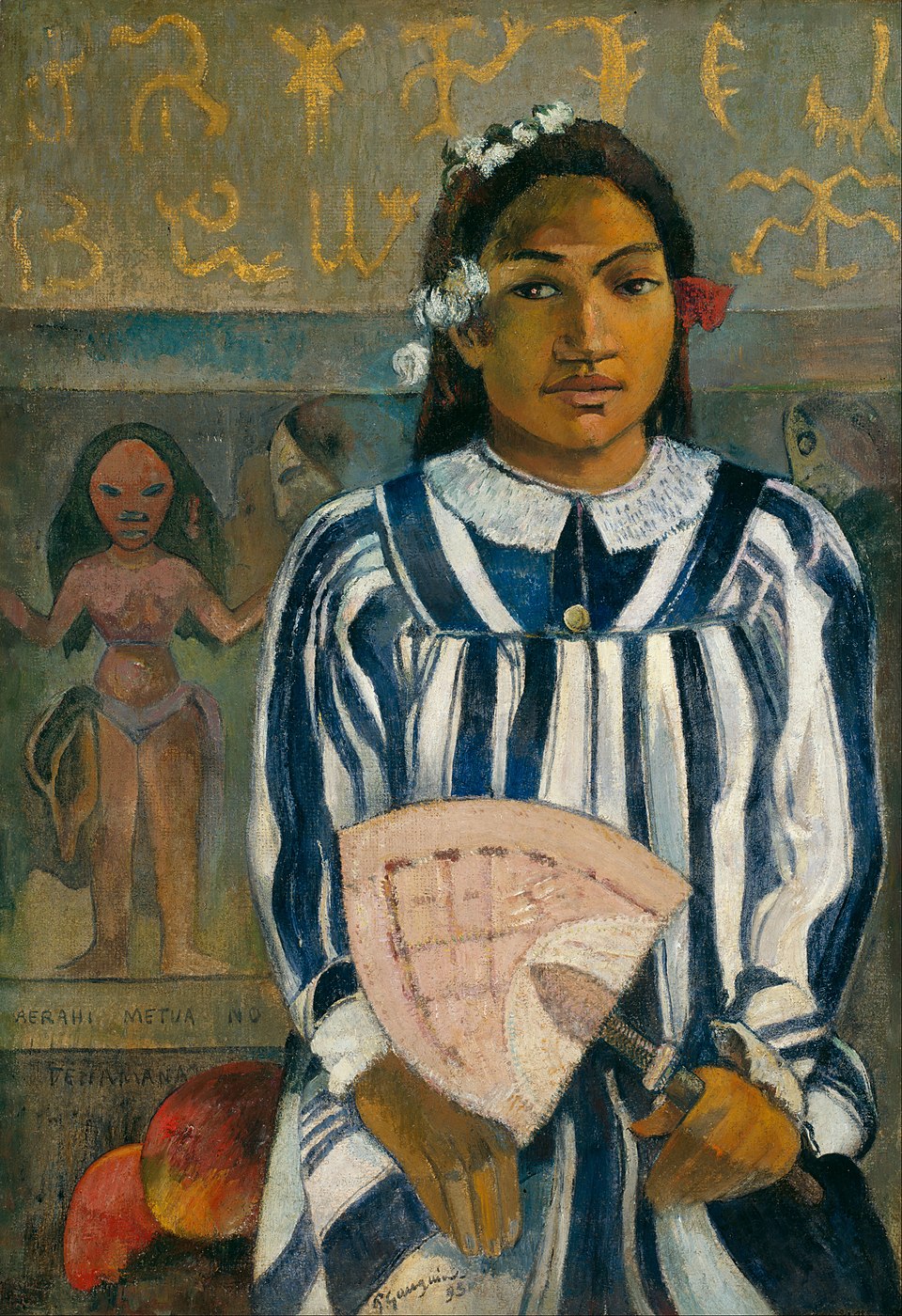
Paul Gauguin, Merahi metua no Tehamana, 1893. Wikimedia Commons. · PD
Мерахи метуа но Техамана (Предки Техаманы)
Сведения
История
Гоген написал этот портрет в 1893 году, в конце своей первой поездки на Таити, незадолго до возвращения в Париж. На нём — Техаамана, молодая таитянка, с которой он жил. По словам самого Гогена, ей было тринадцать, и эта связь до сих пор вызывает споры. Она одета по-европейски, в миссионерское платье, и держит веер. Фон Гоген во многом придумал: в полумраке — фигура божества, а вдоль края — полоса знаков, подражающих древнему письму, которого на самом деле не существовало. Название отсылает к местному обычаю иметь несколько родителей — кровных и приёмных. Это была та Полинезия, которую Гоген хотел видеть, скорее вымышленная, чем найденная. Сейчас картина находится в Художественном институте Чикаго.