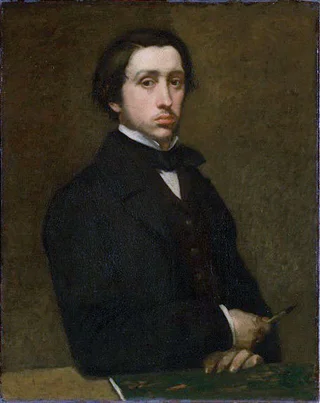
Edgar Degas
1834–1917 · Frankreich · Impressionismus
Die Geschichte
Degas half, die impressionistischen Ausstellungen zu organisieren, und stellte neben Monet und Renoir aus, obwohl ihn das Malen von Sonnenlicht im Freien wenig interessierte. Er arbeitete lieber drinnen, unter den Gaslampen der Pariser Oper, beobachtete Tänzerinnen bei Proben und Pausen und fing Körper in unbeholfenen, ungestellten Momenten ein.
Bei der sechsten impressionistischen Ausstellung, 1881, enthüllte er eine zwei Drittel lebensgroße Wachsstatue, die "Kleine Tänzerin von vierzehn Jahren", bekleidet mit einem echten Stofftutu und einer Perücke. Die Kritiker waren entsetzt. Sie nannten das Mädchen hässlich und lasterhaft und lasen in ihrem Gesicht das Zeichen einer geborenen Verbrecherin, eine damals verbreitete Vorstellung. Degas, getroffen, stellte zu Lebzeiten nie wieder eine Skulptur aus.
In diesen Jahren ließ seine Sehkraft nach, weshalb er sich Pastellkreide und dem Modellieren in Wachs zuwandte, Medien, die er tastend und in kräftiger Farbe bearbeiten konnte. Er wurde zunehmend zurückgezogener und verbitterter, und während der Dreyfus-Affäre der 1890er Jahre, als sich Frankreich über einen jüdischen Offizier spaltete, der zu Unrecht des Verrats verurteilt worden war, nahm Degas die Seite der Dreyfus-Gegner ein und brach mit alten jüdischen Freunden, darunter die Familie Halévy, die ihn jahrelang bei sich aufgenommen hatte. Er starb 1917 in Paris, fast vollständig erblindet.
Weitere Artikel
Werke
133 Werke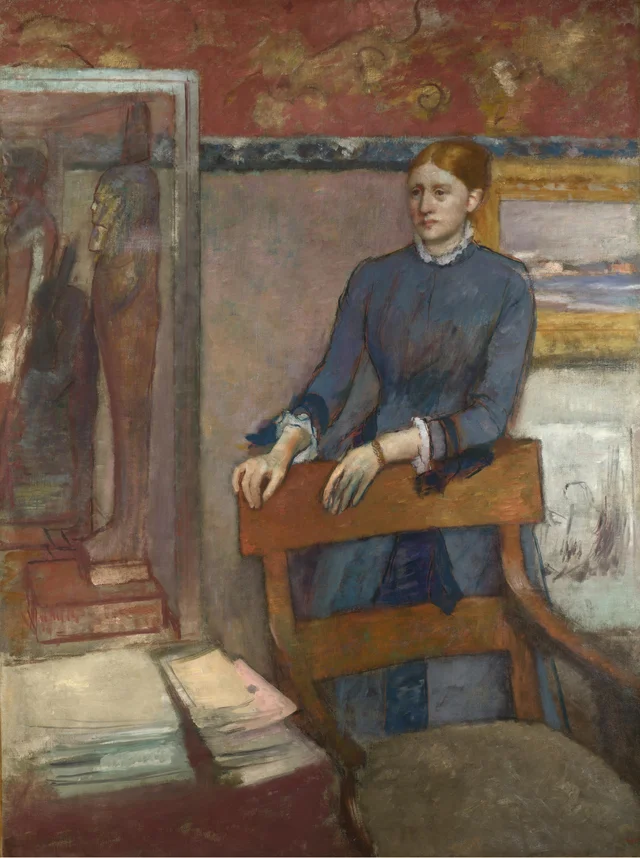 Hélène Rouart im Arbeitszimmer ihres VatersEdgar Degas, 1886
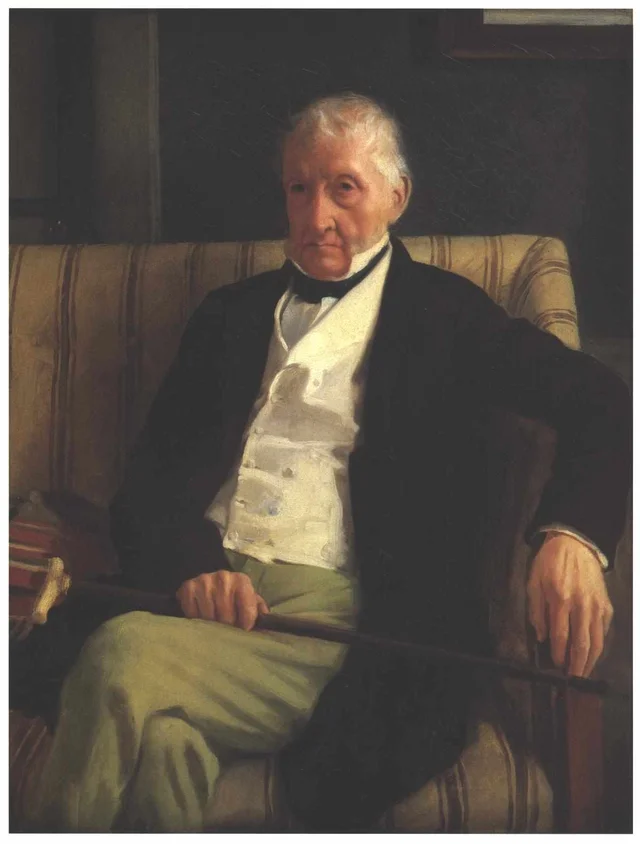 Hilaire de GasEdgar Degas, 1857
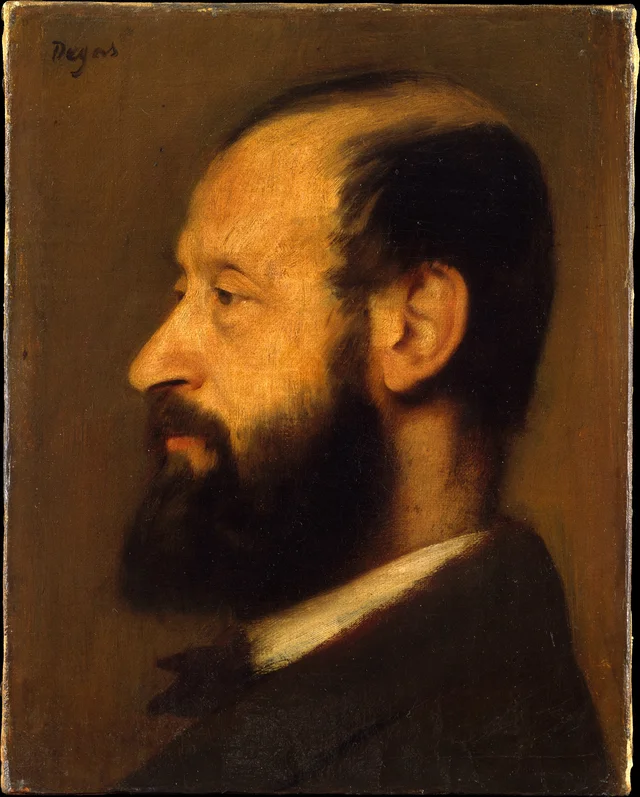 Joseph-Henri Altès (1826-1895)Edgar Degas, 1868
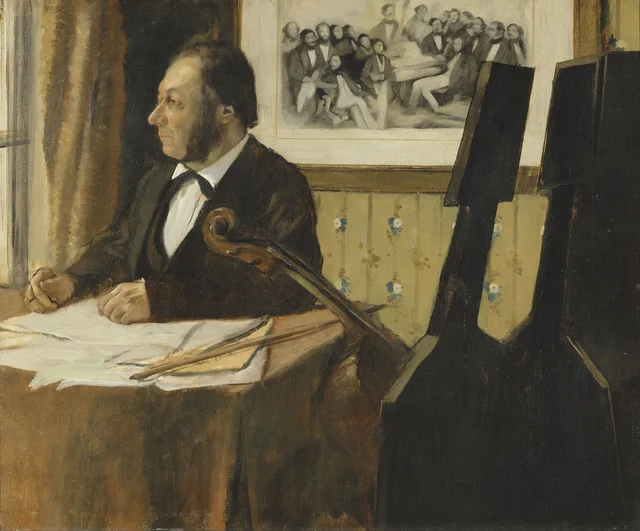 Der Cellist PiletEdgar Degas, 1868
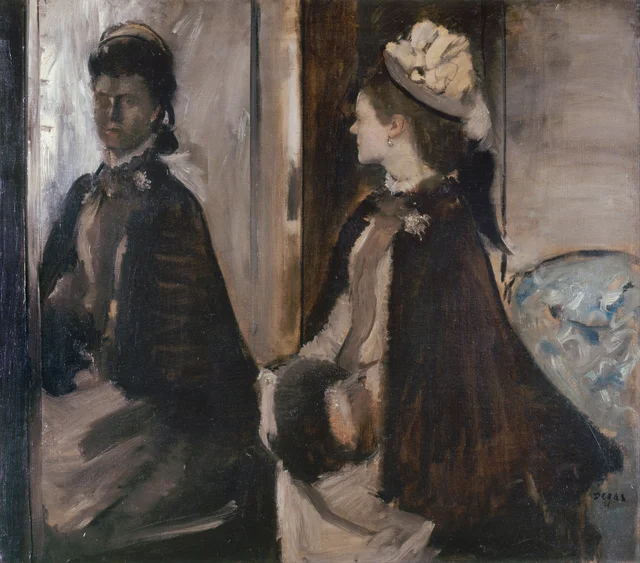 Madame Jeantaud vor dem SpiegelEdgar Degas, 1875
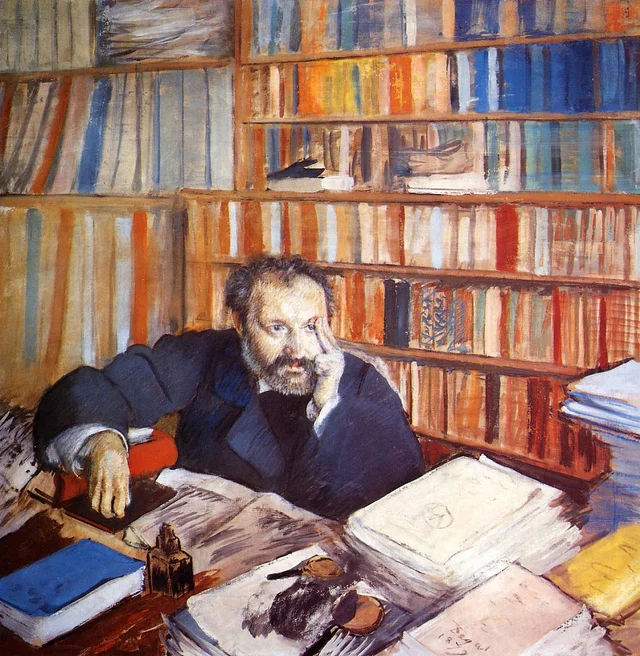 Porträt des Edmond DurantyEdgar Degas, 1879
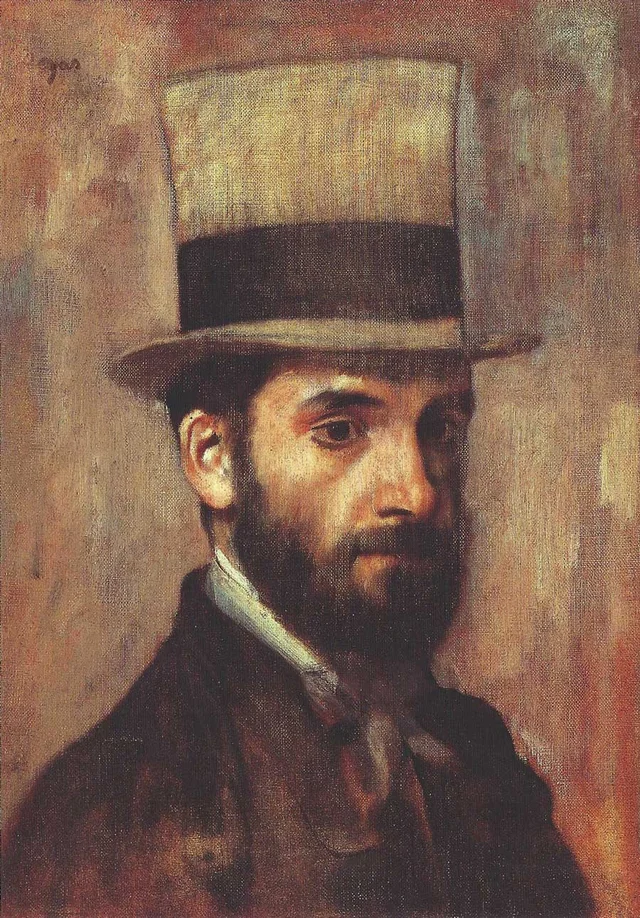 Porträt des Léon BonnatEdgar Degas, 1863
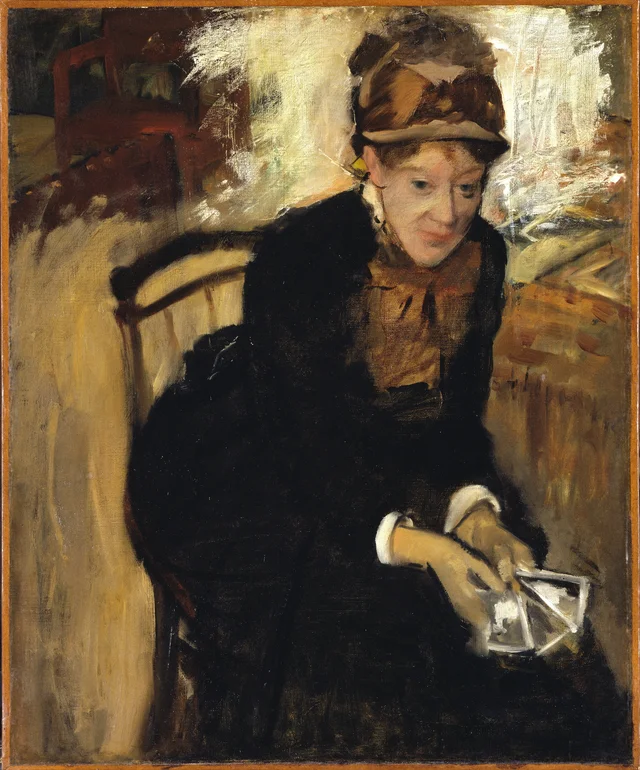 Porträt der Mary CassattEdgar Degas, 1884
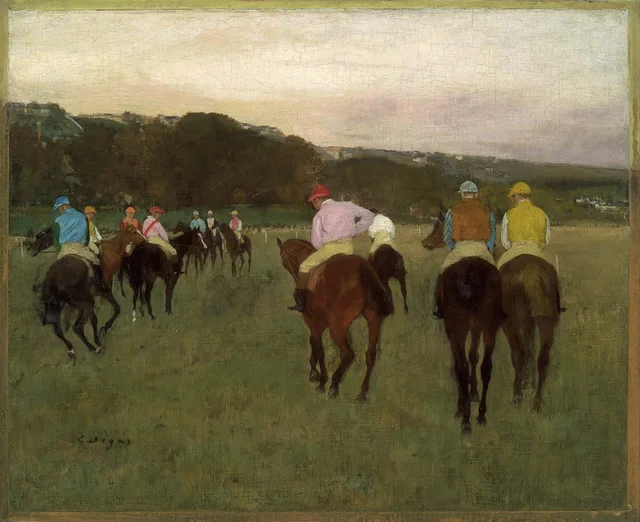 Rennpferde in LongchampEdgar Degas, 1874
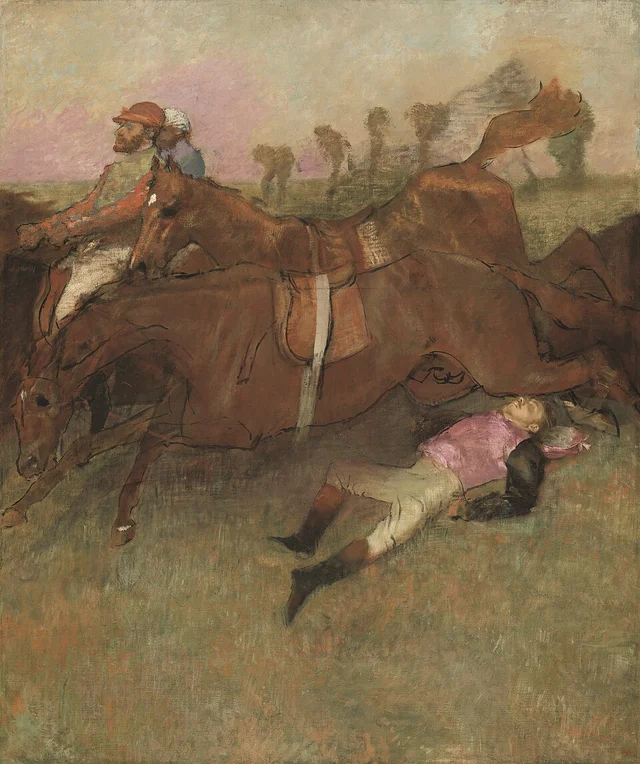 Szene aus dem Hindernisrennen: Der gestürzte JockeyEdgar Degas, 1866
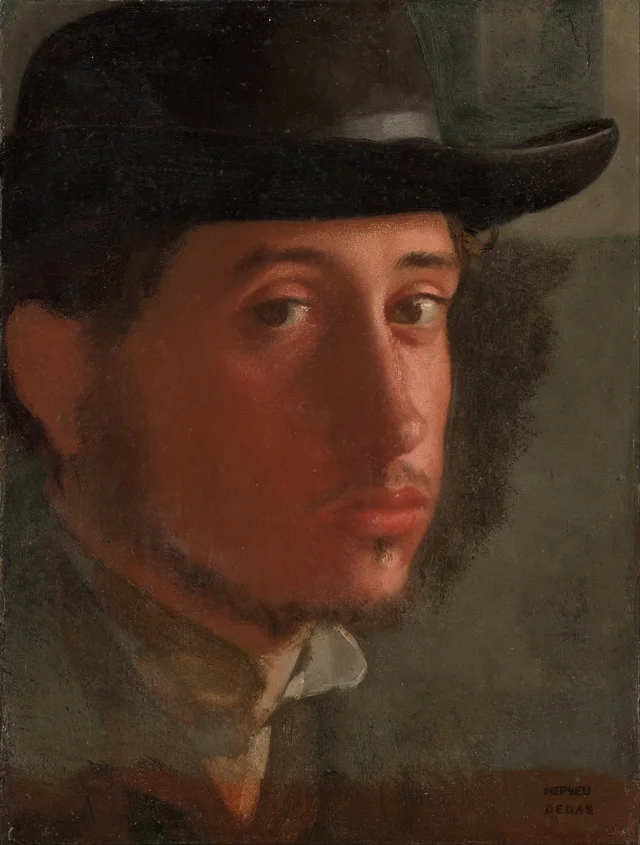 SelbstbildnisEdgar Degas, 1857
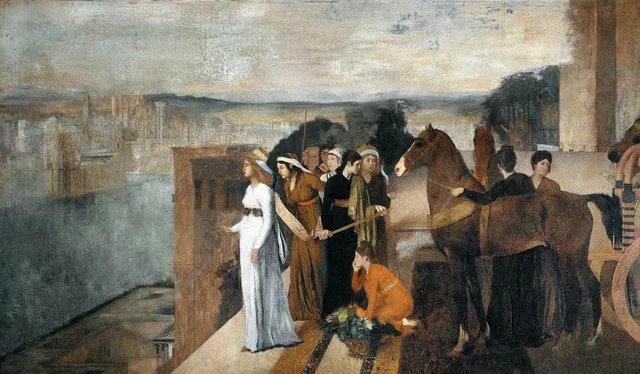 Semiramis erbaut BabylonEdgar Degas, 1860
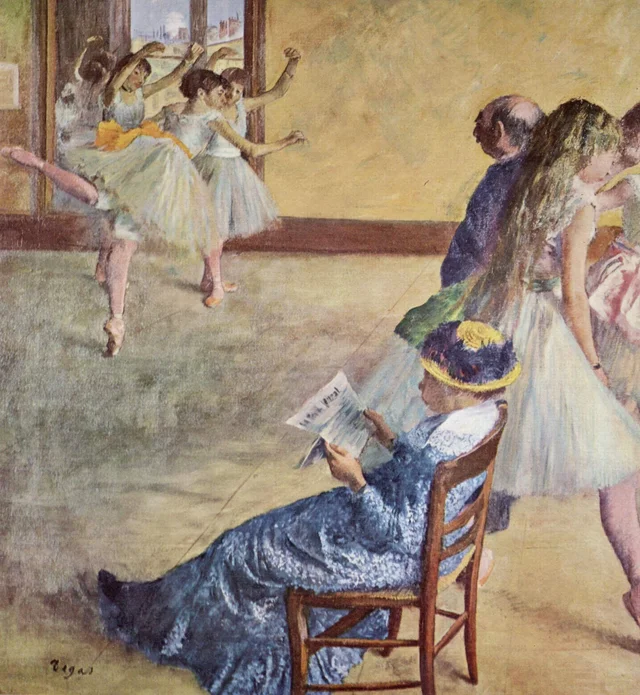 Die BallettklasseEdgar Degas, 1878
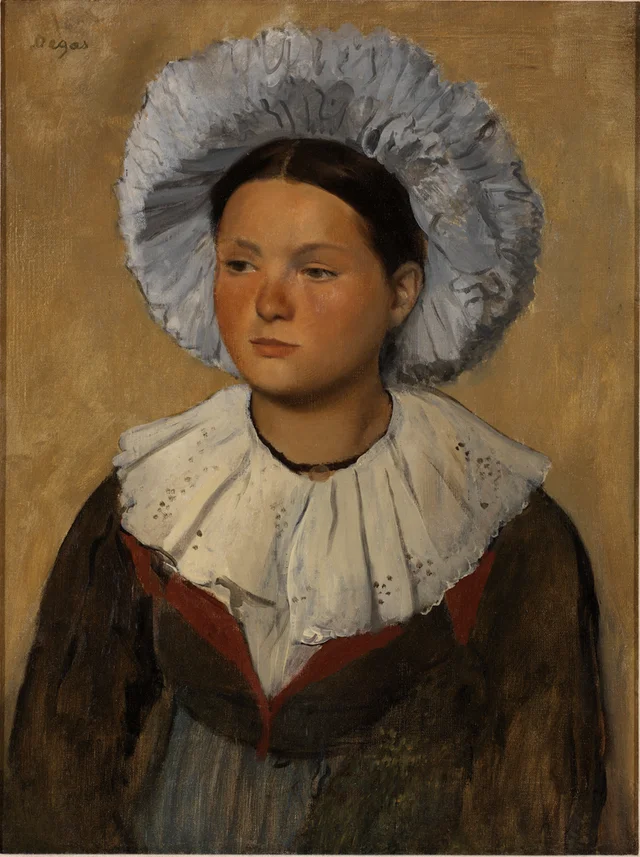 Die SavoyardinEdgar Degas, 1860
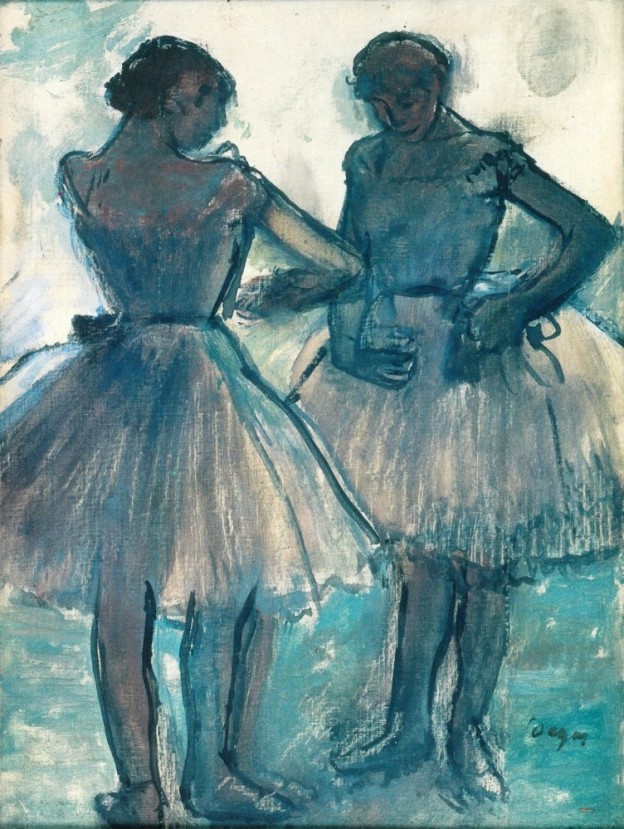 Zwei TänzerinnenEdgar Degas, 1880
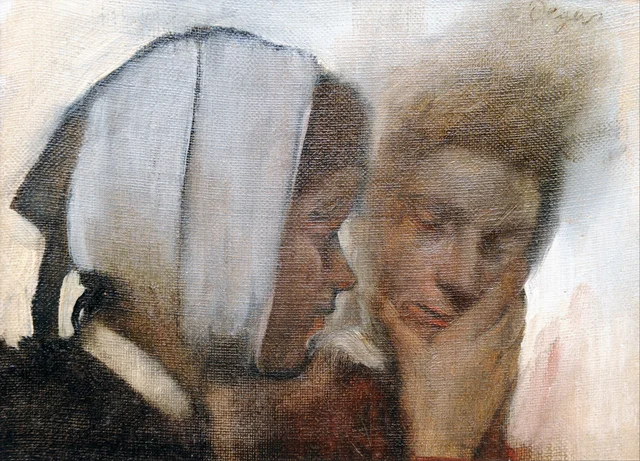 WäscherinnenEdgar Degas, 1871
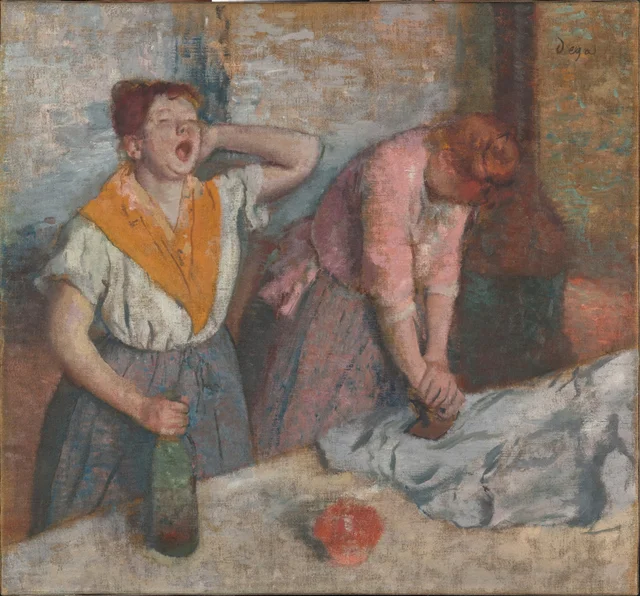 Die PlätterinnenEdgar Degas, 1884
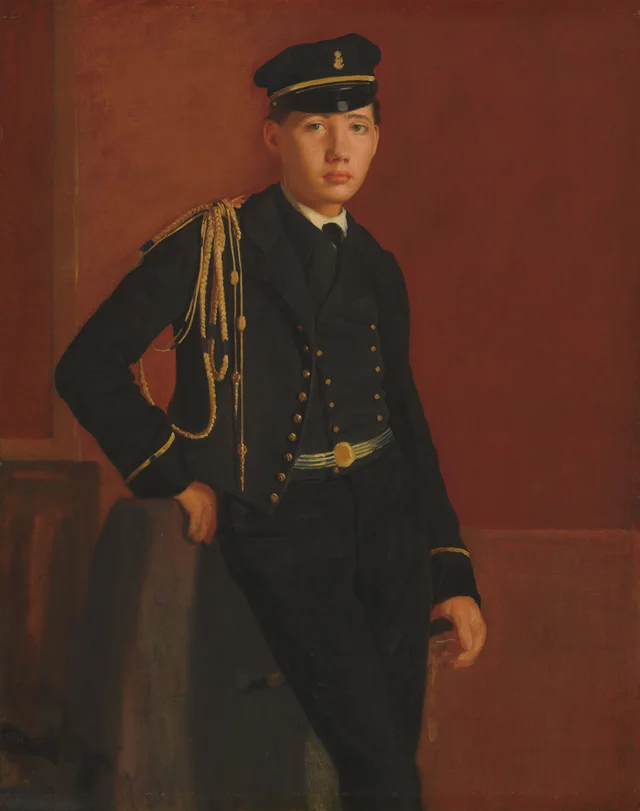 Achille De Gas in KadettenuniformEdgar Degas, 1856
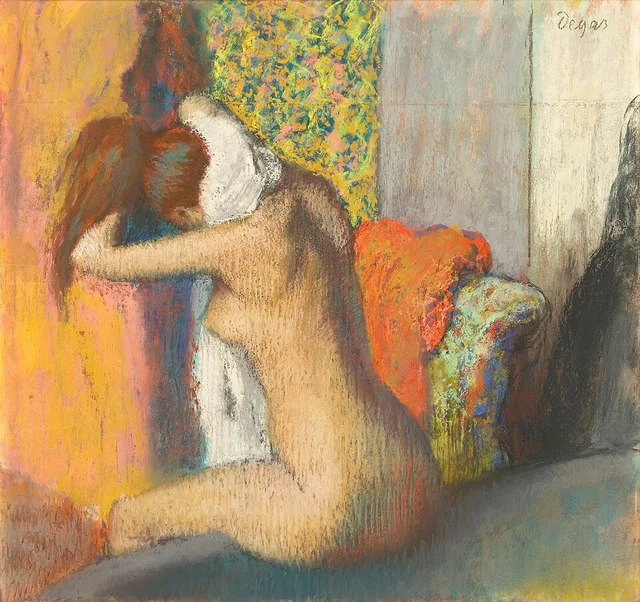 Nach dem Bad, Frau, die sich den Nacken abtrocknetEdgar Degas, 1895
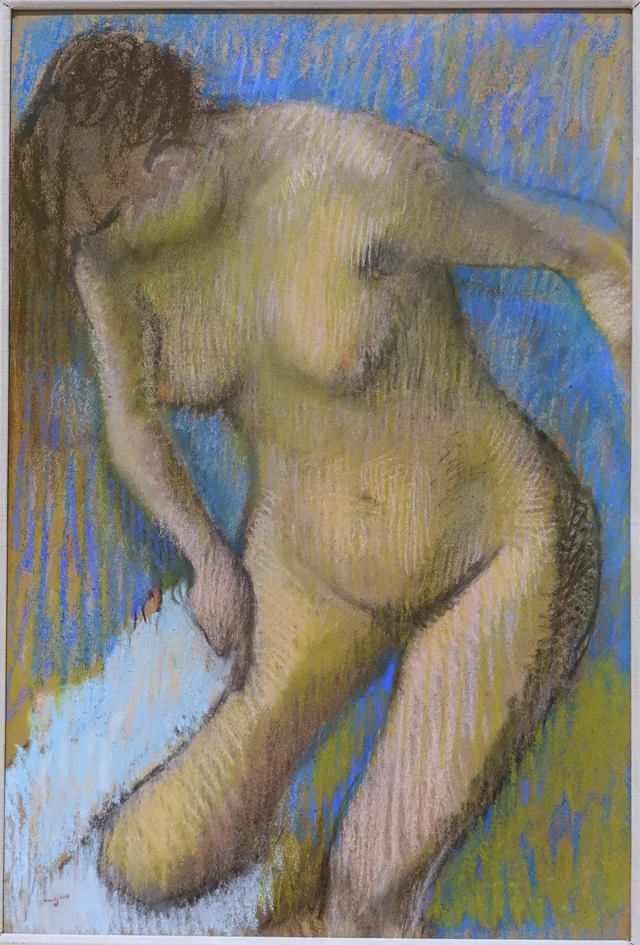 Nach dem BadEdgar Degas, 1886
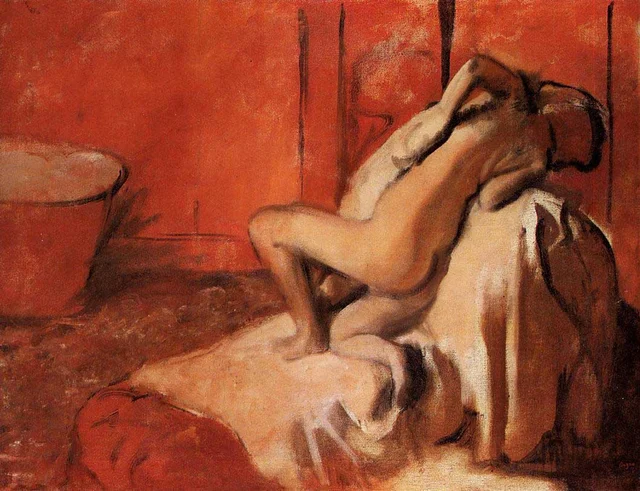 Nach dem Bad (Sich abtrocknende Frau)Edgar Degas, 1896
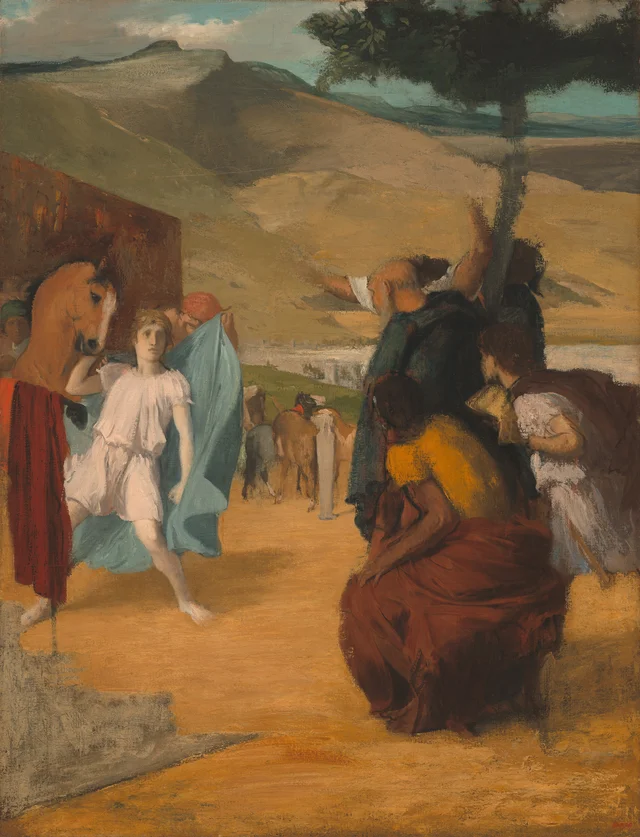 Alexander und BukephalosEdgar Degas, 1861
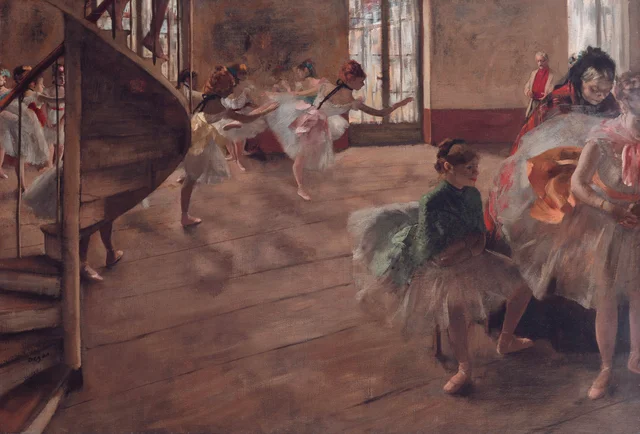 BallettprobeEdgar Degas, 1874
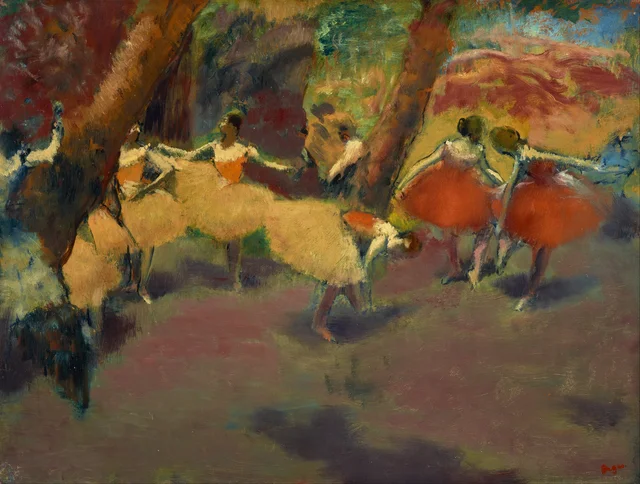 Vor der VorstellungEdgar Degas, 1896
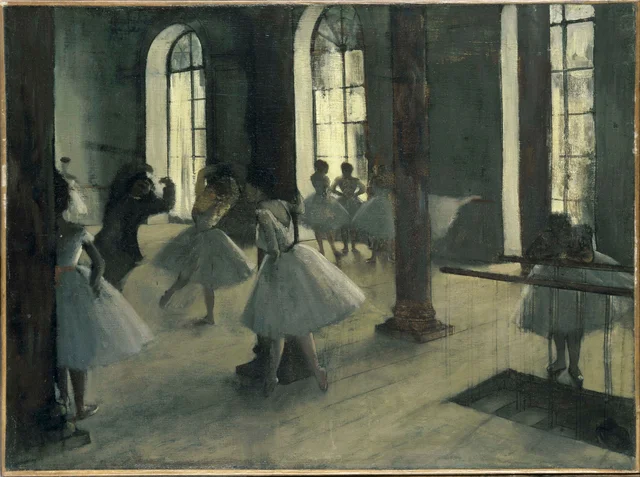 TanzprobeEdgar Degas, 1873