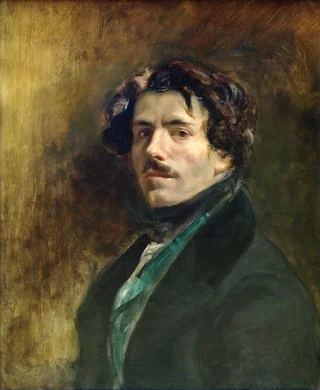
Eugène Delacroix
1798–1863 · Frankreich · Romantik
Die Geschichte
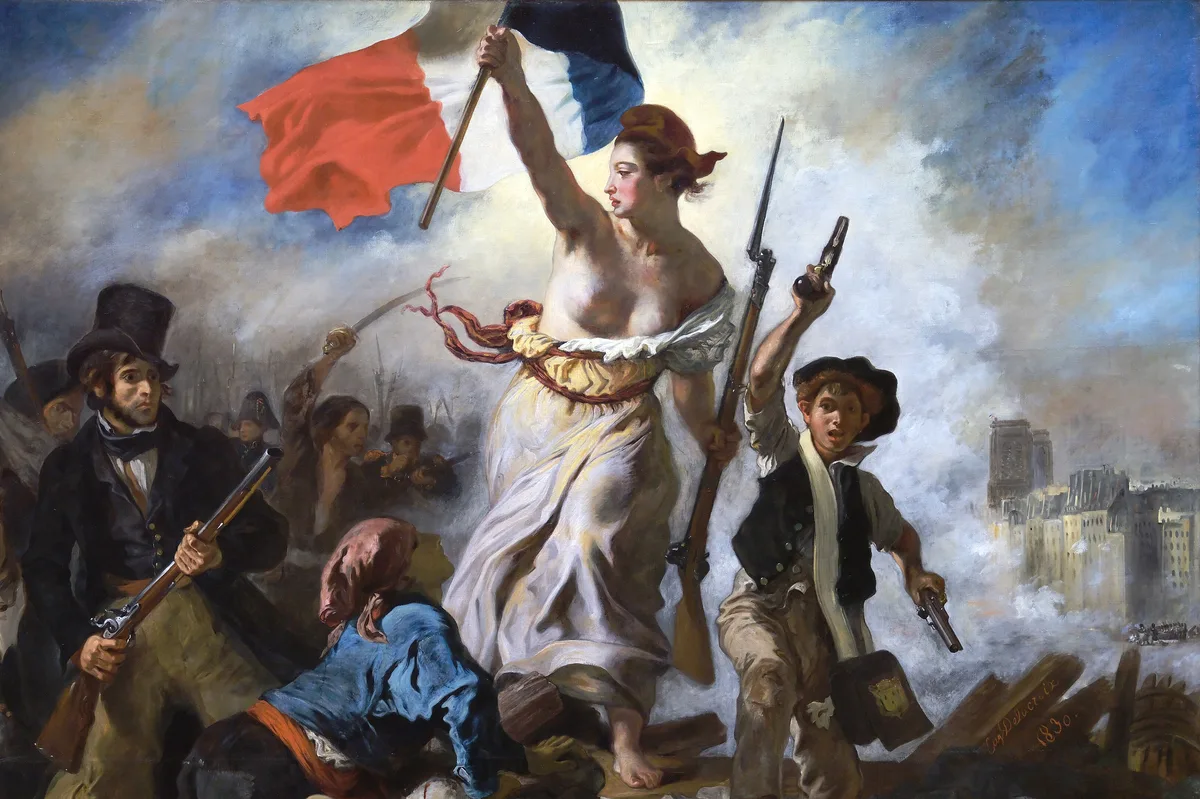
Ende Juli 1830 verbrachten die Pariser drei Tage auf den Barrikaden und vertrieben ihren König Karl X. Eugène Delacroix, 32 Jahre alt, sah vom Rand aus zu und hatte das Gefühl, seinen Teil nicht beigetragen zu haben, also holte er es mit dem Pinsel nach. In jenem Winter malte er eine barbusige Frau, die mit der Trikolore in der einen und einem Gewehr in der anderen Hand über die Toten schreitet und eine Menge aus Arbeitern und Straßenjungen durch den Pulverdampf führt. "Die Freiheit führt das Volk" verwandelte eine Woche echter Straßenkämpfe in das Bild, auf das Frankreich noch heute zurückgreift, wann immer es aufbegehrt.
Delacroix führte die andere Hälfte der französischen Malerei an, gegenüber Ingres – jene Hälfte, die Farbe, Bewegung und Gefühl mehr vertraute als der reinen Zeichnung. Zwei Jahre nach der "Freiheit" machte er die Erfahrung, die seine Palette endgültig entzündete. 1832 reiste er mit einer französischen diplomatischen Mission nach Marokko, und das Licht, die Gewänder, die Pferde und Höfe Nordafrikas trafen ihn wie eine Offenbarung. Er füllte Skizzenbücher mit raschen Aquarellen und schöpfte aus dieser halbjährigen Reise noch 30 Jahre lang, mehr als 70 Gemälde gingen daraus hervor.
Auch in seinen Freundschaften war er ein Romantiker, eng verbunden mit dem Komponisten Frédéric Chopin, den er am Klavier malte, und mit der Schriftstellerin George Sand. Über weite Strecken seines Lebens führte er ein Tagebuch, das noch heute als eines der klügsten Zeugnisse gilt, die je ein Maler über die Malerei geschrieben hat. Gegen Ende seines Lebens bemalte er eine Kapelle der Pariser Kirche Saint-Sulpice mit Wandgemälden, eines davon zeigt einen Engel, der mit Jakob ringt, umgeben von Bäumen, die er in einem Wald vor den Toren der Stadt studiert hatte; er vollendete sie 1861 und starb zwei Jahre später.
Weitere Artikel
Werke
139 Werke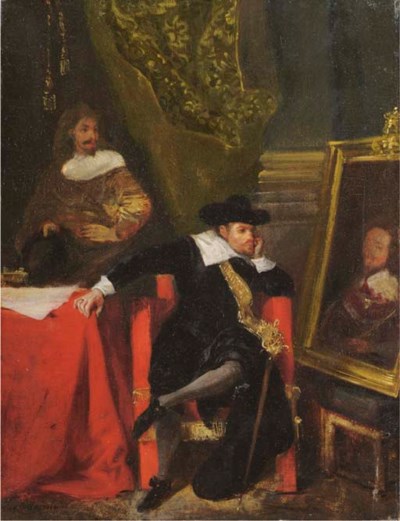 Cromwell auf Schloss WindsorEugène Delacroix, 1828
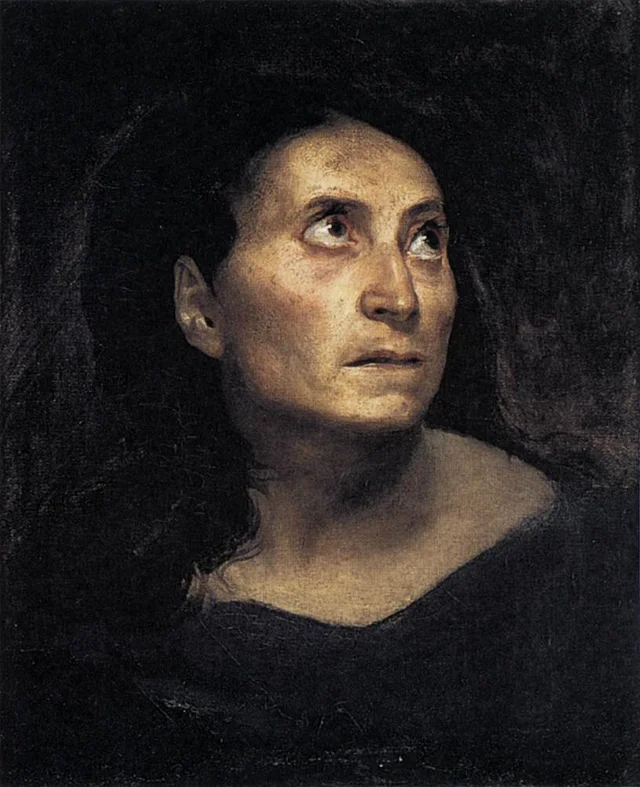 FrauenkopfEugène Delacroix, 1822
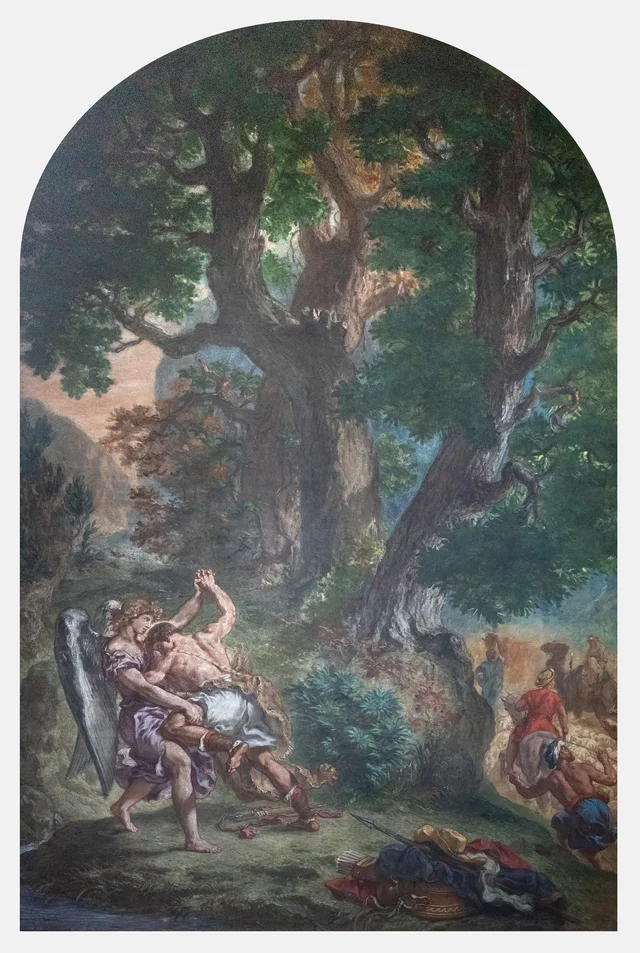 Jakobs Kampf mit dem EngelEugène Delacroix, 1860
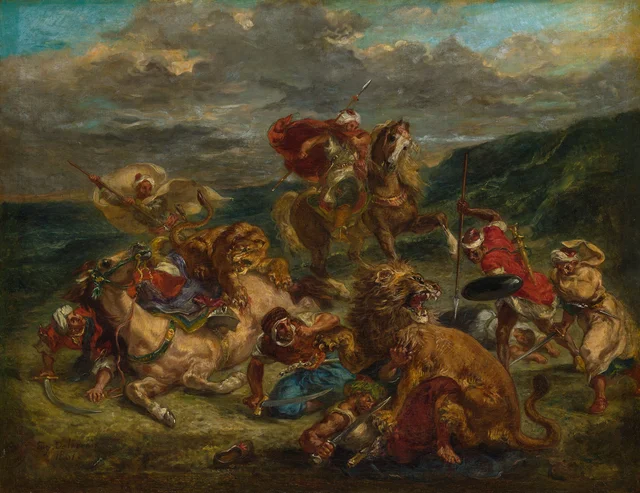 Die Löwenjagd in MarokkoEugène Delacroix, 1861
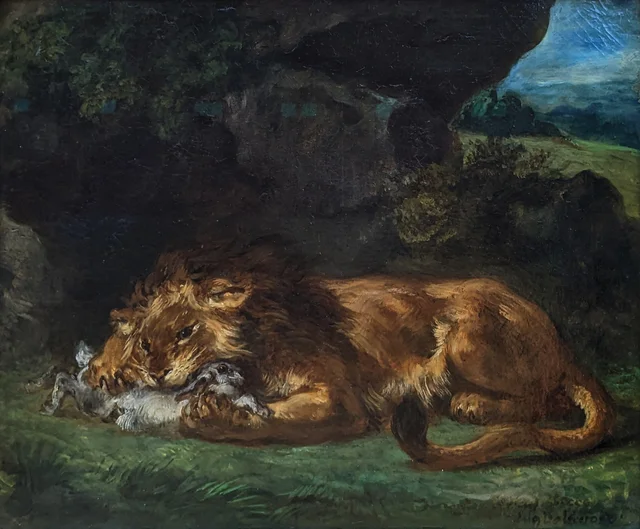 Löwe, einen Hasen verschlingendEugène Delacroix, 1853
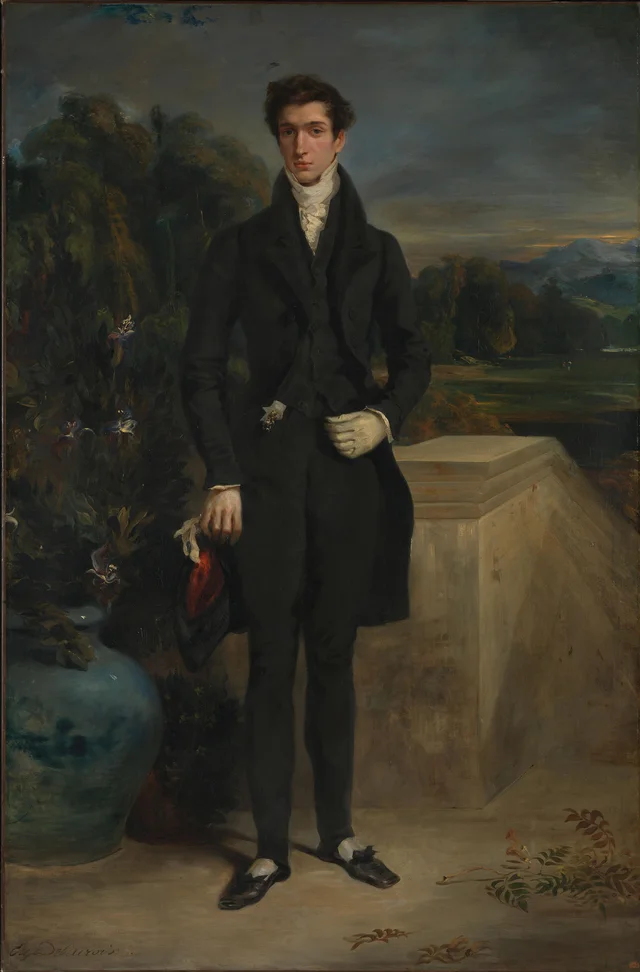 Porträt des Louis-Auguste SchwiterEugène Delacroix, 1827
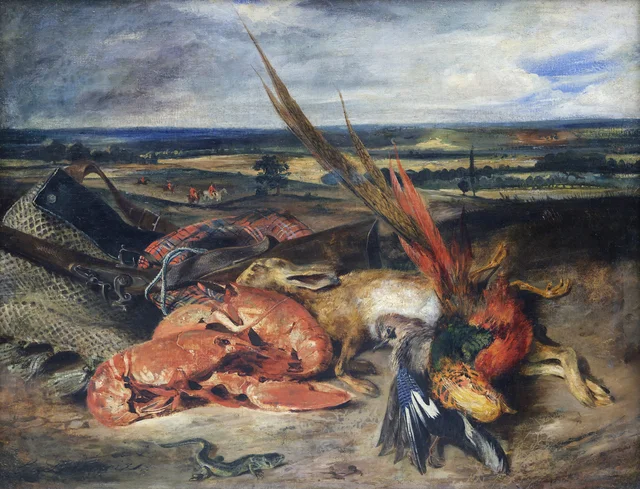 Stillleben mit Hummer und Jagd- und FischereitrophäenEugène Delacroix, 1827
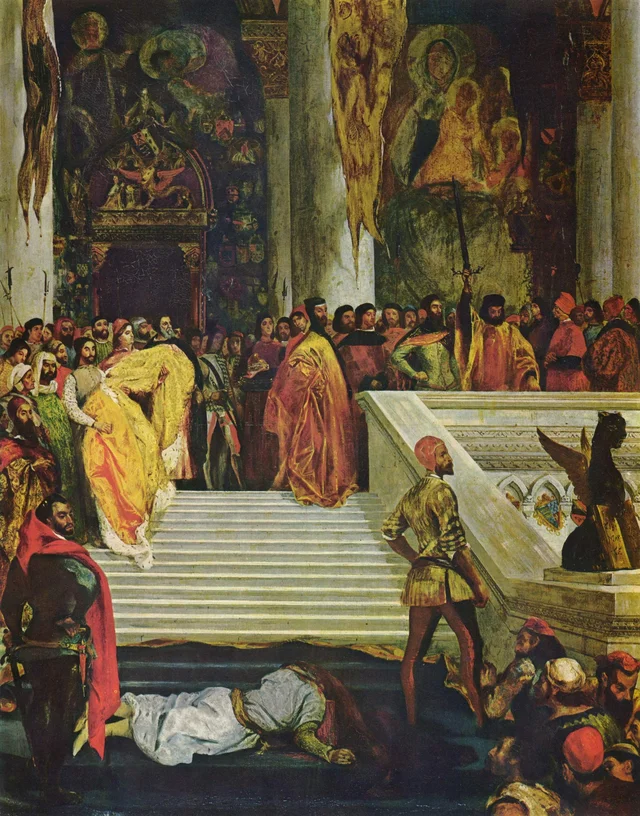 Die Hinrichtung des Dogen Marino FalieroEugène Delacroix, 1826
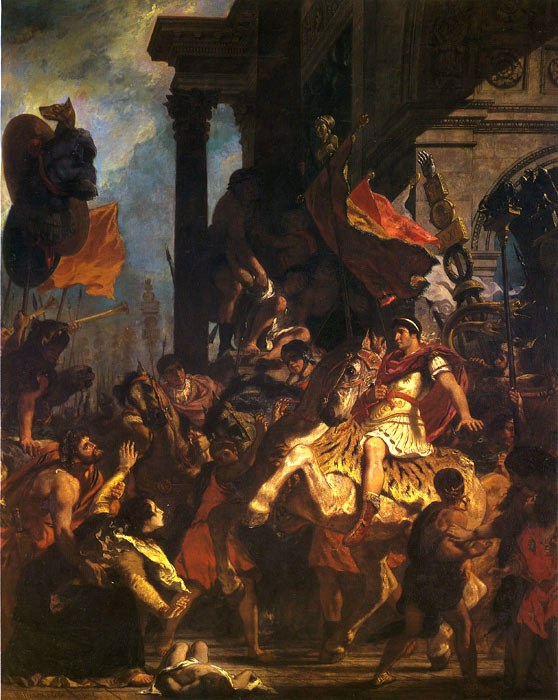 Die Gerechtigkeit des TrajanEugène Delacroix, 1840
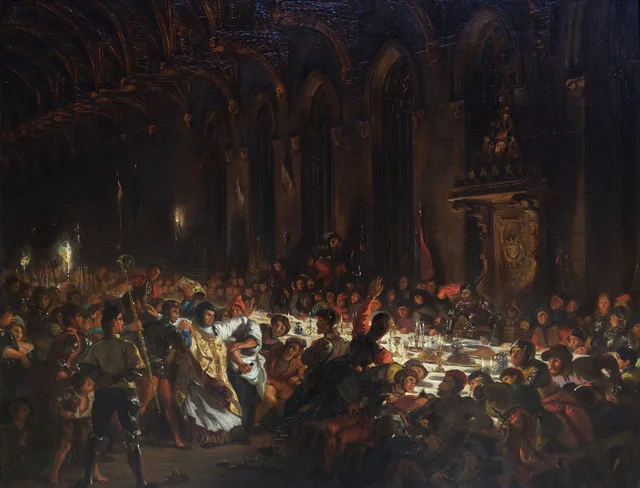 Die Ermordung des Bischofs von LüttichEugène Delacroix, 1828
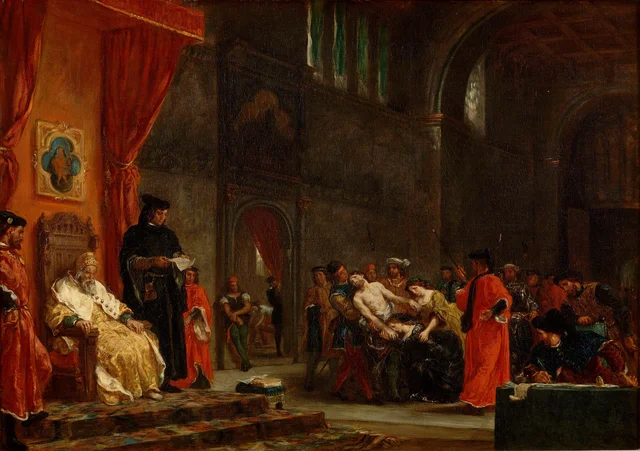 Die beiden FoscariEugène Delacroix, 1855
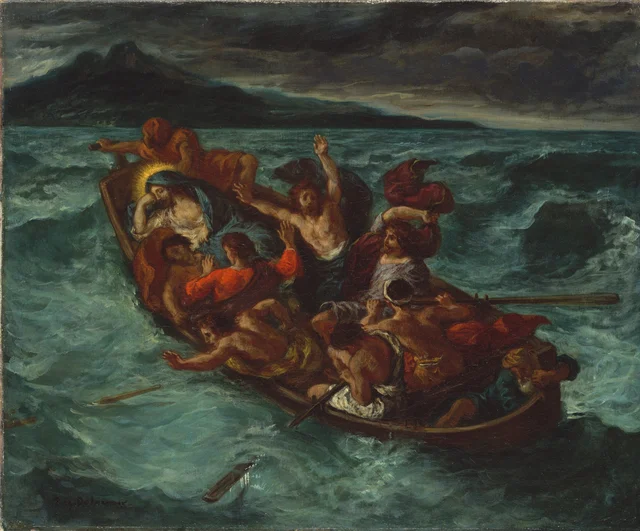 Der schlafende Christus während des SturmsEugène Delacroix, 1853
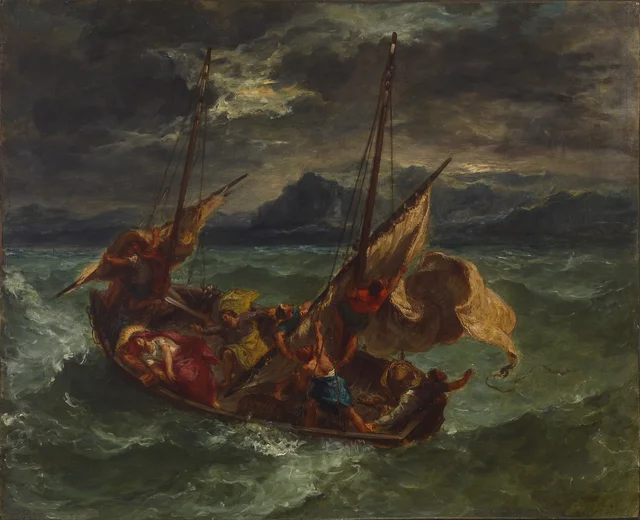 Christus auf dem See GenezarethEugène Delacroix, 1854
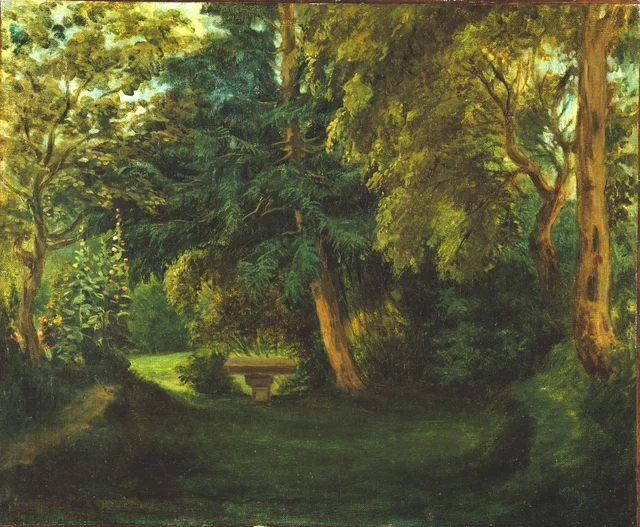 George Sands Garten in NohantEugène Delacroix, 1842
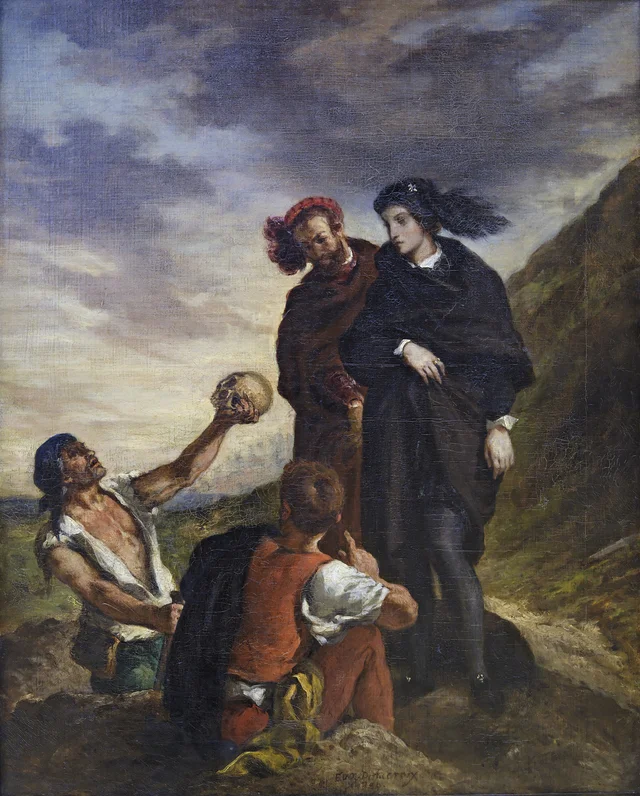 Hamlet und Horatio auf dem FriedhofEugène Delacroix, 1839
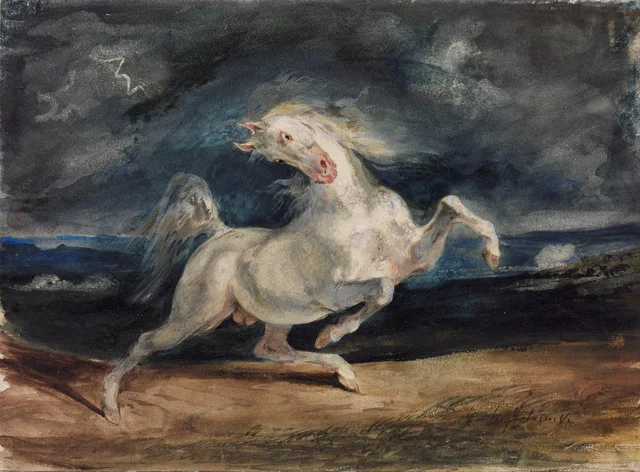 Von einem Blitz erschrecktes PferdEugène Delacroix, 1824
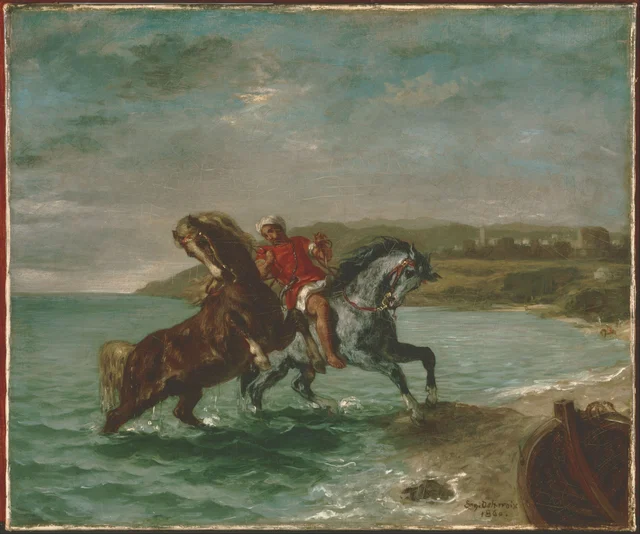 Aus dem Meer kommende PferdeEugène Delacroix, 1860
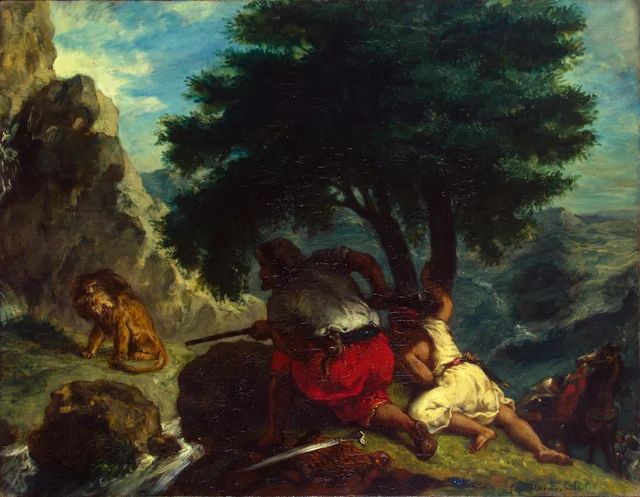 Löwenjagd in MarokkoEugène Delacroix, 1854
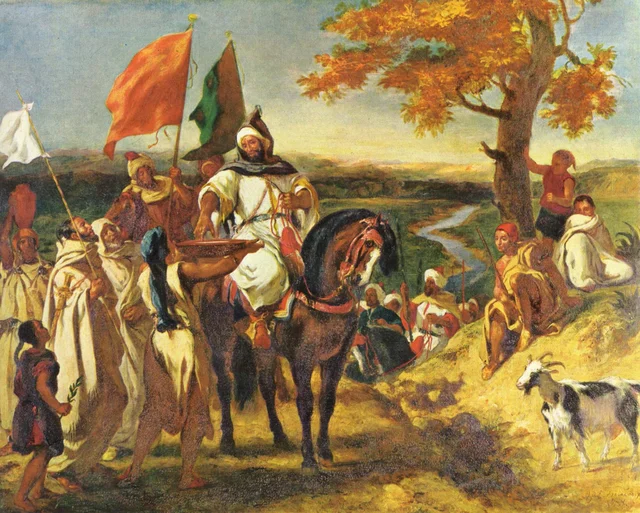 Marokkanischer Kaid besucht seinen StammEugène Delacroix, 1837
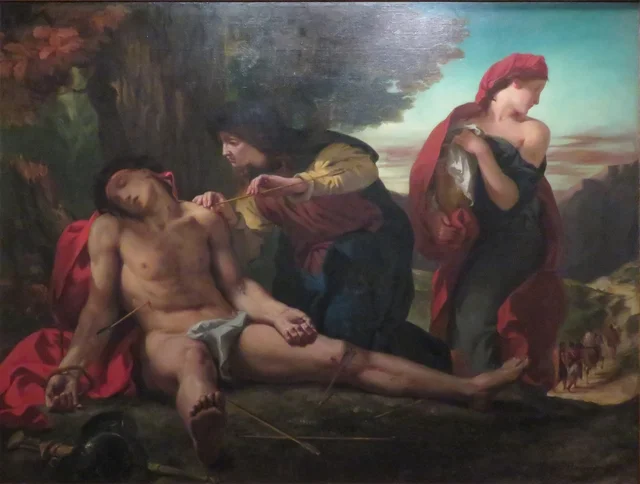 Der heilige Sebastian, von den heiligen Frauen gepflegtEugène Delacroix, 1836
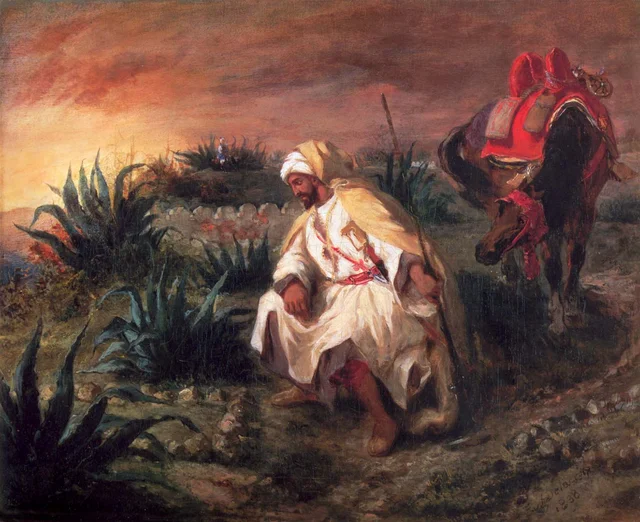 Araber am GrabEugène Delacroix, 1838
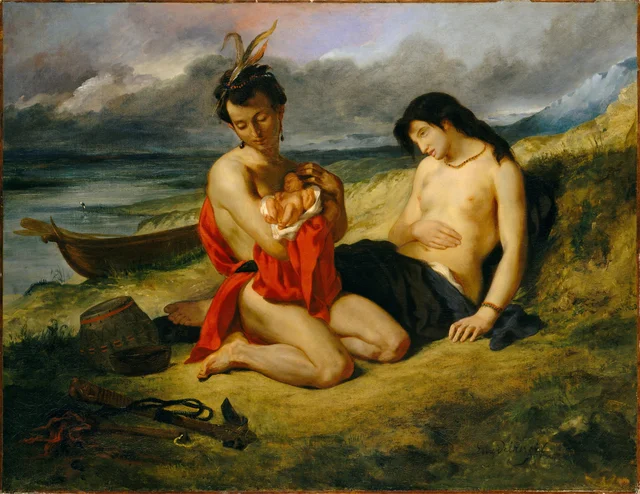 Die NatchezEugène Delacroix, 1835
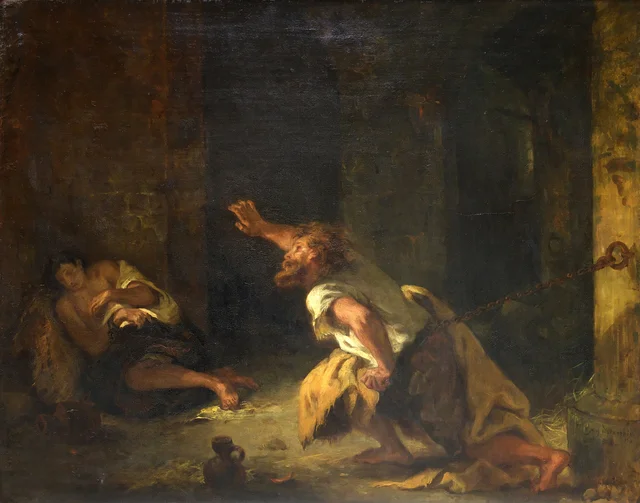 Der Gefangene von ChillonEugène Delacroix, 1834
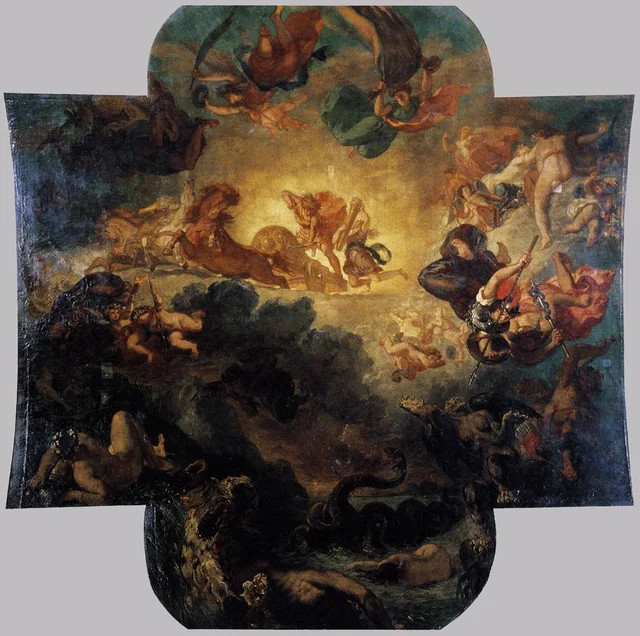 Apollo besiegt PythonEugène Delacroix, 1850
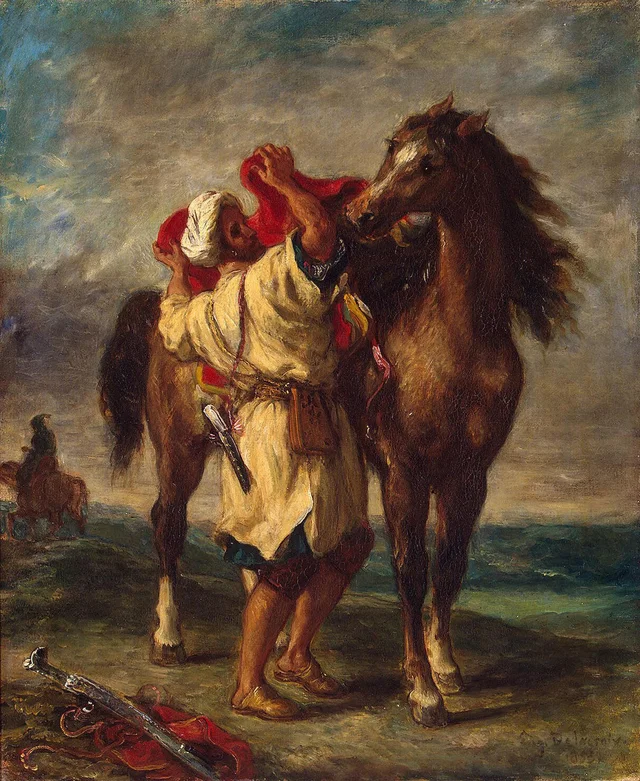 Araber sattelt sein PferdEugène Delacroix, 1855