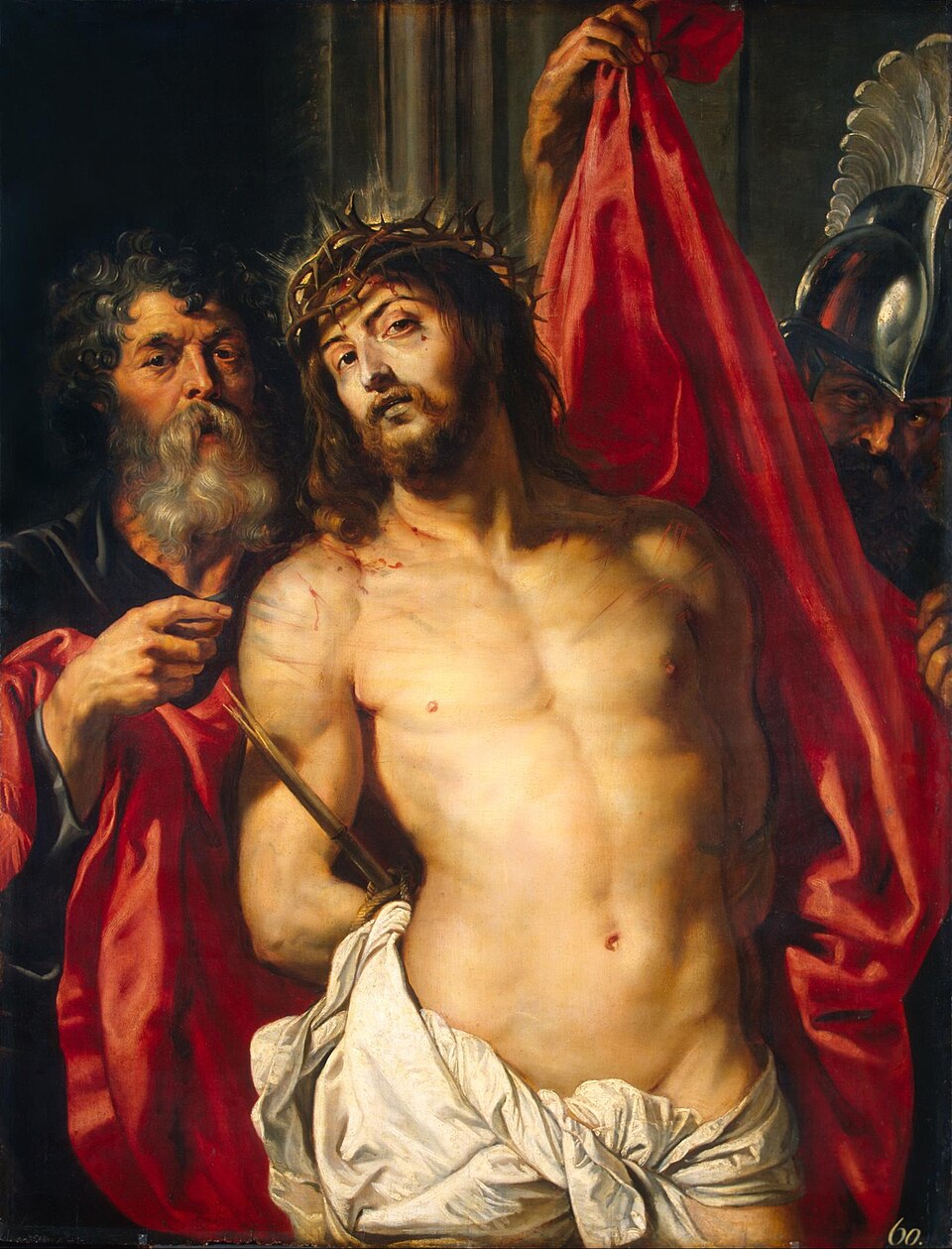
Peter Paul Rubens, Crown of Thorns, 1612. Wikimedia Commons. · PD
Die Dornenkrönung
Details
Die Geschichte
Acht Jahre verbrachte Rubens in Italien, wo er die Antike und die großen Venezianer in sich aufnahm. 1608 kehrte er nach Antwerpen zurück und wurde rasch zum meistbeschäftigten Maler Nordeuropas. Um 1612 malte er dieses Ecce Homo, den nach der Geißelung der Menge vorgeführten Christus, und bringt Italien darin mit nach Hause. Die Haltung ist nicht erfunden. In der Galleria Borghese in Rom hatte er eine berühmte antike Kentaurenstatue gezeichnet, die Arme nach hinten gezwungen, den Oberkörper nach vorn gestemmt, und diesen angespannten Körper übertrug er auf die Figur Christi. Dornenkrone und roter Mantel sind der grausame Soldatenspott über das Königtum. Gegen Ende des 18. Jahrhunderts war die Tafel in Sankt Petersburg, in der Sammlung eines russischen Fürsten, und dort blieb sie.