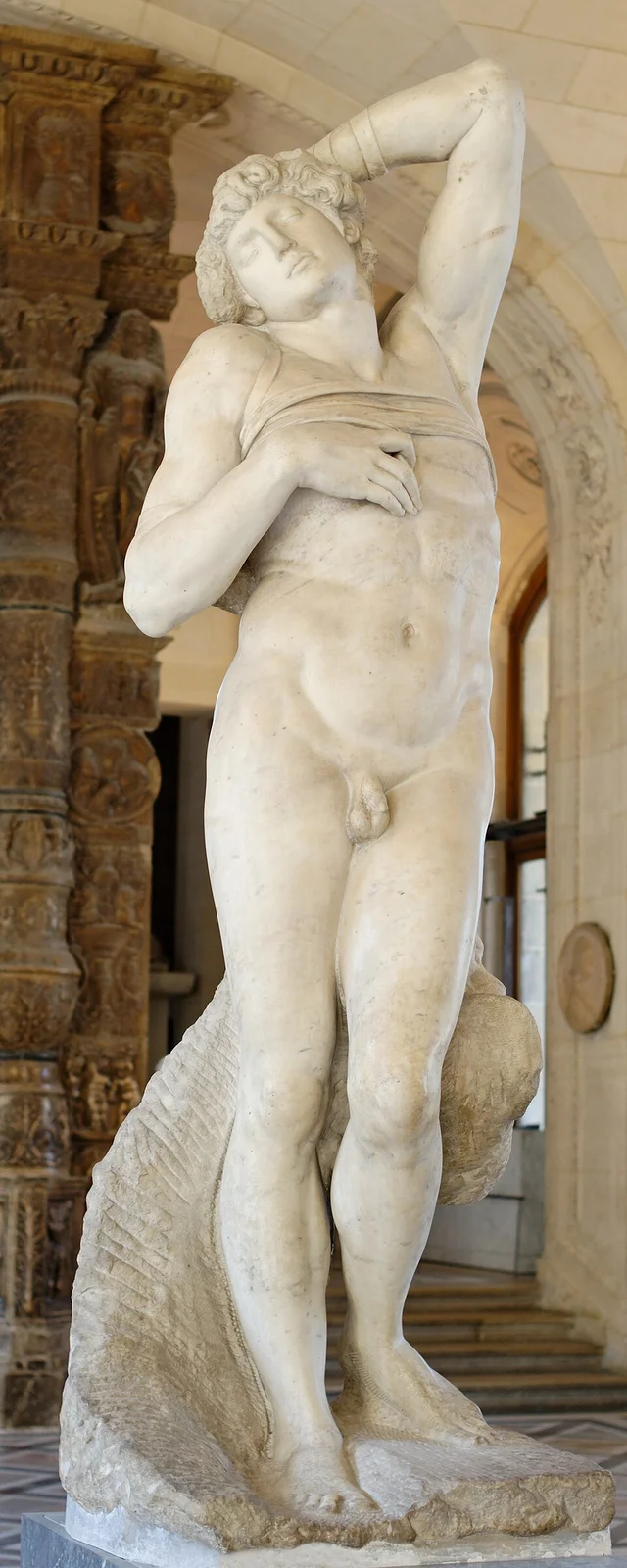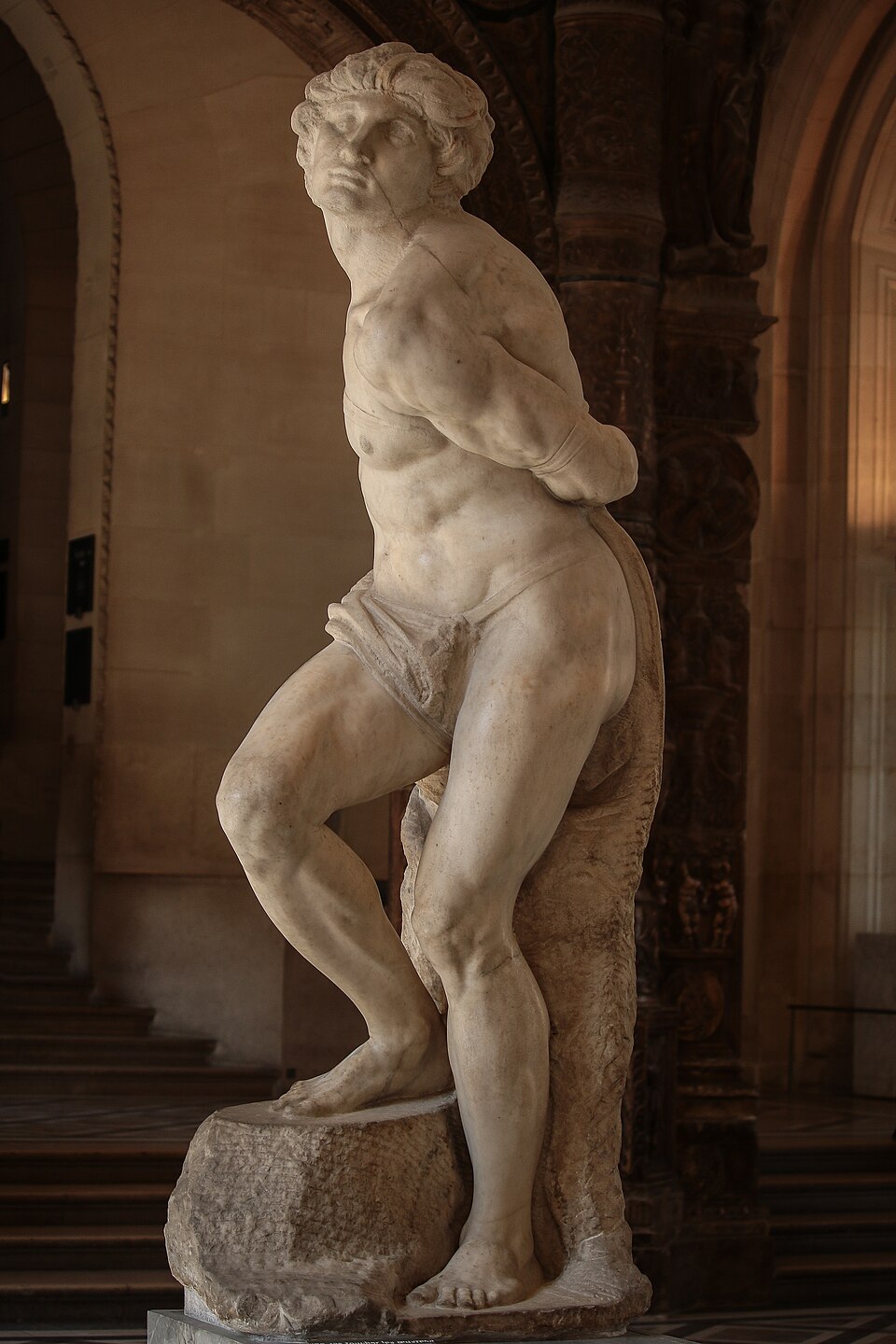
Michelangelo, Rebellious Slave, 1514. Wikimedia Commons.
Der rebellische Sklave
Details
Die Geschichte
Michelangelo begann den 'Rebellischen Sklaven' um 1513 für das Grabmal Papst Julius' II., ein Projekt, das ihn Jahrzehnte verfolgte und immer weiter zusammenschrumpfte. Die Figur windet sich, als wolle sie sich aus dem Stein selbst befreien, die Muskeln gespannt, das Gesicht abgewandt. Am Ende fand sie im verkleinerten Grabmal keinen Platz. Michelangelo verschenkte die Figur samt ihrem Gegenstück, dem 'Sterbenden Sklaven', an den Florentiner Roberto Strozzi, und über Umwege kamen beide nach Frankreich. Seit dem 18. Jahrhundert gehören sie dem Louvre.