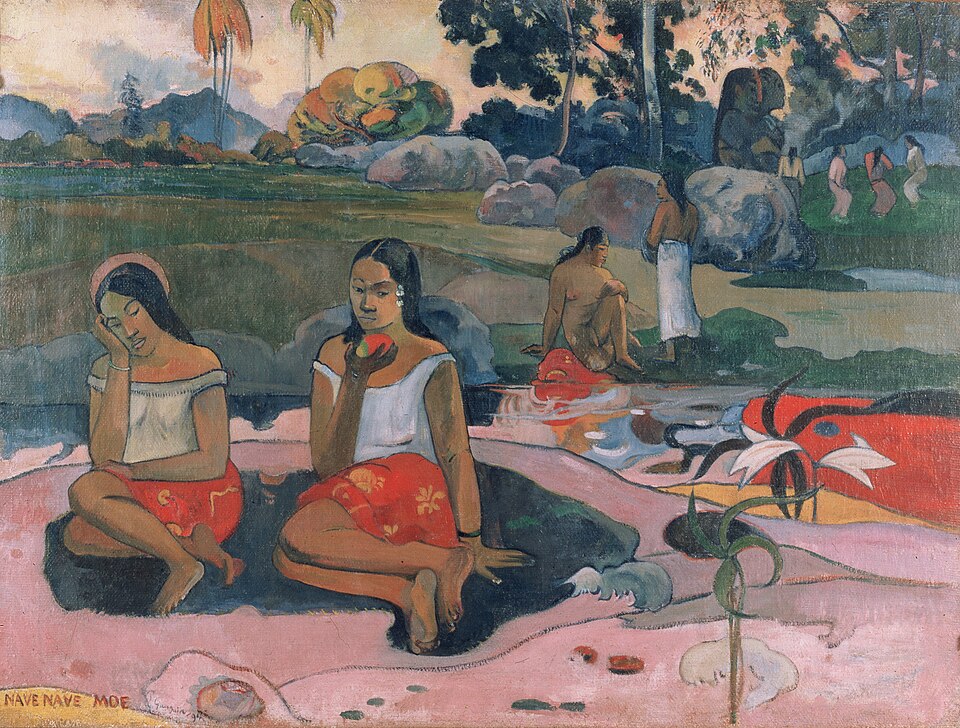
Paul Gauguin, Sacred Spring: Sweet Dreams (Nave nave moe), 1894. Wikimedia Commons. · PD
Heilige Quelle: Süße Träume (Nave nave moe)
Details
Die Geschichte
Gauguin malte dieses Bild Anfang 1894 in Paris, nicht in den Tropen. Zwei Jahre zuvor war er ohne Geld aus Tahiti zurückgekehrt und lebte in einem Atelier, das mit seinen eigenen Inselbildern behängt war, noch immer aus der Erinnerung arbeitend. Die Szene ist also erinnert, nicht gesehen. Zwei Tahitianerinnen sitzen an einem Becken: die eine schläft, ein zarter Heiligenschein über dem Kopf; die andere hält eine Frucht, wie eine Eva kurz vor dem Biss. Gauguin flocht christliche Zeichen in eine polynesische Welt, die sie nie kannte, und Heiligenschein und Lilie stehen für Reinheit. Er schrieb sogar die tahitianischen Worte Nave nave moe auf die Leinwand, die er als süße, verschlafene Lust deutete. Der Moskauer Sammler Iwan Morosow kaufte das Bild 1907, und 1931 gelangte es in die Eremitage.