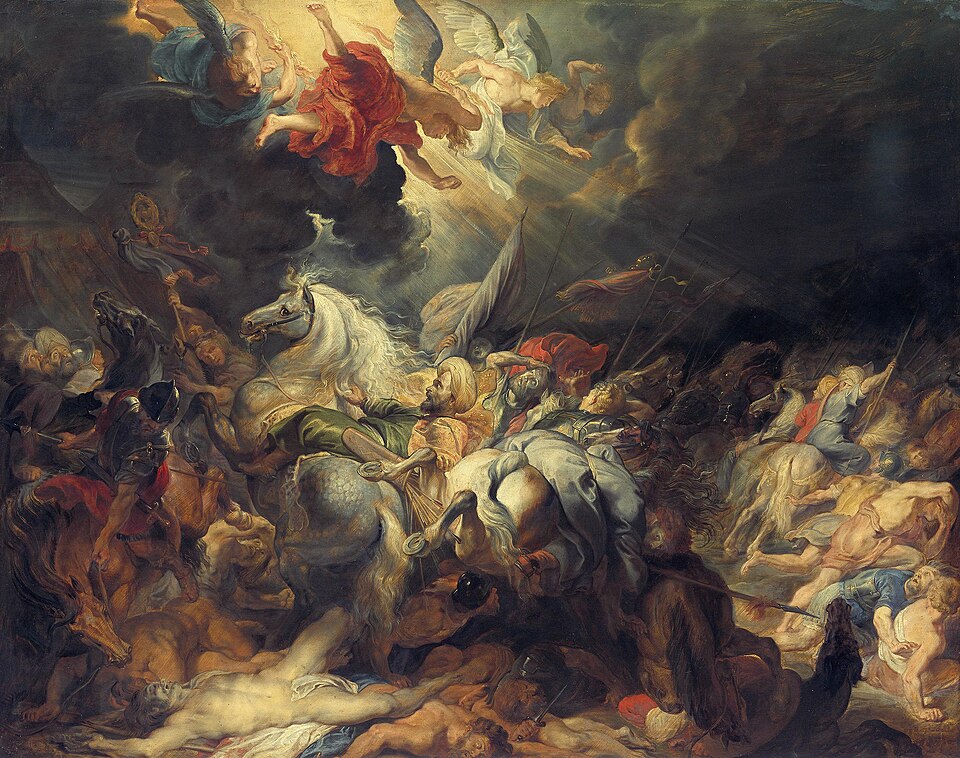
Peter Paul Rubens, The Defeat of Sennacherib, 1614. Wikimedia Commons. · PD
Die Niederlage Sanheribs
Details
Die Geschichte
Im Jahr 701 vor Christus belagerte der assyrische König Sanherib Jerusalem, und nach dem Bericht des Alten Testaments sandte Gott in der Nacht einen Engel, der sein Heer schlug. Rubens fasst diesen Höhepunkt um 1617 in eine dicht gedrängte Komposition und lenkt das Licht genau. Es trifft die Toten am Boden, die Fliehenden ganz rechts und vor allem Sanherib selbst mit seinem entsetzten Gesicht. Den prachtvoll aufsteigenden Schimmel hat er, so die Pinakothek, nach einer Erfindung Leonardo da Vincis gestaltet. Das Bild hatte ein Gegenstück, die Bekehrung des Saulus, auf der ebenfalls ein Reiter von einem Licht aus dem Himmel vom Pferd geworfen wird. Dieses Bild hängt heute in der Courtauld Gallery in London.