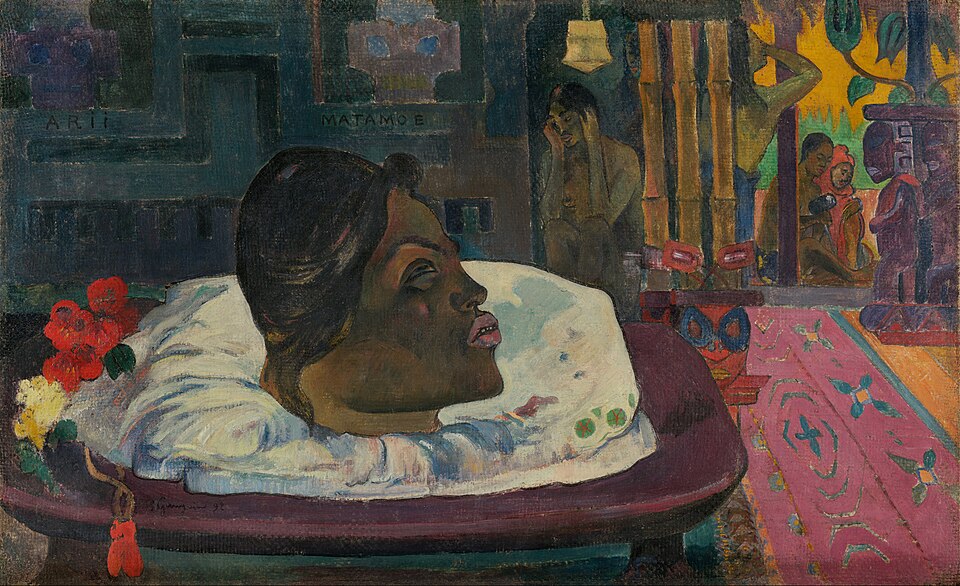
Paul Gauguin, The Royal End, 1892. Wikimedia Commons. · PD
Das königliche Ende
Details
Die Geschichte
Gauguin kam 1891 nach Tahiti, in der Hoffnung, eine von Europa unberührte Welt zu finden. Wenige Wochen später starb Pomaré V., der letzte König der Insel, die längst unter französischer Verwaltung stand. Aus dieser Stimmung der Trauer entstand dieser abgeschlagene, auf ein weißes Kissen gebettete Kopf, um den einige Frauen klagen. Einen wirklichen tahitianischen Brauch gibt die Szene nicht wieder. In einem Brief an seinen Freund Daniel de Monfreid gab der Maler zu, den Palast wie die Frauen erfunden zu haben, und wollte damit wohl die Pariser aufschrecken, wenn er mit seinen Bildern zurückkäme. Die Muster im Hintergrund verbinden Erinnerungen an marquesanische Schnitzereien mit Teppichen, die er in Büchern gesehen hatte.